 讲知识 · 讲经验 · 讲未来
 人人可分享 · 处处是课堂
 科技 · 财经 · 游戏 · 快讯,每日更新
 诚搜315观察网
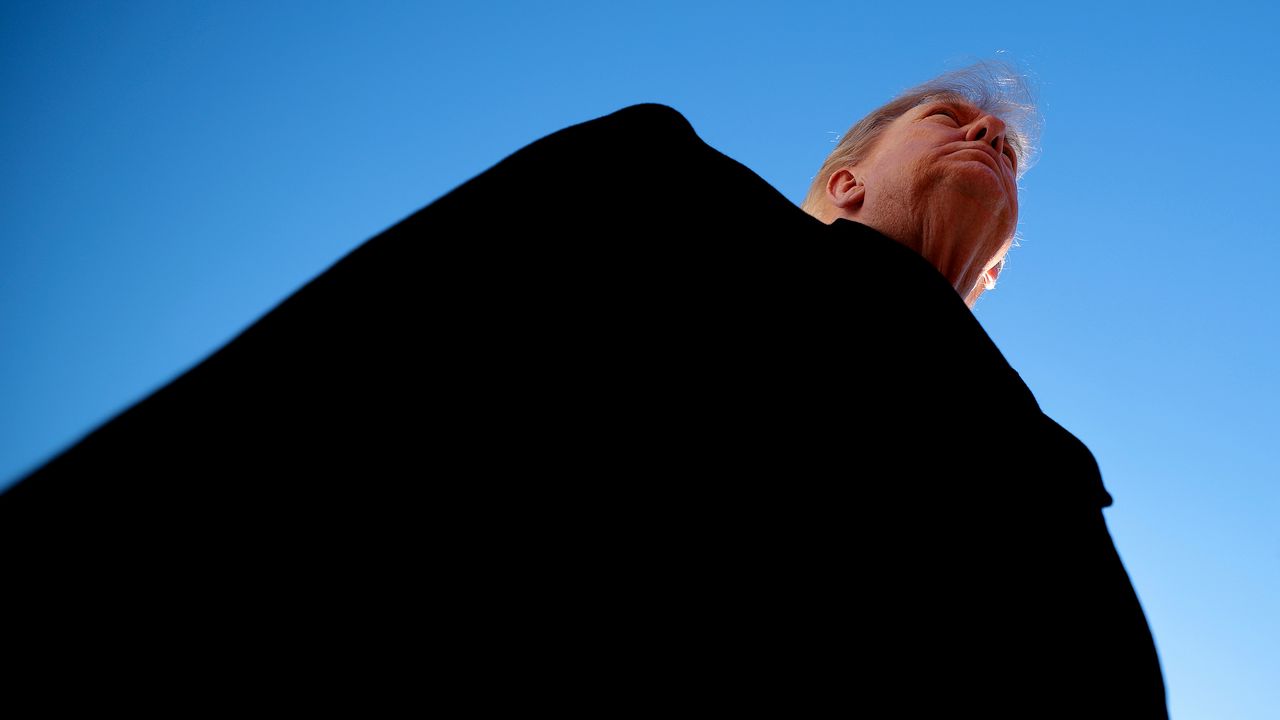
The most important tripartite meeting of the twentieth century required a gruelling journey. In late January, 1945, President Franklin D. Roosevelt—enfeebled, partially paralyzed, and, unbeknownst to all, in the final months of his life—made the transatlantic crossing aboard an American heavy cruiser, in constant threat of attack from German U-boats. After ten days, the warship reached the Mediterranean island of Malta, where Roosevelt met the British Prime Minister Winston Churchill. They then flew, in military planes, to an airfield in Soviet-controlled Crimea, and, after landing, the delegations motored by jeep over the peninsula’s southern mountain ranges to finally arrive at their destination—a refurbished old tsarist resort in Yalta, on the Black Sea, a town that, Churchill reportedly grumbled to the Americans, was mostly “good for typhus and deadly lice.” There, they met the Soviet leader Joseph Stalin, who, because of an aversion to flying, had travelled to Crimea in an armored train loaded with anti-aircraft cannons and roof-mounted heavy machine guns.
The following eight days of deliberations more than justified the trip. The Yalta Conference is now remembered as the summit that prefigured a new global order. The leading Allies firmed up plans for Nazi Germany’s defeat and carved war-torn Europe into separate zones of influence and control. Crucially for the United States, Roosevelt enlisted Stalin in the effort against Japan and secured an agreement on the framework of the institution that would eventually become the United Nations. “We shall have to take the responsibility for world collaboration, or we shall have to bear the responsibility for another world conflict,” an increasingly ailing Roosevelt said, in a March 1st address to Congress, after returning home.
Still, for many in Europe, Yalta is remembered not as a milestone of international coöperation but as the moment a vast swath of the continent was consigned to life behind the Iron Curtain, extinguishing the political aspirations of a slate of smaller countries amid the bargaining of great powers. If not an outright betrayal—Roosevelt had little ability to dictate terms to Stalin, whose forces were doing much of the work in rolling back Nazi conquests and whose support he still needed on other fronts—it was, as the former President Richard Nixon put it decades later, “a tragedy.” The current Ukrainian President, Volodymyr Zelensky, has said he fears that that tragedy will repeat itself this week, when President Donald Trump will travel, in far greater comfort and speed, to the southern Chinese megalopolis of Shenzhen to meet the Russian President, Vladimir Putin, and the Chinese President, Xi Jinping, on the sidelines of a major regional conference. “We really don’t want this to turn into ‘Yalta 2, 3, 4’ with a redistribution of influence,” Zelensky said last month about the possible fallout of this conspicuous tripartite summit, while warning against any agreement about Ukraine’s future made without its direct participation.
Talks between Ukrainian and Russian interlocutors, mediated by Trump’s envoys last week in Abu Dhabi, were a dud, as Russian officials resurfaced old demands that NATO retrench its forces further away from Russia’s borders while refusing to withdraw Russian troops from Ukrainian territory. A top Kremlin negotiator, Vladimir Medinsky, even told state television that Moscow’s goal was to “create a comprehensive system” that will “become a new, modern Yalta”—in other words, a lasting deal that would guarantee Russia greater influence over countries once in the Soviet orbit. Such ambitions are fanciful. The war in Ukraine is still in full swing and has pushed some of Russia’s neighbors even deeper into the arms of institutions such as NATO. Russia has maintained its campaign of frequent, deadly air strikes on Ukrainian population centers, and Ukrainian long-range drones have struck targets deep inside Russia, including critical infrastructure and oil refineries. (On Tuesday, in retaliation for Russian attacks, Ukraine appeared to severely damage the main bridge connecting Russian-occupied Crimea, including Yalta, to Russian territory on the other side of the Kerch Strait.) Both countries are in rough shape: Ukraine is short of manpower and theoretically bankrupt, in desperate need of European cash to stay afloat; Russia has lost tens of thousands of soldiers each month in the “meat grinder” that is Ukraine’s southeastern front. “Putin is floating ideas for redrawing Europe’s security order,” the Ukrainian foreign minister, Andrii Sybiha, told the Wall Street Journal last weekend. “In his dreams, he sees himself in Yalta in 1945. The problem is, to propose ideas on that scale, you first need to win a world war.”
In Trump, Putin has an American President who seems willing, even eager, to antagonize the Europeans and bring Russia out of the geopolitical cold after years of international sanctions. Dmitri Trenin, the president of the Russian International Affairs Council, a think tank in Moscow that was created by the Kremlin, told me that Trump is the only prominent Western leader willing to “discuss and consider what Russia regards as its legitimate national-security interests.” Even if Russia would likely not “draw any material benefits” from the summit, Trenin added, its participation itself is a “message that all the attempts to cancel Russia or to isolate Russia have been reduced to naught.” There will likely not be any more of a message than that. Shenzhen in 2026 is not Yalta in 1945. The Allied leaders convened when the Axis powers were nearing defeat. In a world shattered by conflict, the Allies had the accrued legitimacy to lay the foundations of the post-war international order.
None of the three who are meeting in Shenzhen can claim anything close to a similar mandate: Trump goes to China in the wake of his party’s generational wipeout in the midterms, and of the ongoing failure to extract himself from the U.S. war with Iran. He will be not simply a “lame duck” for the remainder of his Presidency, mused The Economist, but “a destructive Angry Bird,” moodier and even more mercurial as he tries to salvage his cratering legacy. Putin, meanwhile, is no Stalin; he has expended more than a million Russian lives in prosecuting a failing, revanchist war that’s claimed only a fraction of Ukrainian territory. Putin’s Russia is not a global superpower but a shrinking state with an economy the size of Italy’s and a deepening, vassal-like dependence on China. And Xi himself faces profound economic headwinds at home, while contending with a thicket of geopolitical realities abroad, including his inability to assert Beijing’s control over Taiwan.
For Putin, there’s a clear upside in being part of the spectacle alongside the leaders of the world’s two economic juggernauts. Trenin told me that the three powerful states sit in a geopolitical tier of their own, though he acknowledged Russia’s weaker, “unequal” status compared with the other two. “Each of those three countries is stubbornly independent,” he said. “Each of those three countries represents a civilization of its own.” Civilizational thinking is of the Zeitgeist—it suffuses Putin’s Russian nationalism and underpins Xi’s vision of China as a leading civilization-state with a distinct sphere of influence. Trump’s Secretary of State, Marco Rubio, has repeatedly turned to his understanding of the United States as the expression of a particular, muscular idea of Western civilization, while attacking international law and the “globalist” bureaucrats who propagate universal values. In a speech last Friday, Rubio declared, “Stop quoting laws to men with swords”—a line attributed to the ancient Roman general Pompey, who supposedly said it when dismissing a local faction who were appealing for their ancestral rights in a city he was intent on subjugating. (What Rubio failed to mention was that Pompey would later be brought down by yet other men with swords.) Carl Bildt, a former Swedish Prime Minister, told me that Putin and Xi “want to create the impression of a post-Western world,” and that Trump now “plays along with them.”
Bildt also expressed doubt that the meeting would achieve anything of substance. Trump is headed to Shenzhen with a lot on his plate, including an apparent desire to get his counterparts to commit to some sort of verification agreement surrounding their nuclear arsenals. But he has few means to achieve much, if any, of it. Trump is unlikely to solve anything related to the crisis with Iran, and his lead diplomatic envoys, Jared Kushner and Steve Witkoff, won’t even be there: both are headed to Berlin to attend a European meeting on Ukraine that will serve as something of a juxtaposition to the summit in Shenzhen. And after the nominal détente in the trade war that Trump thrashed out with Xi in September, few analysts expect significant progress in Sino-U.S. ties, or any meaningful advances on their existing dialogue and disagreements around A.I., its global governance, and the procurement of advanced chips. Xi, meanwhile, reportedly dismissed the prospect of an agreement on Ukraine in conjunction with Trump and Putin. “He explicitly pointed out that this is a European conflict, in which the Europeans must also be at the table,” the German President, Frank-Walter Steinmeier, told the public broadcaster ARD after meeting Xi a few weeks ago.
The Chinese aren’t interested in the optics of another Yalta, either. “It is not in China’s natural playbook to do such things,” Kevin Rudd, a former Prime Minister of Australia and an expert on Chinese politics, told me. “China, in approaching such a summit, will be intrinsically distrustful of both American and Russian motivations. China will be seeking to have a maximally scripted, minimally content-related meeting.” He added: “Yalta divided Europe. This is not going to divide anything.” ♦
来源:纽约客中文网