 讲知识 · 讲经验 · 讲未来
 人人可分享 · 处处是课堂
 科技 · 财经 · 游戏 · 快讯,每日更新
 诚搜315观察网
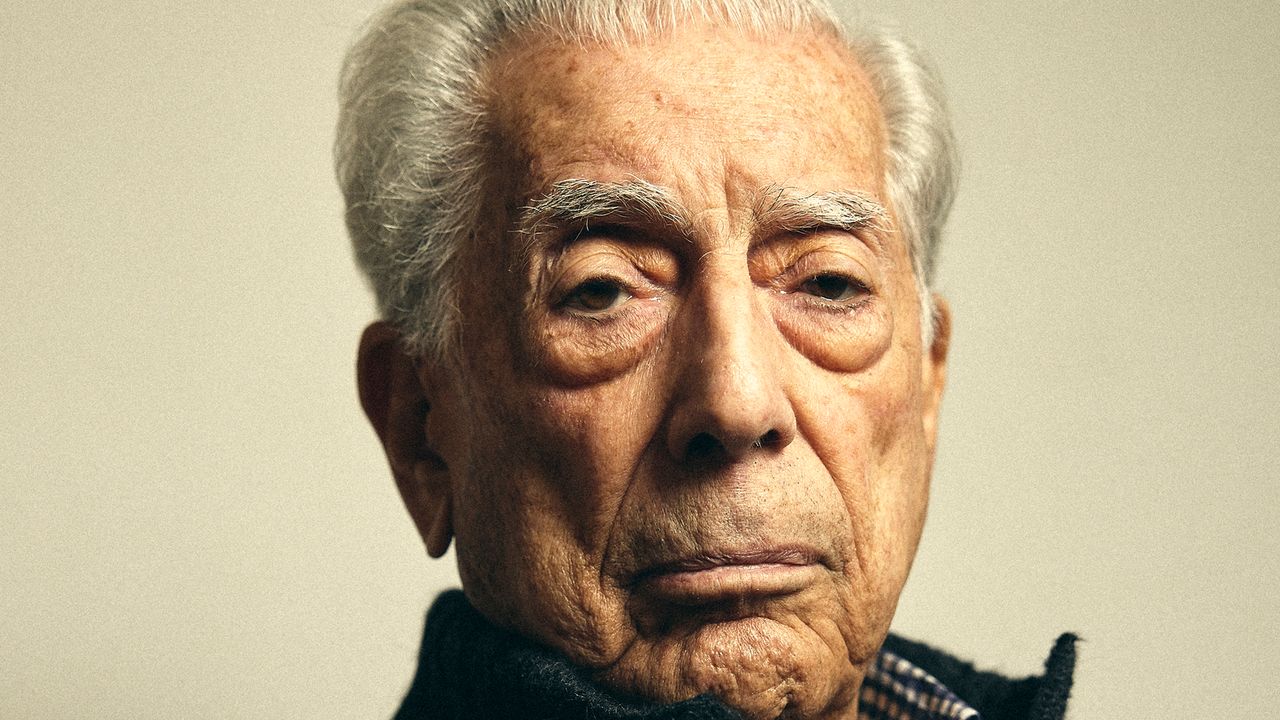
Three weeks before the legendary Spanish literary agent Carmen Balcells died, in 2015, she sent a letter to the English literary critic Gerald Martin, who was working on a biography of her longtime client Mario Vargas Llosa, the Peruvian novelist and winner of the Nobel Prize in Literature. Martin, a scholar of Latin American literature, had known Balcells for decades; he had written what is considered the definitive biography of one of her other clients, Gabriel García Márquez. She had long advised Martin not to dwell on Vargas Llosa’s turbulent love life, but she had changed her mind. “Forget his literary career,” she advised, “forget his political career and write a soap opera all about his love affairs.”
The life of Vargas Llosa, who died last year, at the age of eighty-nine, could indeed be told as a soap opera. At nineteen, he married his uncle’s sister-in-law, Julia Urquidi, who was ten years his senior and who, Martin writes, he had regarded as an aunt when he was a child. At twenty-nine, he left her for his first cousin Patricia Llosa, Julia’s niece, with whom he had three children, and over the following decades he had a string of affairs, including one with the wife of Patricia’s brother. But what changed Balcells’s mind was Vargas Llosa’s announcement, at the age of seventy-nine and just days after celebrating his fiftieth wedding anniversary with Patricia, that he was leaving her for Isabel Preysler, a Filipina Spanish socialite who had previously been married to Julio Iglesias. Even Balcells, who had worked with Vargas Llosa since the beginning of his career, was shocked.
If Martin had taken Balcells’s advice and focussed only on Vargas Llosa’s personal life, the result would still have been a revealing portrait of the writer. But his literary and political lives were just as rich and sensational. He was astonishingly prolific, publishing twenty-six works of fiction, fifty-five of nonfiction, eleven plays, and thousands of newspaper and magazine articles. His work ranged from the sophisticated and perfectly executed novels of his youth to the simpler, commercial books of his later years. He also underwent one of the most dramatic political transformations of any Latin American public intellectual, moving from an early commitment to socialism and, initially, to the Cuban Revolution in the nineteen-sixties, through free-market conservatism in the eighties and a run for the Presidency in 1990, to an embrace of far-right leaders, including Peru’s Keiko Fujimori, Brazil’s Jair Bolsonaro, and Chile’s José Antonio Kast, in this decade. What ties together the personal, the literary, and the political? In “Mario Vargas Llosa: A Life,” an eight-hundred-page biography to be published by Bloomsbury on November 17th, Martin argues that it is the writer’s lifelong drive to escape boundaries, to be, in Martin’s words, “as free as was humanly possible.”
Martin first met Vargas Llosa in London in 1967, when they both attended a lecture by the Guatemalan novelist Miguel Ángel Asturias, who won the Nobel Prize in Literature later that year. Vargas Llosa was thirty-one and already the author of two acclaimed novels. He was “the latest and greatest prodigy of Latin American literature so meeting him was a great privilege, but I also heard, that same day, about a Colombian novelist called Gabriel García Márquez, who was about to publish a novel in Buenos Aires three weeks later that many thought would be a sensation,” Martin writes. That novel was “One Hundred Years of Solitude.” In 2009, Martin published his biography of García Márquez, and his work on it informs this new book. The two writers were contemporaries and close friends until 1976, when, at a movie première in Mexico City, Vargas Llosa punched García Márquez in the face, knocking him to the ground, in what became the most talked-about estrangement in Latin American letters. Many attribute it to jealousy over Patricia; Martin ascribes it to literary rivalry.
Martin stayed in touch with Vargas Llosa for the next fifty-eight years, until the writer’s death. For the biography, Martin draws on some hundred and fifty conversations with him and with key figures such as Julia and Patricia; Vargas Llosa’s children; Balcells; and García Márquez’s widow, Mercedes Barcha; and on the writer’s personal archive. Martin traces what he sees as Vargas Llosa’s desire for freedom to his early childhood. Born in Arequipa, Peru, in 1936, he moved as a young child with his mother, Dorita Llosa, to Cochabamba, Bolivia, where her family, who were upper middle class “with decidedly aristocratic aspirations,” had settled. He was adored by the Llosas, for whom he wrote and recited poems. He was both extremely coddled, sleeping in the same bed as his mother until he was almost eleven, and also allowed to roam the streets with his friends.
When he was almost ten, the family moved back to Peru, to the northern city of Piura. He had believed that his father, Ernesto Vargas, was dead, but he was not; a year later, in 1947, Dorita suddenly introduced them, and mother and son moved to Lima to live with him. There has been much speculation about his parents’ separation and subsequent reunion, but the reasons, Martin writes, remain a mystery. Ernesto, a radio operator for an airline, was the opposite of the Llosas: a working-class, violent man who, after Mario’s birth, had married and left another woman, with whom he’d had two children. He abused Mario physically and psychologically and sent him, when he was fourteen, to the Leoncio Prado Military Academy, in Lima. It was a brutal place, but Mario was relieved to be away from his father, whom he hated for the rest of his life. In Vargas Llosa’s own telling, the childhood crossing from paradise to hell is what made him a writer.
He quit the military academy after two years and moved back to Piura, where he lived with his uncle Lucho (Patricia’s father) and his family. He never got his mother back. Dorita and Ernesto eventually moved to Los Angeles, and when Ernesto died, years later, Vargas Llosa expected that Dorita would move in with him, but she chose not to. Deprived of that closeness with his mother, Martin writes, Vargas Llosa chose both his wives from her family.
He started writing young: first poems for the Llosas, then erotic stories and love letters, for cadets at Leoncio Prado. When he was fifteen, he wrote his first significant work, a play, “The Flight of the Inca.” He finished high school in Piura, and worked as a journalist in that city. After graduating, he returned to Lima to study literature at the National Major University of San Marcos, Peru’s main public university. He was a voracious reader, particularly of William Faulkner, Victor Hugo, Alexandre Dumas, Emilio Salgari, and, later, Jean-Paul Sartre. Convinced that he would never become a great writer if he stayed in Peru, Vargas Llosa moved to Madrid with Julia, whom he married while attending university, to work on a doctorate, and then to Paris. After nearly a decade of marriage, he left her for Patricia, whom Martin credits with a critical role in Vargas Llosa’s sustained commercial success, managing both his career—she liked to say that Vargas Llosa was “useless” for everything except writing—and their family. Her support allowed the couple to lead a nomadic life between London, Washington, Lima, and Madrid, with summers, when the children were home from boarding school, spent in the Dominican Republic, and winter breaks in Marbella.
Still, Vargas Llosa’s success relied mostly on his own discipline. Martin argues that “his energy, his stamina, his intellectual hunger, his sheer desire to win and above all, his extraordinary appetite and capacity for hard work” were as important as his talent. Even at the age of eighty, his energy was undiminished; Isabel Preysler, fifteen years younger, had a hard time keeping up with him when he dragged her, in Martin’s words, “round Peru and up to Machu Picchu.”
Early success further fuelled his drive. His first novel, “The Time of the Hero” (or, in the much better Spanish title, “La ciudad y los perros,” “The City and the Dogs”), became an immediate sensation when it was published, in 1963, having won prepublication, in 1962, the Premio Biblioteca Breve, a career-making literary award. The book’s timing was fortuitous: Vargas Llosa arrived as one of a generation of writers who were transforming the continent’s literature. Together with “The Death of Artemio Cruz” (1962), by Carlos Fuentes, and “Hopscotch” (1963), by Julio Cortázar, “The Time of the Hero” helped launch the Latin American Boom, which reached its peak with “One Hundred Years of Solitude.”
Vargas Llosa was twenty-two when he started writing his novel and almost twenty-six when he finished it. It follows a group of cadets at the Leoncio Prado Military Academy, where a culture of hazing escalates into murder; the coverup that follows exposes the corruption and hypocrisy of the institution. The book draws directly on his years at the academy and portrays the institution as a microcosm of Lima—with the same culture of social hierarchies, class prejudice, and machismo. He tells the story nonlinearly, constantly shifting perspectives and time lines, a technique that came to define his realistic fiction.
Martin read “The Time of the Hero” soon after meeting Vargas Llosa in London. He writes:
I had already noticed that Latin American writers were given to mythological, “magical realist” or expressionist forms of writing and that the continent almost completely lacked the kinds of realist and naturalist writers seen in Europe in the nineteenth century. The exciting thing—indeed the unique thing—about Vargas Llosa was that he has the social vision and critical bite of those European realists combined with the cinematographic techniques and streams of consciousness developed by the European and North American “modernists” like James Joyce, Virginia Woolf and William Faulkner in the 1920s.
Vargas Llosa’s s next novels—“The Green House” (1966), “Conversation in the Cathedral” (1969), “Captain Pantoja and the Special Service” (1973), and “Aunt Julia and the Scriptwriter” (1977) are equally dazzling, and all draw on his own experiences between 1947, when he met his father, and 1958, when he and Julia left Peru for Europe. These books alone would have made him deserving of the Nobel Prize, Martin writes, and Vargas Llosa wrote them all before he had turned forty-two.
Martin seems to assume that his readers have read the novels, so his references to their plots may be hard to follow for those who haven’t, but he compensates by uncovering connections between the characters in them and people in Vargas Llosa’s life. Again and again, Martin writes, he used his fiction to exact revenge on those whom he felt had wronged him, or seemingly, just to humiliate people in his life, sometimes using their real names or circumstances. The most obvious example is “Aunt Julia and the Scriptwriter,” a comedy based on his first marriage, in which Julia appears under her first and last names and is made older than she was. (She was so hurt by the portrayal that she later wrote her own account of their marriage, “Lo que Varguitas no dijo”—“What Varguitas Didn’t Say.” Varguitas was the nickname she gave him when he was young.)
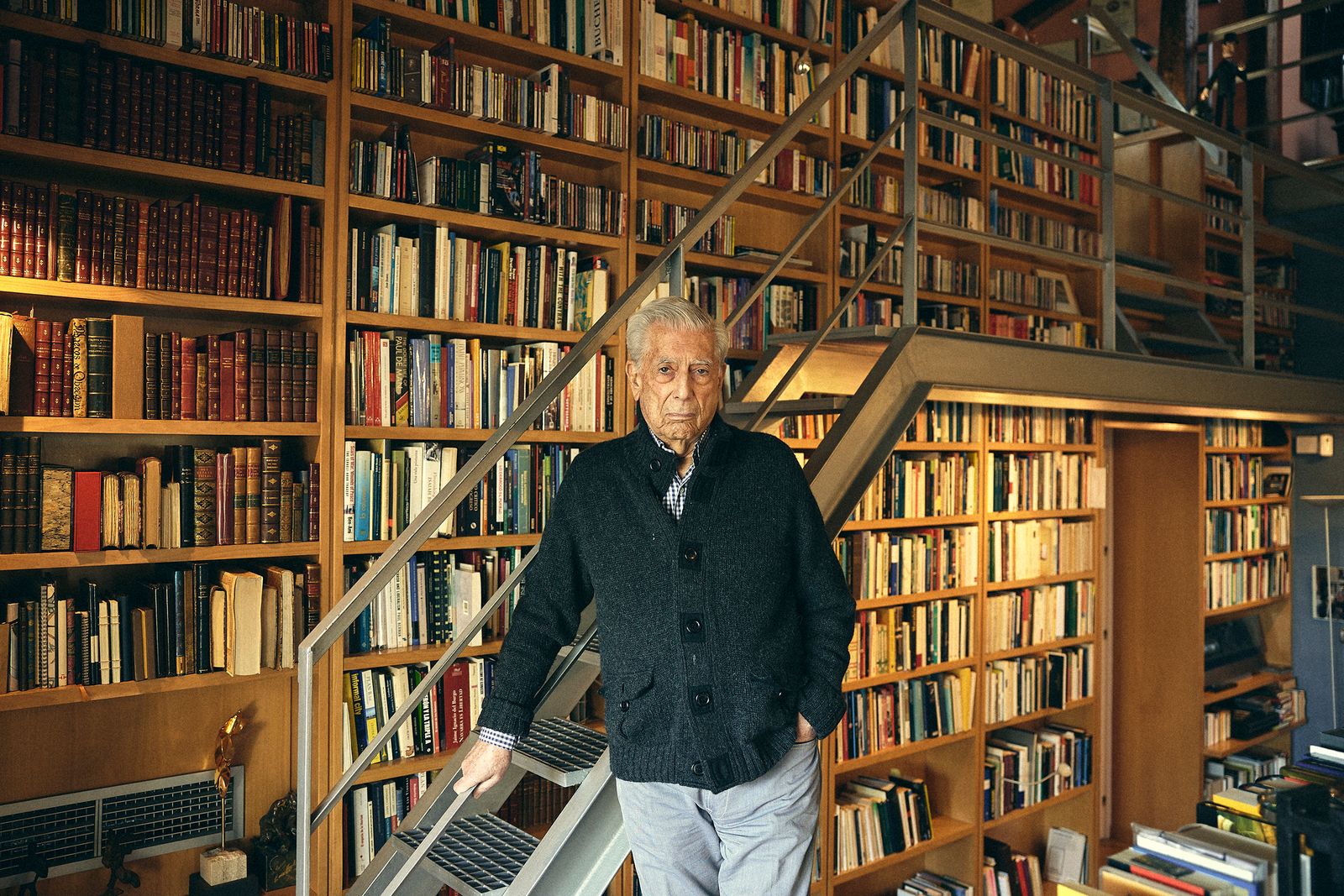
In a later novel, “The Real Life of Alejandro Mayta” (1984), Vargas Llosa takes aim at former comrades in the Communist Party in Lima, which he had briefly joined while he was at university, slightly altering their names and portraying them as opportunistic and pathetic. These in-jokes “seem mainly for Mario’s own satisfaction,” Martin writes. But in that novel, he also aired his new contempt for the left. He had become “a fiery and unapologetic supporter of Margaret Thatcher and Ronald Reagan and the neoliberal individualism they espoused,” Martin writes. It’s hard to overstate how controversial this shift was at the time—on a continent where most intellectuals have traditionally embraced progressive views—or how fundamental Vargas Llosa became in strengthening neoliberal projects in Latin America and Spain. According to Martin, “No novelist had a greater effect, for good or ill, on the histories of such major Latin American countries as Cuba, Mexico and Venezuela, and in his own country, Peru, he had a decisive influence on the results of every presidential contest between 2001 and 2022.” But he paired his free-market conservatism with a progressive social agenda—including support for gay marriage, abortion, and secularism—that he presented as fiercely pro-freedom. In 1987, he co-founded a political party called Movimiento Libertad (Freedom Movement). Martin is openly critical of this political transformation, in which he finds his clearest evidence of his subject’s self-serving individualism. As he puts it, “Vargas Llosa wanted to be free of responsibilities: free of engagement, free of Marxism, free of Cuba and its Revolution, free of Peru, its nationalism and all its insoluble problems.”
Vargas Llosa’s political evolution is well known. More surprisingly, Martin places classism at the heart of the writer’s political ideology, tracing it to his hatred for his father, a feeling that became a deep antipathy for Peru’s working classes and, particularly, for its Indigenous population—the bottom of the class pyramid. Vargas Llosa’s “anti-Indian postures” were at “the centre of his thinking as a Peruvian writer,” Martin writes. He also cites an infamous report that Vargas Llosa wrote after chairing a government commission that investigated the 1983 killing of eight journalists and their guide by Quechua-speaking residents of the Andean community of Uchuraccay. The report, which portrays the villagers responsible as “primitive,” drew sharp criticism for its bias and superficiality. Peru’s Truth and Reconciliation Commission later found that military officers and counterinsurgency police had encouraged the villagers to kill strangers who arrived on foot, on the assumption that they belonged to the Shining Path guerrilla group and were coming to attack them.
Vargas Llosa’s sense of his country of birth is painfully described in a chapter about his run for the Presidency, after spending long stretches of the previous three decades in Europe. Martin points us to Vargas Llosa’s “astonishing” admission in “A Fish in the Water,” his memoir of the campaign, that only when he had to travel the length and breadth of Peru did he realize that it was a poor country. He was a Peruvian, Martin concludes, “who didn’t like Peru.”
Vargas Llosa lost the election in a runoff to Alberto Fujimori, by nearly twenty-five points. Fujimori, the son of Japanese immigrants, was a political outsider and a virtual unknown in a field of eight other candidates (“Ten days before the election Vargas Llosa had never even heard of him,” Martin writes), but he spoke like a man of the people. (Fujimori held office for a decade and later served sixteen years in prison for corruption and human-rights abuses.) Defeated, Vargas Llosa returned to Europe, became a Spanish citizen, and focussed on his writing. His novels became, Martin writes, “a less nuanced and more simplistic world view—that of freedom through neoliberalism.”
Yet winning prizes remained a “major objective,” Martin writes, and he was “picking up dozens every year,” but not the Nobel. He was aware, Martin also notes, that “rumour had it that he hadn’t won the prize because he and his work were now seen as too reactionary,” and he set out to write novels with more progressive characters and themes. These included “The Way to Paradise” (2003), about Flora Tristán, a real-life nineteenth-century feminist who had a Peruvian father and was Paul Gauguin’s grandmother, and “The Dream of the Celt” (2010), about Roger Casement, a diplomat, human-rights activist, and Irish nationalist executed by the British in 1916. In 2010, Vargas Llosa was, finally, awarded the Nobel, as the organization’s citation put it, for “his cartography of structures of power and his trenchant images of the individual’s resistance, revolt, and defeat.” On receiving the news, he was “jubilant,” initially telling Patricia not to share it with their children in case it wasn’t true. “The Prize had liberated him and he had become, at last, a free man,” Martin concludes.
At the end of the biography, Martin makes a confession: “I had always imagined that towards the end of my work on this biography I would have a once-and-for-all let-it-all-hang-out heart-to-heart with Mario, with both of us asking and answering every question, saying what we thought and finally telling all.” That moment never came, so Martin was left to let it all hang out in his book. (The Spanish translation will come from Planeta, after Debate—an imprint of the Penguin Random House group that has published most of Vargas Llosa’s books in Spanish—dropped it for painting a portrait of Vargas Llosa that was incompatible with its view of him.) Martin was deeply disappointed, almost heartbroken, by his subject, and from time to time his judgment gets in the way of the story. “He proclaimed himself a man of integrity with an always open mind (and I believed him),” Martin writes. Even so, he pulls off a monumental feat, showing how the inner forces that gave us these immortal novels also created the complicated person who wrote them. ♦
来源:纽约客中文网