 讲知识 · 讲经验 · 讲未来
 人人可分享 · 处处是课堂
 科技 · 财经 · 游戏 · 快讯,每日更新
 诚搜315观察网
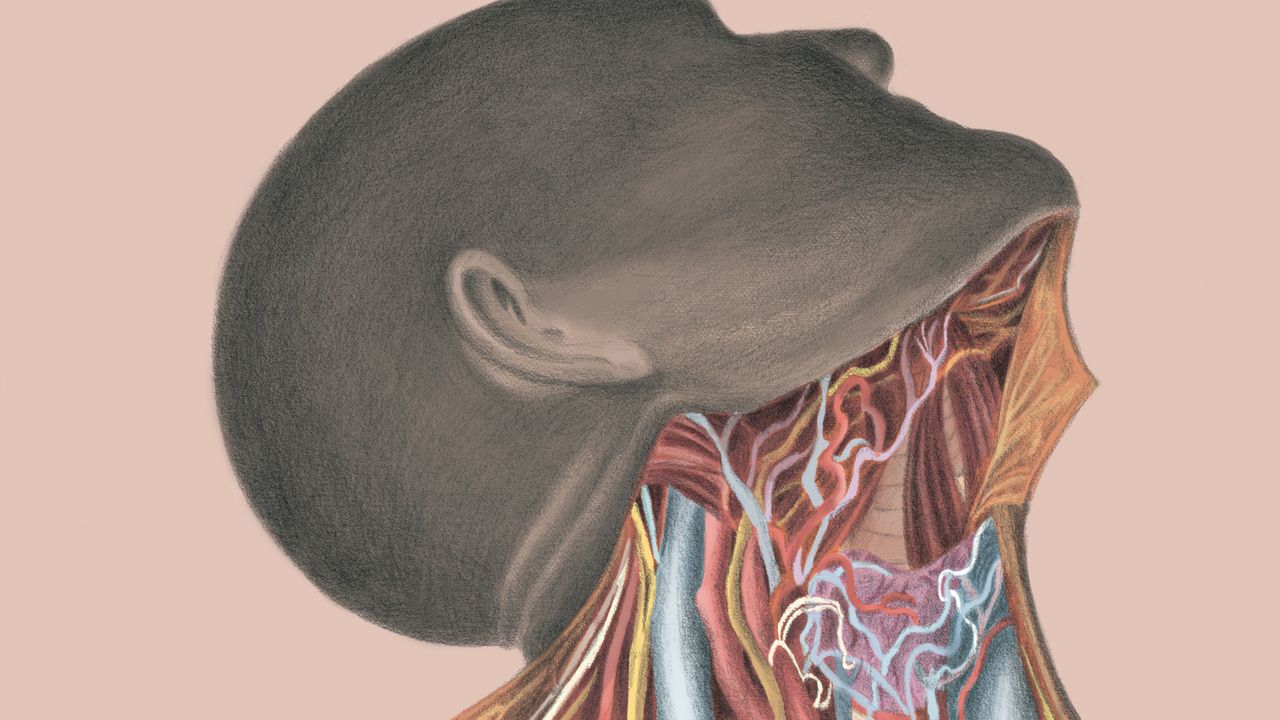
Sundip Aujla, a London-based alternative-medicine practitioner with a sharp nose and a long, graying beard, has trained in osteopathy, psychotherapy, Pilates, and clinical hypnotherapy during his thirteen-year career. As an adolescent, however, he was better acquainted with delinquency. Once, when Aujla was sixteen, he was being chased by a gang of young men with knives and took refuge in a public library in Birmingham, England. Hiding in the stacks, he selected a DVD at random and inserted it into a player. “I needed an excuse not to get kicked out,” he told me. The video, part of a series called “Integral Anatomy,” showed a man named Gil Hedley preparing to dissect a human body layer by layer. Hedley spoke in philosophical, almost spiritual terms. “Like astronauts who bravely approach the frontiers of outer space in their quest for discovery, together we will become somanauts navigating our bodies to the frontiers of inner space,” he declared. The dissection footage was interspersed with soothing clips of flowers, clouds, spiders, and a babbling stream. “We will look to the intelligence and forms of nature to help us understand the body,” Hedley went on. Aujla was transfixed. “It made me realize that there’s an entire landscape inside of me that I’m not even considering,” he said. About five hours later, he’d watched all of the library’s videos of Hedley. He left determined to change the trajectory of his life. First, though, he stole the DVDs.
In the years that followed, Aujla watched hundreds of hours of dissection footage. He briefly pursued a medical degree but resented what he considered a reductionist conception of the body. “Gil’s holistic approach became a curse and a blessing,” he told me. “Because of him, I couldn’t get on board with the traditional medical mind-set—but he also set me on the path I’m on today.” Aujla learned that Hedley held ten-day dissection workshops at the Institute for Anatomical Research, a nonprofit facility in Colorado Springs, and in 2025 he enrolled. He and several other participants, most of whom had never dissected a human, were assigned the cadaver of an obese woman. This will be tough going, Aujla thought. For days, they cut away skin and body fat, and Aujla grew frustrated. “You start projecting things, like, This is what becomes of a person if they make bad choices,” he said. Hedley preached patience. Then the group arrived at the muscle layer, and suddenly the body “looked like a Greek statue,” Aujla recalled. “It was unbelievable.” He paused. “Suddenly, you think of two things. First, which layer of me do I hate? Second, if I’m in conflict with someone—if there’s a layer of their persona I’m struggling with—maybe there’s also a layer below that I can really connect with.”
Human dissection has long been the province of doctors and medical schools. In some countries, it is mostly illegal for non-clinicians; in the U.S., there are only a handful of dissection laboratories that are not affiliated with universities. Hedley has argued that dissection should be much more widely available to the public, and has described himself as being “on a mission to democratize knowledge of the body, and expose the profound gift of it.” Modern life is often digital and cerebral instead of corporeal, which likely contributes to cultural pathologies such as anxiety, alienation, and distraction. There’s a reason that “Touch grass” has become the admonition of our era, and that somatic psychotherapy, which attempts to treat mental health by drawing attention to bodily sensations, is growing in popularity. The writer Faith Hill has observed that people used to try to transcend the body but that today “the existential quest is inverted. . . . They want to reinhabit it.”
Earlier this year, Hedley received a stern e-mail from Thomas Champney, a biology professor at the University of Miami Miller School of Medicine. Champney serves on the Anatomical Board of the State of Florida, which oversees donations of human bodies for educational purposes. “Did you have explicit consent from the individuals to photograph them and post their pictures on a non-password protected, fully accessible website?” he asked. Some images from Hedley’s dissections had been shared on social media. Champney attached ethical guidelines that he’d co-written concerning the display of anatomical images; they stated that limiting access to photos is “necessary to uphold the dignity of the individuals.” Hedley wrote back that the “good done sharing my images far exceeds the limited instances of misuse on the part of unscrupulous folks.” (He also said that, when he’d learned about the posts, he requested that they be taken down.) “It’s not respectful toward the deceased,” Champney told me. He argued that promoting dissection in the absence of a clear pedagogical need can veer into morbid “edutainment.”
I was startled by the gulf between Champney’s perspective and that of Hedley and his followers. During our conversation, Aujla told me about a dream of his that he’d shared with others during his dissection workshop. In the dream, souls congregate in a waiting room before they are to be incarnated on Earth; they learn who their parents are, and what joys and sorrows they’ll experience. Then they’re given scuba suits—bodies—with which to dive into the world. Hedley suggested that the souls were telling one another to make the most of what they’d been given: “Love it, care for it—it’s the only suit you’re going to get.” Ten minutes after Aujla recounted the dream, he and his fellow-attendees were cutting into cadavers. “You hear something like that and you’re not thinking about the origins and insertions of muscles anymore. You’re thinking about something much deeper,” he told me. “I don’t think another degree was going to teach me that.”
On a crisp morning in September, I pulled into the Kissing Camels Office Park, in Colorado Springs. A two-story brick building, set against the Rocky Mountains, housed both a massage school and the Institute for Anatomical Research. In a small room at the back of the building, I joined eighteen people who, like me, had paid thirty-five hundred dollars to participate in a six-day dissection workshop. Most were middle-aged white women. We sat in folding chairs around a wooden table on which rested four lit candles and a replica of the C2 vertebra, adorned with a jewelled necklace. Two of the women had purple hair; one of them joked that they must be related. “Welcome Somanauts!” was scrawled in orange marker on a whiteboard. Above it hung a sign with cursive lettering: “Mortui Vivos Docent”—the dead teach the living. Hedley, who was dressed fully in black, addressed us. “All this world is a mirror reflecting your light back to you,” he said. He opened a book and, gesticulating wildly, read a poem, one of dozens that his dissections have inspired him to write. The class sat enraptured.
Hedley asked us to share why we’d signed up. A young man from Los Angeles had recently started a medical-massage company. “I work on muscles all day but have never actually seen them,” he said. A woman seated near him nodded vigorously. “It’s like having a pen pal you’ve been corresponding with for years, and now you finally get to meet them,” she said. Another woman had taken one of Hedley’s previous courses and was inspired to start teaching dissection at a similar lab in North Carolina. “Gil is my dissection dad,” she joked. Later, a somatic psychotherapist admitted, “I’m not sure why I’m here. I just feel like it’s part of my spiritual practice.”
The group included physical therapists, chiropractors, yoga instructors—people who probably spend more time manipulating people’s bodies than I do as an internal-medicine doctor, distanced as I am from the body by stethoscopes, CT scans, and medical records. Several of the attendees told me how pleased they were that a doctor had joined a course that championed a holistic—as opposed to a siloed and reductionist—approach to the body. They seemed to view the medical field as unduly myopic. It reminded me of an old joke about why an orthopedic surgeon might refer a patient to his colleague: “I specialize in right shoulders. He does the left.”
We migrated to a well-lit area with gray cabinets and steel sinks: the dissection room. At one end was the Siberian Suite, a walk-in freezer that stored as many as sixteen “unfixed” bodies—those which hadn’t been chemically preserved. At the other end was the Teachers Lounge, a refrigerated room where half a dozen embalmed bodies lay in body bags. Towels and cleaning agents hung on the walls; a metal cart held trays of scalpels.
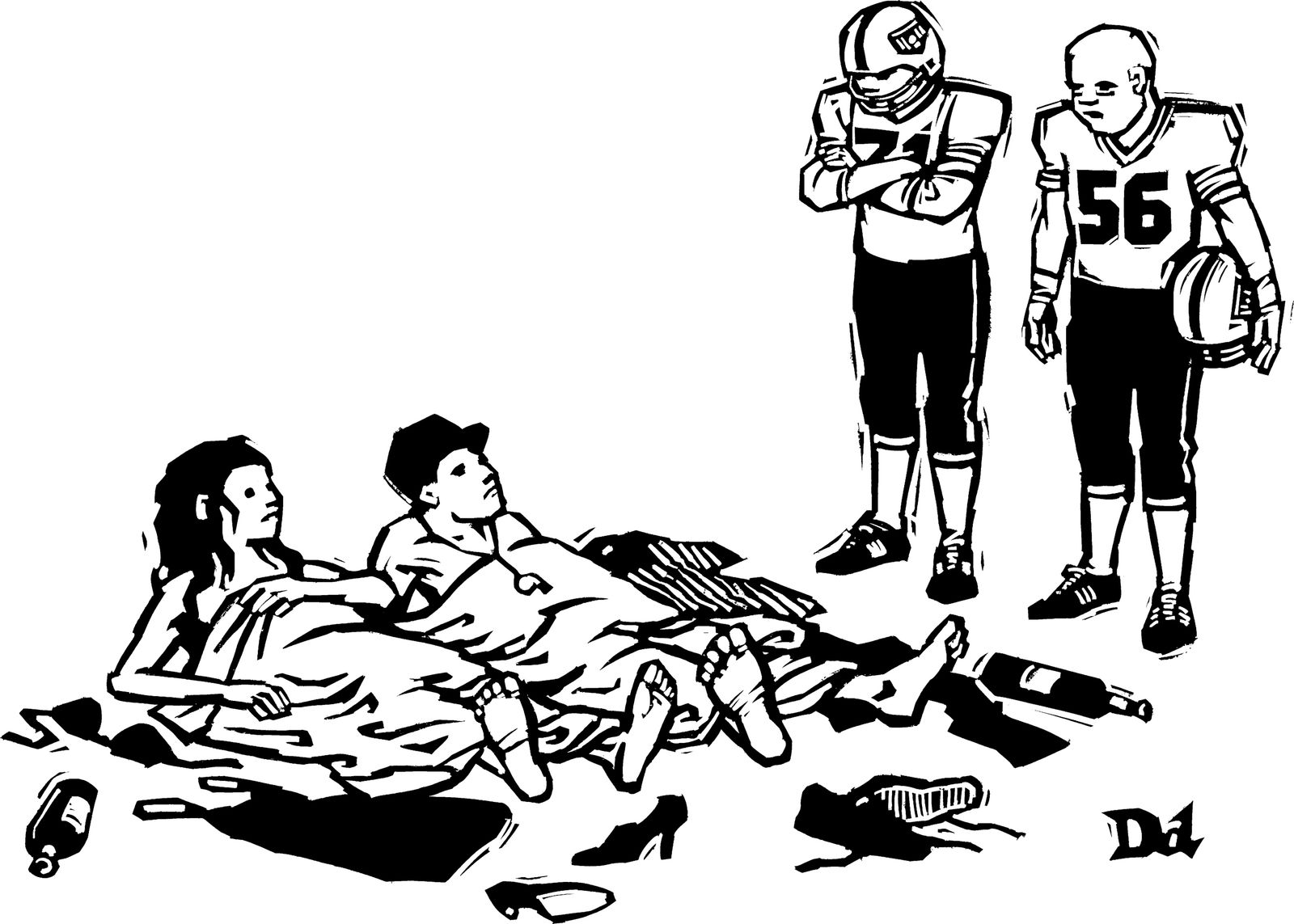
Hedley and his assistants pushed three metal dissection tables to the center of the room. On top of each table was an embalmed body, and on top of each body was a white sheet and various items: candles, “Somanaut” decals, a stone with an inscription reading “Gratitude.” We formed a circle around the cadavers, held hands, and swayed. “A year ago, these people were walking around just like you and me,” Hedley said. “We give thanks that their intention to teach has met your intention to learn.” Hedley began to stomp his feet, and the rest of us followed suit. “This week is an extreme exercise in staying present, in this place, in this moment,” he said. Then he removed the sheet covering the first cadaver.
Hedley grew up in northern New Jersey. His mother was a typesetter, and his father was a building manager and a floor salesman. He first encountered dissection in the early eighties, when his high-school biology class took a field trip to a nearby podiatry college. There were human feet on shelves and partly dissected legs on tables; the experience was almost comically unsettling. Still, Hedley was intrigued. In college, he studied physical anthropology, a field that often uses skeletons to explore the evolutionary history of human beings. Then he pivoted and earned a Ph.D. in theological ethics at the University of Chicago, writing a dissertation about whether marriage was ethical for people who wanted to serve others. “I was a good Catholic boy who became obsessed with how to be a better person,” he told me. “It took me eight years to conclude that, basically, it’s O.K. to get married.” (He later got married himself, and then divorced.)
During graduate school, Hedley developed back pain, which he attributed to prolonged sitting and various neuroses. He took up Tai Chi and massage, and learned that his mother, who struggled with pain and stiffness, had benefitted from an intense, hands-on form of bodywork known as structural integration, or Rolfing. Ida Rolf, a mid-century biochemist, believed that a person’s stressors, injuries, and posture could produce patterns of tension in the body’s connective tissues. In a Rolfing program, a practitioner typically uses stretching, movement, and sustained pressure to release tissue stiffness and to improve posture and pain. But the practice itself can inflict acute pain, as when, for example, the skin is stretched perpendicular to the underlying muscles. A large-scale review funded by the Australian government found that there was “very low certainty” about the benefits of Rolfing.
Hedley was impressed enough by Rolfing that he trained to practice it himself, though he often felt that his knowledge of anatomy was lacking. In graduate school, his back pain had inspired him to spend a few weekends accompanying a medical student to an anatomy lab, and now, with a doctorate in hand, he thought, Hey, I’m Dr. Hedley! I ought to be able to get a body. Hedley, working with the Dr. Ida Rolf Institute, contacted an embalmer at a New Jersey medical school, who agreed to let him dissect during the summer session, when students were away. To pay for a cadaver and for two weeks of lab time, Hedley offered a dissection class to a handful of fellow-Rolfers. Using a step-by-step manual titled “Grant’s Dissector,” he was basically learning alongside them. “It was pretty much, like, ‘You do the leg. And you do the arm!’ ” he recalled. When they finished, he looked at the body with dismay. What a fucking hack job, he thought.
He signed up to teach dissection again the following summer, but he felt that he needed a new approach. “I couldn’t do that higgledy-piggledy mess again,” he said. He remembered a book called “Job’s Body,” which he’d read during his Rolfing certification and which organizes the body by anatomical layer and tissue type. “We’re just going to take the skin off today, fellas,” Hedley told the group. Over several weeks, they went on to remove the fat and the muscle, then they made their way through the visceral organs and the bones. After the workshop, one participant pulled Hedley aside and said, “I think you’ve got something special here.”
Hedley is now in his early sixties, with an expressive face and a mop of tousled gray hair that makes him look like a bohemian Steven Pinker. In the past three decades, he has taught his version of dissection everywhere from Boston and San Francisco to Vienna and London. He is, by most accounts, very skilled. In 2023, he performed a painstaking dissection of an entire intact nervous system. Such a dissection has been performed only a handful of times, most recently about a century ago. Afterward, Hedley embarked on what he called the Nerve Tour, delivering a five-and-a-half-hour presentation in more than a hundred cities. At the end of the talk, Hedley showed a video of himself lifting a cadaver’s nervous system as one continuous net, running from the neck to the toes. One man, moved to tears, compared the moment to witnessing Michelangelo’s Pietà.
The body under the sheet belonged to a small, elderly woman with a shaved head and a bruised chest. Her skin was Pepto-Bismol pink, a consequence of the type of embalming fluid that had been injected into her neck. She had thin calves and red toenail polish. We stared at the body; some people fidgeted uncomfortably.
The second body to be uncovered was that of a woman in her sixties who had dark, curly hair. An implanted port, allowing for the infusion of chemotherapy and other medications, was visible on her upper chest, suggesting that she may have died of cancer. “She looks like my sister,” Hedley said.
The third body was that of a slender older man with exceptionally long legs, a relatively short trunk, and large hands. I guessed that he’d had a connective-tissue disorder known as Marfan syndrome. “People want you to learn from their differences,” Hedley told the group. He attempted a wisecrack: “My dad wanted to make sure everyone saw his giant testicle!”
The class split into three groups, each of which selected a body and named it. I joined the table with the male cadaver, which we decided to call Aristotle. (The women were dubbed Nonna Marcy and Starla Marie.) Next, Hedley instructed us to stand the bodies up. “In life, we meet people vertically,” he explained. At first, I thought he was joking, but he grabbed Aristotle and started to hoist him off the table. Hedley and an assistant lifted the torso while a fellow-participant and I knelt to lock his knees in place. The body, which was heavier than I expected, nearly toppled over. I stared up at the dead man towering over me and wondered what the hell I was doing.
Most medical schools teach what’s known as regional anatomy. Students might spend a day isolating the brachial plexus—the intricate network of nerves that animate the shoulder, the arm, and the hand. Another session might focus on tracing the arteries that run through the abdomen, supplying blood to the liver, the spleen, and the gut. Medical dissectors clear away connective tissue from structures of interest; instructors sometimes insert pins or flags for identification. In this way, doctors develop a common language to talk about the body, and a precise mental map that enables medical interventions. Hedley’s “integral anatomy,” by contrast, does not necessarily isolate or name the structures that doctors care about. Integral anatomy is concerned primarily with the body’s continuities and textures, and treats connective tissue not as extraneous material to be discarded but as a system worthy of sustained attention.
After a cursory presentation on how to handle a scalpel and hemostatic forceps, Hedley directed us to remove the cadavers’ skin. “You only get one first cut,” he said. “Make it count.” Even though I was wearing a mask, the smell of formaldehyde singed my nostrils, and my eyes started to burn. I ran my gloved fingers over Aristotle’s right thigh, which felt firm and smooth, like cold leather. I made an incision from near the groin to above the knee. I was surprised by how thin the skin was—just a millimetre or two deep—and, as I worked to peel away the layer, I accidentally took part of the fatty yellow tissue below. “Got a little carried away there!” Hedley said over my shoulder. He helped me scrape the underside of the skin clean, revealing a delicate network of fibrous tissue that looked like cantaloupe rind, then gestured toward a metal bucket marked with blue tape which sat by my feet. Every bit of tissue that we removed from the body was to go in there; the remains would be cremated and returned to the family. Hedley brought over a flap of abdominal skin from Starla Marie. He shone a flashlight behind it to emphasize narrow bands of damaged collagen and elastin—stretch marks. Near the head of the table, someone cut into Aristotle’s armpit, and blood-tinged embalming fluid flowed onto the metal surface. The lab’s director sucked it up with a turkey baster. A woman working next to me indicated that she felt lightheaded and excused herself.
Madhav Gramke, a chiropractor who serves as one of Hedley’s assistants, joined our group. He had a bald head, a black beard, and lively eyebrows. As he cut away the thick skin of Aristotle’s heel, I noticed the names of the Hindu deities Radha and Krishna tattooed on Gramke’s forearm. Gramke was born in Houston, and his parents, who were Catholic, named him John. “But I always felt more like a Madhav than a John,” he told me. As an adolescent, he became an atheist, but one night in college he took LSD and watched the sun rise over the ocean. That’s God, he remembered thinking. A few weeks later, a Hare Krishna gave him the Bhagavad Gita, and Gramke eventually went to India to study with a guru who called him Madhav. Gramke said that his faiths had instilled in him a deep appreciation of the human form. Christianity teaches imago Dei—humans are made in the image of God. Some Hindus consider the body a temple for the soul. “Christian, Hindu, evolutionary biologist, whatever,” Gramke said, placing a flap of skin into the bucket. “If you pay attention, you’ll see that the body is amazingly elegant. It’s an extraordinary thing.”
The history of dissection is full of sordid episodes. A few centuries ago, many cadavers were obtained by “resurrection men,” who dug up freshly buried bodies and sold them to anatomists. Surgeons and for-profit body collectors fought over corpses after public executions. In 1752, England passed the Murder Act, which allowed for the bodies of convicted killers to be hung in chains and left to decay or to be “dissected and anatomized,” for “better preventing the horrid crime.” The first known full-body nerve dissection, conducted in 1888 and still on display at Drexel University, was reportedly performed on a Black woman named Harriet Cole; there is no record of her having given her consent. The famed Scottish anatomist John Hunter, a father of modern surgery, once hired someone to follow a nearly eight-foot-tall Irish man in the days before his death. The man, who had a pituitary disorder, did not want his body to be dissected, and arranged for his corpse to be thrown into the ocean. But Hunter conspired to bribe the undertaker, so a coffin full of stones went into the ocean instead. Hunter kept the man’s skeleton at his home.
Misconduct continues to this day. In 2024, an NBC News investigation revealed that a Texas university had been using unclaimed bodies—many of them from nursing homes, hospitals, and homeless encampments—for its anatomical-dissection program. In one case, a deceased veteran’s body was classified as unclaimed, despite the fact that his family lived nearby. Some medical companies use body parts to help them develop products; the veteran’s torso was sent to a medical-education company, one of his legs went to a Swedish device-maker, and a pair of bones from his head went to the U.S. Army. The man’s family later said that he never wanted to be a donor. Last year, a former morgue manager at Harvard Medical School was sentenced to eight years in prison for helping to steal and sell body parts that had been donated to the university, and Harvard recently agreed to a fifty-three-million-dollar settlement to compensate the families of the donors. Not long ago, the operators of a funeral home a few hours away from the Institute for Anatomical Research were sentenced to prison for harvesting and selling parts of hundreds of bodies that they’d promised to prepare for cremation.
James Pulciani, the Institute’s director for the past decade, is in charge of procuring bodies for dissection. He described the recent scandals as “a constant challenge.” “I am always trying to destigmatize this work,” he said. “I want people to see labs like ours as a third destination for the body after death. It should be burial, cremation, and anatomical dissection.” Pulciani has a graying goatee, three earrings in his left earlobe, and a boisterous laugh; in the lab, he could usually be found in purple scrubs and SpongeBob SquarePants socks. Recently, a student asked Pulciani how he should alter his diet so that his colon would not look as diseased as that of a cadaver on display. “Now that’s what I call preventative care!” Pulciani said, chuckling.
In the U.S., people who wish to donate their bodies can register with their state as organ donors (which means that the donation could directly save lives) or as whole-body donors (which is sometimes described as a donation “to science.”) Debra Szuster, who manages the whole-body donation program at the Colorado State Anatomical Board, told me that medical and dental schools are generally the first to receive donations. When there are sufficient donations, however, bodies can go to professional-development programs like those at the Institute; they are generally used within two or three years so that the remains can be returned to families. Szuster personally inspects many such organizations, to make sure that they store and treat the donations with care.
The Institute acquires about forty bodies per year. Many that do not come from the Anatomical Board come from the Institute’s direct-donation program. Pulciani often retrieves the bodies himself in a van, at times driving to morgues and funeral homes as far as three hundred miles away. “A lot of programs try to anonymize donors,” he told me. “We tend to take the opposite tack.” A few years ago, a brother of one of Pulciani’s close friends was diagnosed with pancreatic cancer. The man, who’d cycled in and out of prison, learned of Pulciani’s work during his treatment. Initially, he was reluctant to offer up his body, but Pulciani framed a donation as a way to give back. Money also played a role. The man didn’t want his family to bear the expense of his burial; if he donated his body, the lab would cover the cost of cremation. When I spoke with one of the man’s sisters, Debbie, she told me that their mother never felt comfortable with his decision. “I can’t believe they’re cutting into him like that,” she remembered her mother saying. But Debbie was moved “beyond measure” by her brother’s donation. She occasionally watches videos of his dissection and recognizes his tattoos; she thinks of the people who might learn from him. She has since filled out paperwork to donate her own body to the Institute when she dies.
Sometimes the relations are even more intimate. Hedley’s whole-body nerve-dissection project was performed on Gramke’s father, whom Hedley called Captain. Gramke, who participated in the dissection and helped film it, described the experience as intense and strange, but also “beautiful in its own way.”

Dissecting the body of someone you’ve known in life can be seen as an act of devotion or as a profound transgression. During my time with Hedley, I tried to decide which it was. Medicine discourages practitioners from treating their family and friends, and has strong norms in favor of professional boundaries, but Hedley’s work is often personal. Some anatomists I spoke to questioned whether anyone can make an objective decision to donate his body to someone he knows. “I worry about conflicts of interest,” Champney, the University of Miami professor, told me. “You don’t want situations where it’s ‘Oh, I’m not sure about this—but I’ll do it for my friend.’ ” James Cray, who directs the anatomy graduate program at Ohio State University, said, “Good stewardship is all about consent. It’s important that donors really understand how their bodies will be used and make decisions based on what’s important to them.”
In an article on best practices for body donation, the Swiss anatomist Beat Riederer wrote that dissecting a friend or a family member “seems unimaginable.” I felt the same way. Still, I had to admit that my aversion was more visceral than rational. Hedley emphasizes the distinction between a body and a person: “Cadavers are not people. They are records of people.” I could not detect anything coercive or exploitative about the lab and its work. Staff members spoke of donors with respect, even reverence. Direct donors to the Institute sign a letter of intent that encourages open conversation with loved ones, “so that everyone feels informed and comfortable” with their wishes. (It can be withdrawn at any time.) The organization’s website tells the public, “When you make a whole body donation, your legacy will live on as your body becomes a teacher in our lab.”
After the skin had been removed from the cadavers, they looked as though they were encased in buttery yellow bubble wrap. This was the superficial fascia, which sits just beneath the skin. When I cut into it, my blade advanced with a succession of tiny pops: we were severing the fibrous material that separates lobules of fat. I pulled the layer up like it was a carpet and saw a thin white sheet of dense, collagenous tissue underneath—the deep fascia. I was surprised by how much of the firmness of the muscle below seemed to come from this layer. After I removed it, the muscle felt like lumpy hamburger meat.
Lower down the body, one of my tablemates had filleted the quadriceps, four reddish-brown straps that converge at a white tendon above the kneecap. Pulciani pointed out that, contrary to many people’s expectations, two of the straps actually extend around the thigh and partially attach to the back of the femur. When we turned the body face down, we also saw a glistening silver ribbon running up the back of the thigh. It was the connective tissue atop the hamstrings, and it looked almost like aluminum foil. I made a mental note to stretch more.
As I worked, I thought about how abstract my sense of the human body had become. When I examine a patient who has neuropathy, my mind immediately turns to drugs and doses; I couldn’t remember the last time I’d conjured an image of the neurovascular bundle that I was now pinching between my thumb and forefinger. In my practice, cardiovascular disease is represented by risk scores, imaging studies, and cholesterol blockers. But in the lab I could lift up a man’s neck muscle and feel that a once supple carotid artery was rigid with gritty calcium deposits. The dissection reminded me that as medicine grows more digitized, and more artificially intelligent, it will become only more divorced from the material reality of sickness and health.
The novelist Ayad Akhtar has noted that, in French, two words can be translated as “to know”: savoir, to know about, and connaître, to know directly. Dissection, it seemed to me, was an exercise in moving anatomical knowledge from the realm of description to the realm of experience. One massage therapist in the room said that she’d never realized how deep she needed to press to access the psoas-major muscle, which connects the lower spine to the thigh. Another said that she changed her technique massaging the iliotibial band after she saw how it ran along nearby structures. But knowing how to cut open a body is different from knowing how it works. When we opened a donor’s abdomen, Hedley spoke admiringly of the visceral fat lining certain organs—“Don’t be hating on your visceral fat!”—even though scientists have associated it with such conditions as diabetes, stroke, and cancer. Later, he characterized the liver and the spleen as “friends,” saying that, when the liver fails, the spleen enlarges in order to assume some of its jobs. In fact, the spleen grows because blood has difficulty passing through a scarred liver; it can’t, in any meaningful sense, take over the liver’s functions.
Hedley has a special interest in the fascia, which in alternative-medicine circles is seen as a key driver of pain and stiffness. In a 2009 YouTube video titled “The Fuzz Speech,” which has been viewed more than a million times, Hedley pulls back a layer of muscle and uses his finger to disperse wispy tissue that looks like cotton candy. “Each night when you go to sleep, the interfaces between your muscles grow fuzz,” he says. “In the morning, when you wake up and you stretch”—he reaches his arms overhead and groans—“the fuzz melts.” Failure to stretch, Hedley claims, makes us “all fuzzed over,” which can be treated with massage and other forms of bodywork. Paul Ingraham, a science writer and a former massage therapist, called the video “embarrassingly pseudoscientific.” There is essentially no evidence supporting it, Ingraham said, but “what the average therapist saw was an impressive-sounding rationalization for what they were already doing.” (Hedley told me that the demonstration “gave the wrong impression,” and that his perspective has evolved over time, but he maintained that the video has encouraged many people to move more.)
Some elements of the workshop proved hard to stomach. One participant quit after the first day. Another tearfully shared how upsetting it was to throw human tissue into a bucket. I was particularly troubled by dissecting the head. After a few days, Aristotle’s face was missing most of its tissue, but the lips and one ear remained, and his green eyes appeared to be staring blankly at the ceiling. At night, I had trouble sleeping and began having visions of dissected and decomposing bodies.
One evening, I drove to Garden of the Gods Park, which is known for dramatic sandstone formations at the foot of Pikes Peak. Millions of years ago, layers of sediment accumulated in structures that are now hundreds of feet tall. I arrived about an hour before sunset, in scrubs, hoping that the rock forms might distract me from human ones. Instead, I looked at a hole in the sandstone and saw an inguinal canal—a passage through the lower abdominal wall into the groin—which I’d palpated earlier. Striations on a rock face reminded me of muscle fibres. The branches of a tree looked like a network of nerves.
At some point, I stopped trying to ignore these similarities. I concentrated on grazing deer and chirping birds. Nature seems imprinted on the human form: blood vessels diverge into tiny tributaries, fat adopts the structure of honeycomb, the cerebellum develops folds like coral. It’s as though evolution deployed a common set of solutions for its myriad engineering problems. The sun began to dip behind some slender sandstone pillars known as the Three Graces. I recalled the mystical experience that Gramke had shared with me. Without the benefit of psychedelic drugs or of long-standing faith, I can’t say that I saw God. But I did feel a kind of unity with the world around me, and, that night, I slept better.
The first time I spoke with Hedley, over Zoom, he told me that a body he was dissecting—just a few feet in front of him—belonged to his brother-in-law. The man’s name was Tom, but Hedley called him Doc, because he had a doctorate in English. In fact, before Tom married one of Hedley’s sisters, Vicki, he had been Hedley’s high-school teacher. For a long time, Hedley and Tom had had a tense relationship, but eventually they developed a mutual respect, and even love, for each other. Tom decided to donate his body to Hedley when he died, though he worried, after he developed severe diabetes and cardiovascular disease and had half of his foot amputated, that the lab “wouldn’t want me—I’m too sick.” When the time came, Hedley accepted the donation and began a new project that was focussed on pelvic vasculature. It eventually expanded into a contiguous dissection of all the large blood vessels in the body. Hedley called the project “Sex and the Sacred Heart.”
Tom had consented to his body being photographed, and Hedley took a picture of the intricate dissection. It showed a skull, jaw muscles still attached, connected to the entire vascular tree. Hedley sent it to a family group chat; Vicki was shocked. “It looked just like him,” she told me. “It’s one thing in the lab, when you know what’s coming. It’s another when it’s on your freaking phone. It was disrespectful.” She was haunted by the image for weeks. Yet I was surprised to learn that Vicki did not resent her brother for dissecting and displaying her husband’s body. If anything, she told me, she felt grateful. “My husband was a teacher,” she said. “He taught until the end. And even after the end.” ♦
来源:纽约客中文网