 讲知识 · 讲经验 · 讲未来
 人人可分享 · 处处是课堂
 科技 · 财经 · 游戏 · 快讯,每日更新
 诚搜315观察网
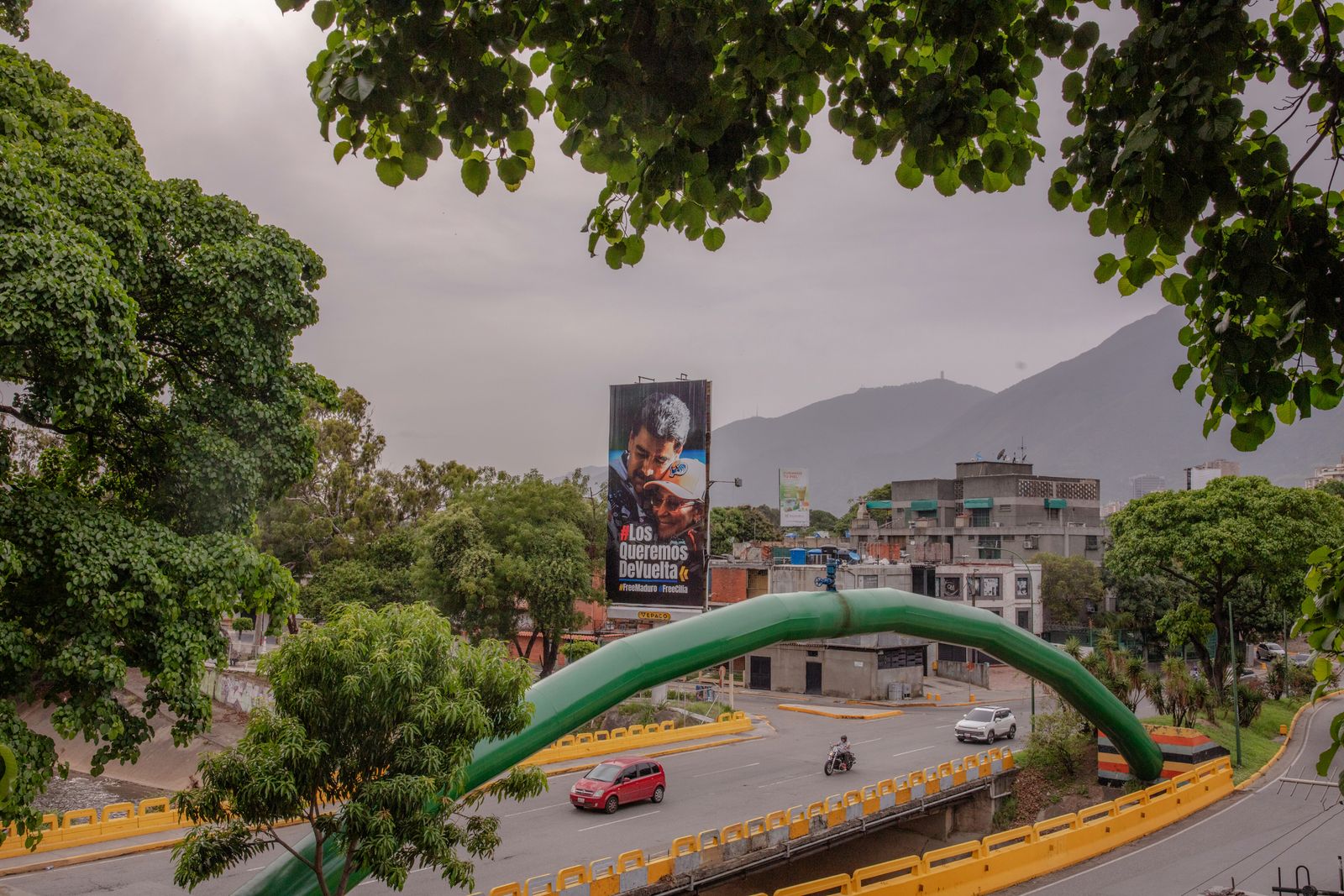
Around Venezuela, you can still see images of the deposed President Nicolás Maduro, installed during the years when he was the country’s maximum leader. Near the main airport is a faded billboard of him welcoming visitors with a beneficent smile. A few campaign signs are left over from the 2024 election, which he is universally understood to have stolen from the opposition. Along the roadsides of Caracas, the capital, newer billboards show him embracing his wife, Cilia Flores. The First Couple were abducted by U.S. Special Operations Forces in a violent raid on January 3rd, so their images are accompanied by a despondent slogan: “We want them back.” But these signs are just about all that remains of Maduro in the public consciousness. On two recent trips I made to Venezuela, not a single person mentioned his name unless I brought it up first.
Maduro’s replacement is Delcy Rodríguez, his former Vice-President. Barely five feet tall, with oversized glasses and the oratorical style of a seventh-grade teacher, Rodríguez is an unlikely head of state. For a quarter century, she served as an unswerving loyalist to Maduro and to his predecessor, Hugo Chávez—a backstage operative whose effectiveness as an administrator earned her the slightly dismissive nickname la tecnócrata. Now she is la encargada, the one in charge. But what does it mean to be in charge of Venezuela these days? After Maduro’s kidnapping, Rodríguez dutifully denounced the raid as “barbaric” and “illegitimate.” Since then, though, she has done little to dispel the sense that she is Donald Trump’s puppet. Soon after being sworn in, she welcomed visits from the C.I.A. director, the Energy Secretary, and the head of the Southern Command, which, in the guise of fighting drug trafficking, had overseen lethal attacks on civilian boats off the Venezuelan coast. In March, she restored diplomatic ties with the U.S., which had been severed during Trump’s first term.
Though the Americans in Caracas keep mostly to the Embassy complex and to a couple of expensive hotels, everyone knows that they are running the country. It is the closest thing to an unabashedly imperial relationship that the U.S. has had since it governed the Philippines, in the first half of the twentieth century. After Maduro’s abduction, Trump described Venezuela as the cornerstone of a revived hegemony: “Under our new National Security Strategy, American dominance in the Western Hemisphere will never be questioned again.” Since then, he has repeatedly expressed interest in making it the “fifty-first state.” When he bothers to mention Rodríguez, he sounds like a bullying boss praising a compliant underling: “She was quite gracious, but she really doesn’t have a choice.” Mostly, he touts America’s access to Venezuela’s oil deposits, which are among the largest in the world. During a speech in Las Vegas this summer, he boasted, “We’re taking a lot of oil from Venezuela, and we’re getting along great with them. . . . It’s the old-fashioned way. To the victor belong the spoils, right?”
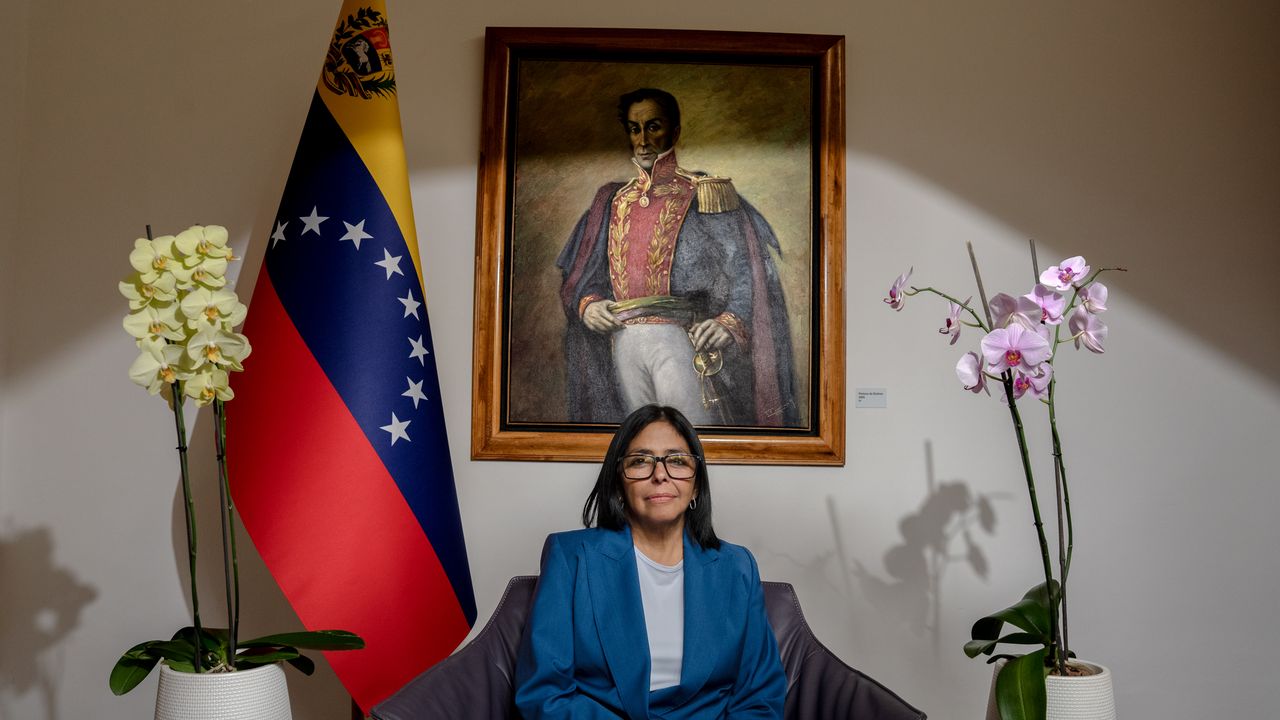
The twenty-seven years of chavismo—the heady, divisive experiment in militarized socialism conceived by Hugo Chávez—were an exhausting roller coaster. Though most Venezuelans understand that it is ending, it is not quite over, and no one seems entirely sure where Rodríguez is leading the country. Many people believe that she coöperated with the kidnapping of her former boss so that she could take his job. A former senior Chávez adviser described her to me as “the Pétain of Venezuela”—a reference to Philippe Pétain, who led the Nazi-aligned Vichy government during the Second World War. More forgiving observers see her as a political survivor, forced to accommodate a stronger nation. “I think Delcy has had to betray chavismo,” a former senior U.S. official told me. “The question is: does she want to keep power or become an agent of change?”
A forty-minute drive from the Caribbean shoreline, Caracas sprawls in a long valley below forested peaks. From the late fifties to the eighties, while much of South America suffered under repressive military regimes, the city was a sanctuary for progressives. Venezuela was prospering from the oil trade, and, though Caracas had slums on the hills, it also had well-designed social housing, a world-class theatre, and a university decorated with sculptures by Alexander Calder. Gas was subsidized, and Venezuelans lived well. For people of means, there were stylish night clubs and Concorde flights to Paris. Gabriel García Márquez spent a year and a half in Caracas as a young man, and later wrote, “One of the beautiful frustrations of my life is not having stayed to live in that infernal city forever.”
These days, the city’s wealthy neighborhoods still have tree-lined streets, with wild macaws swooping overhead, but little of the rest could be called beautiful. The vagaries of an oil-based economy, along with widespread corruption and mismanagement, have turned the city into a grimy, careworn place. Chávez’s revolution added blocks of Soviet-style social housing and murals of anti-imperialist icons: Che Guevara, Augusto César Sandino, and, most of all, Simón Bolívar, the nineteenth-century liberation hero.
Despite these depictions of revolutionary fervor, a visitor might wonder whether Venezuela is still a socialist country. Along the expressways that wind through the city, billboards advertise everything from crypto deals and remittance services to hot dogs and Hollywood blockbusters. As Chris Sabatini, a Latin America expert at the British think tank Chatham House, put it, “Venezuela has never been a socialist state. It’s a crony-capitalist state.”
Delcy Rodríguez met me at La Estancia, a hacienda owned by Venezuela’s national oil company that she often uses as an alternative office. La Estancia is a quiet place of neatly trimmed lawns, limewashed buildings, and colonnaded walkways, patrolled by security men. When I arrived, I was shown to a waiting room, where a uniformed valet wearing black plastic gloves brought coffee.
I met Rodríguez in a sleek conference room. She is fifty-seven, and was dressed comfortably in a red sweater, a white blouse, loose pants, and sneakers. I asked how she felt about a recent Times report that depicted her as a friendly collaborator with Secretary of State Marco Rubio, trading gossip and selfies. She rolled her eyes and said, “I am not going to share our private conversations, but we maintain an official relationship. Official. When we have had an opportunity to converse about work on concrete matters, it has been official. And respectful, which is important, no?” To demonstrate the formality of their relationship, she turned her phone around and showed me a WhatsApp exchange with Rubio. “ ‘Good afternoon, Secretario,’ ” she read. “I don’t call him Marco or Marquito.”
A few days earlier, Rubio had delivered a speech calling for a global alliance of right-wing forces to combat the scourge of leftism. When I asked about it, Rodríguez described a collision of systems created hundreds of years in the past. “The source for this lies within your constitution—in liberalism, which doesn’t allow the participation of socialist or communist models,” she said. I asked if she had discussed the subject with Rubio. “No. We’ve discussed work agendas for coöperation on the economy and energy,” she said. “We have frequent interactions, as should be normal between nations.”
Rodríguez has talked to very few reporters, and she generally dodges questions about Maduro’s abduction, her ascent to the Presidency, and her relationship with the U.S. In her telling, the country’s current circumstances were a kind of accident of fate: a collective trauma that Venezuelans were forced to get through together. “These differences are two centuries old, and we are not going to resolve them in a decade or in a day,” she said. “We have to find different ways to preserve the peace and tranquillity of our society, because it’s very painful for countries that are at war, that are victims of violence. It’s painful to hear a child say, ‘I am afraid, I feel terrified, I saw the helicopters, I saw the missiles.’ I think one has to opt for a peaceful and diplomatic course of action. Which is difficult.”
Since 1830, when the former Spanish colony of Venezuela became an independent state, it has endured more than a hundred and sixty rebellions and at least a dozen coup attempts. For the first half of the twentieth century, it was ruled largely by military strongmen, until the dictator Marcos Pérez Jiménez was overthrown, in 1958. Later that year, a U.S.-friendly politician named Rómulo Betancourt won the Presidency, with support from the Eisenhower Administration. For the next four decades, two political parties traded turns in power; one was to the left of center, the other to the right.
The arrangement worked fine from Washington’s perspective, but it systematically excluded the country’s communists. After the Cuban Revolution, in 1959, Latin American leftists grew increasingly restive. Rodríguez’s father, Jorge Antonio Rodríguez, was among them. As a student leader, he joined a guerrilla outfit called the Revolutionary Left Movement, and he went on to co-found the Socialist League—a political front for an underground cell that launched armed attacks.
One afternoon in Caracas, Delcy’s older brother, Jorge Rodríguez, spoke to me about their father. “He may have been a guerrilla fighter, but at home he was someone else—calm, friendly,” he said. “He called Delcy his negrita. She was his doll.” Delcy and Jorge knew from a young age that their father was a guerrilla; it was a family secret that they were trusted to keep. In 1972, when Delcy was a toddler, her father was captured by military intelligence and spent a year and a half in prison. Jorge said that, when they were allowed to visit him, an officer threw a tear-gas cannister at the family. Choking from the gas, they fled to a clinic, where their mother, who was pregnant, suffered a miscarriage. Delcy succumbed to an asthma attack, the first in a lifelong series of them.
Even when Jorge and Delcy’s father was out of jail, he sometimes remained in hiding. One day, their mother took them to visit a city park, where they were approached by an old man—their father in disguise. Later, she drove the family to a Chinese restaurant while Rodríguez lay hidden in the trunk. “He loved Chinese food,” Jorge said, laughing. “He was such a Maoist!” He recalled his father talking excitedly about an invitation to visit China. It was scheduled for August, 1976, but it never happened.
Earlier that year, guerrillas linked to the Socialist League had taken part in kidnapping an American businessman named William Niehous, who was suspected of being a C.I.A. agent. Five months into the abduction, Rodríguez was captured by Venezuelan secret police, who tortured him to death over the course of three days. The government initially claimed that he had died of a heart attack, but it was a scandal that could not be covered up; his death was widely reported as a state-sponsored killing, and the agents involved were ultimately imprisoned. Delcy was seven and Jorge ten. She told me that, fifty years later, it remained “one of the hardest moments” of her life.
Afterward, Jorge became Delcy’s closest companion, walking her to school and helping her with her homework. He went on to train as a psychiatrist. She earned a law degree, then moved to Paris and to London for further studies. In time, though, both would be drawn into politics.
In 1998, Hugo Chávez was elected President, and Venezuela was quickly renamed a Bolivarian Republic, in honor of Simón Bolívar. Chávez, a charismatic former paratrooper, was left-leaning but politically uncommitted—until 2002, when a group of conservative military officers abducted him and put a businessman in power, with American support. Though the coup attempt collapsed within forty-eight hours, it turned Chávez decisively against the U.S. Not long afterward, he declared that his country was committed to socialist revolution.

Rodríguez, outraged by the coup, went to work for Chávez. Her brother did, too, and they earned a nickname, los gemelos fantásticos—the fantastic twins. Over the years, each held many of the top positions in government, including foreign minister, head of the legislature, and Vice-President. “I’ve had different responsibilities in my life,” Rodríguez told me. “I can even design purses. I can do anything. But, whatever I do, I like to study it.”
When Rodríguez moved offices, the only thing that she brought along was a photograph of her father. She was a workaholic—an argumentative but capable manager who generally slept only from 6 to 10 A.M. She never married, or had children, though she did tell me, “I’ve had miscarriages.” She has twelve dogs, including a number of dachshunds, divided between her home and a private office. Her pastimes, she said with an embarrassed laugh, lean toward romantic telenovelas, from Italy, Turkey, Korea—“from anywhere.”
In 2013, Chávez died of cancer, and Maduro, his successor, asked Rodríguez to be the minister of communications. She recalled replying with a story: “Until I was seven years old—when they killed my father—there was neither radio nor television, because my father used to say they were instruments to poison our minds. So you’re appointing a minister who knows nothing of radio, of television, nothing of the communications media.” She laughed at the memory. “The only thing I read back then was one newspaper, El Nacional, because my brother made me sit down every night and underline things, like homework.”
She and Maduro shared an important bond, aside from their political loyalties: they were both acolytes of the Indian guru Sathya Sai Baba, a mystic who spoke of the oneness of religious traditions. Rodríguez made several visits to his ashram in southern India. I was curious what attracted her to his teachings. “I can sum it up in one word,” she said. “Faith.” She added that her devotion to Sai Baba fit neatly with her socialist ideals: “What were his precepts? To help everyone, to not hurt anyone, to love everyone.”
During her time working for Maduro, global gas prices plunged, and Venezuela’s economy collapsed, leading to spiralling crime, widespread hunger, and a huge exodus of citizens; eventually, a fifth of all Venezuelans fled the country. Feeling embattled, Maduro began establishing a new revolutionary hierarchy, with himself and his family at the top. He imprisoned dissenting politicians and, in 2015, began sending masked security agents into the slums, ostensibly to fight organized crime. Human Rights Watch has reported that, in the next few years, more than nineteen thousand people were killed on the pretext of “resistance to authority.”
While Maduro became increasingly violent and corrupt, Rodríguez remained a fierce protector. As foreign minister, she claimed to have once injured her arm trying to force her way into a meeting of a regional trade bloc that had suspended Venezuela. In 2017, when she was the head of Maduro’s rubber-stamp legislature, the Constituent Assembly, I joined her as she led a tour of an exhibit on his life: pictures of him as a child, others of him meeting Fidel Castro and the Pope. “You’re a good man, Mr. President,” she said, as she walked. “A man of many facets, which have not been shown because of the media lynching you’ve been subjected to, Mr. President. But, here in the Constituent Assembly, we want to show you as you really are.”
On the night that Maduro was abducted, Rodríguez was on Margarita Island—a Caribbean enclave off the Venezuelan coast which is a favorite holiday destination for Caraqueños. For her detractors, her absence was evidence of complicity, which she has persistently denied. In her interview with me, she described a chaotic night. “The third of January was the culmination of situations that were getting more and more complicated,” she said. The U.S., which had warships off the coast, was attacking putative drug smugglers and halting the flow of oil exports. “We were blockaded for the month of December, without income,” she said. “We had a nation to attend to.” She said that she worked with a planning committee through New Year’s Eve on a scheme to restore some solvency. “Our economic plan emphasized communal programs, food production, and diversified economic activity, much like those countries that don’t have oil,” she said. On January 2nd, she joined Maduro for a meeting with a Chinese envoy. “Afterward, I presented the plan, around seven or eight at night, and he approved it. So I told him, ‘Listo, I’m going to Margarita Island, where Jorge and my nephews are.’ He said, ‘Take my plane,’ and he called the Casa Militar and ordered them to get it ready.”

At around eleven o’clock that night, “I saw that the President’s Instagram account had been hacked,” she recalled. (She knew it was hacked because “it started to show porn sites,” she said.) As U.S. forces deployed, a Venezuelan command center sent reports of planes in the air. Soon afterward, the attack began. “The next few hours were very hard,” Rodríguez said. “The first thing we did was to look for the President, and he didn’t appear.”
Later, an assistant told her that bombs had struck Fuerte Tiuna, a military base where Maduro had taken shelter. Rodríguez began getting calls from the Trump Administration. “We refused to speak to the government of the United States until there was proof of life of the President,” she told me. “And that was done.”
“What was said?” I asked.
“ ‘We want to resume relations with Venezuela.’ That was to some degree a threat, and . . . ”
“That was Rubio?”
Rodríguez nodded silently, then banged her palm on the table, clacking her bracelets.
“Was he respectful?”
She stared. “At that moment, nobody was really being respectful.”
“Do you feel Maduro was unjustly kidnapped?”
“Well, obviously I can’t agree with the way that happened,” she said. This seemed like a surprisingly mild response to a raid that had killed more than eighty people. When I reminded her of the death toll, she murmured, “That’s right—soldiers of ours, Cuban officials.” After a pause, she suggested that it would have been useless to resist the U.S. military: “Our investigation shows very impressive technological development.”
Though many Venezuelans were shocked by Maduro’s abduction, the plan had been discussed in the U.S. for years. One of its main proponents was Mauricio Claver-Carone, a longtime Latin America operative whom the Venezuelans call el comeniños, or the baby-eater. I met Claver-Carone recently on the mezzanine of a luxurious hotel in Rosslyn, Virginia, across the Potomac from D.C. He is fifty-one, a strongly built Cuban American with long hair and a beard. In gym sweats and high-tops, he looked more like a “CSI” extra than like a former White House aide. “You’ve caught me at a good time,” he told me. He had recently announced that he was stepping away from the Trump Administration.
Claver-Carone grew up in Miami, earned a law degree, and became an anti-Castro lobbyist in D.C. He started at the National Security Council in September, 2018, as the head of Western Hemisphere Affairs, and quickly assessed the President’s priorities. “Venezuela was the big one for Trump,” he said. “He was obsessed with it.” During his first term, Trump mused openly about deposing Maduro, who, for his part, had called Trump a thief, a crook, and “the king of wigs.” For a time, Trump did little more than issue threats and financial sanctions, but eventually he tried a more direct intervention, throwing U.S. support behind an opposition figure named Juan Guaidó. In April, 2019, Guaidó launched an uprising, along with a small crew of regime insiders and soldiers, but it was underplanned; after a violent confrontation, several deaths, and hundreds of arrests, the effort fizzled. “That was a shit show,” Claver-Carone said. “I told Trump then, ‘I can come up with a thousand schemes. The only thing that will work is snatching Maduro.’ ”
At the N.S.C., Claver-Carone had met Jessica Bedoya, a C.I.A. analyst on loan to the council. She was half Ecuadorian, half Colombian, born in Chicago. They began a partnership built around clandestine intrigue. “I was the operative, she was the brains,” he told me. “She’s the Andean Oz. She knows her shit.” Bedoya told me in an interview that her idea for dealing with Maduro was based on the “Panama model”—the operation in which the U.S. invaded Panama, in 1989, and arrested the dictator Manuel Antonio Noriega.


In early 2020, the Trump Administration held a meeting of senior officials, and Claver-Carone presented options for Venezuela, including removing Maduro, placing ships off the coast, and seizing oil. He said that he took advantage of a recent piece in the Wall Street Journal about Russian companies’ involvement in Venezuelan oil fields: “I told the President that if he didn’t do it he’d be accused of going soft on Russia.” Trump’s Defense Secretary at the time, Mark T. Esper, recalled in a memoir that Claver-Carone made the case for intervention “in machine-gun fashion.” Esper saw military action as reckless; he and his allies worked to sideline Claver-Carone.
Before long, Claver-Carone left to become the president of the Inter-American Development Bank, bringing along Bedoya as his chief of staff, but he was fired after two years. (He maintains that “my enemies wanted to take me down.” An internal ethics investigation found that he had given raises to Bedoya while they were having an affair, which they denied. The inquiry’s evidence reportedly included an informal contract to divorce their spouses and marry each other, with failure to comply punishable by “candlewax and a naughty box” from a Miami hotel.)
When Trump began his second term, Claver-Carone came back as a special envoy. He began advising Rubio, who also had a long-running interest in deposing the Venezuelan regime. Other factions in the White House had divergent ideas. Richard Grenell, another special envoy, reportedly favored an approach in which Maduro stayed in office but granted broad oil concessions to U.S. investors, including the businessman Harry Sargeant, a major Trump donor. But, Claver-Carone said, “on Team Marco, I was probably the best knife fighter.”
Claver-Carone and Bedoya had been observing Rodríguez, and they were convinced that she was essential to the plan. “Jessica’s an Andean woman, and so is Delcy,” he told me. “Jessica said, ‘It has to be Delcy. You really have to understand—she’s the most competent person.’ Chávez couldn’t stand her. They treated her like shit, and she had a chip on her shoulder, but she’s an opportunist, and she stayed.” Bedoya told me, “Delcy seemed like a truly pragmatic leader, and, while she was part of the regime, she was also being suffocated by it.” It helped their case that Rodríguez had served as the country’s oil minister; after a previous minister resigned amid a corruption inquiry, Rodríguez took over and imposed some discipline on the state petroleum company.
In the summer of 2025, Claver-Carone was summoned to the White House. “They said, ‘O.K., we want to do your plan,’ ” he recalled. “I told them we had a memo already prepared.” Claver-Carone and Bedoya had their security clearance reactivated, and they set to work. “By December, I was confident Delcy could play a role,” he told me. “There was some dialogue, and then January 3rd happened, which took things into overdrive. We agreed that Jess would deal with Delcy, woman to woman, and I would work more with Jorge.” He added, “Delcy doesn’t like to be told what to do by men.” (Rodríguez disputes this account. The Trump Administration maintains that Claver-Carone had no advance knowledge of the January 3rd assault.)
During the raid, Claver-Carone talked with Jorge. “We were still there, with planes in the sky,” Claver-Carone told me. “At that point, they thought we had killed Maduro and were going through the seven stages of grief.” He promised friendship if the Venezuelans coöperated with the United States, but he also called Rodríguez to threaten further attacks: “I tell her, ‘There’s a second wave ready to go, you should get on the phone with Marco’—and she does.”
Rodríguez has proved as efficient and as flexible in the Presidency as she was in her earlier posts. She has removed scores of Maduro-era security officers. The hard-line defense minister Vladimir Padrino López became the minister of agriculture; the prosecutor general Tarek William Saab, known for his neck tattoos and for personally interrogating detainees, was given a new post promoting “music, dance, rhythms, and the nation’s traditional cultural values.” Rodríguez opened the nationalized oil industry to private companies; secured a general amnesty, which freed nearly two hundred political prisoners; and ordered the closure of the Helicoide, a notorious jail run by the secret police. Her bills were approved unanimously in the National Assembly, which is stocked with loyalists and led by her brother. She has maintained that these were her own initiatives; the amnesty, for instance, was intended “to heal the wounds left by political confrontation fuelled by violence and extremism.” But many Venezuelans believe that she is acting under pressure from the U.S., through polite messages from Rubio or blunter ones from Claver-Carone and Bedoya. Claver-Carone described Rodríguez as an ideal partner. “We almost struggle to catch up to her,” he said.
Her political position was radically complicated in late June, when two powerful earthquakes struck Venezuela. Chacao, the upscale part of Caracas where Rodríguez lives, sustained significant damage. But the destruction was far worse on the other side of the mountain, in the seaside towns of La Guaira and Catia La Mar. Nearly eighteen thousand people lost their homes, and the government says that sixty-five hundred people were killed; other estimates are much higher. The Maiquetía airport, between the two towns, was devastated. For days, government rescue crews were largely absent, and citizens were left to fend for themselves.

The regime had erected buildings on soft soil, near a known fault line. When I visited La Guaira, ten days after the disaster, crumpled structures were everywhere, alongside a few that were inexplicably intact. Houses had been paint-tagged according to their damage. One had the designation “recoverable,” with the family’s name and the message “We are alive in Caracas.” Another said “Looters will be shot.”
Men were operating earthmoving equipment, and “human moles” from various countries were burrowing through collapsed floors of buildings, piled up like grim layer cakes. Periodically, someone shouted, “Silencio,” and the machines were shut off, so that rescuers could listen for voices below. A few victims had recently been found alive, and the internet was filled with rumors of miraculous rescues. Among people whose loved ones remained under the rubble, there was both desperate hope and growing resignation.
In the nearby town of Caraballeda, a complex of apartment towers had fallen into immense heaps of masonry and twisted steel. Rescuers, many of them relatives of the missing, gathered on the street nearby, where volunteers had rigged up shade tents, food schedules, and water stations. While people took turns digging, others stood by, looking sleepless and dazed. Dust swirled everywhere. Bizarrely, the government had sent some men to freshen up the paint on the concrete side walls of a road bridge, with ruined buildings on either side.
Among the searchers were a couple in their forties, taxi-drivers at the nearby airport. Two of their sons had been home alone when the earthquakes struck. The couple had been digging ever since, trying to reach them through five wrecked floors of their building. They still had several to go, but the man insisted that his sons could still be saved. “They found a girl alive yesterday,” he said, pointing to another mountain of rubble nearby. A week later, the couple found the children, their bodies charred, possibly from the kitchen’s gas tank exploding. During several visits to La Guaira, I saw no one being found alive.
For the U.S., the ineffectual response to the earthquakes offered an unexpected boon. After months of keeping its military presence fairly unobtrusive, the U.S. took control of the Maiquetía airport and sent in about two thousand troops. Two warships took up positions in the harbor.
For the Venezuelan government, though, the search-and-rescue effort was a public-relations debacle. There was fierce criticism in the media, which cast the response as an epitaph for chavismo. Rodríguez’s officials blamed everyone but themselves. Jorge argued that an erroneous tsunami warning early in the disaster had prompted searchers to evacuate; then, he said, influencers from the Venezuelan-exile community in Miami and elsewhere had urged citizens to rush in and help, so that the traffic would block government rescue teams. In Rodríguez’s first press conference after the earthquakes, she lashed out at “media laboratories” that were spinning falsehoods. “I like to talk facts,” she said, but the litany of statistics that she delivered seemed to convince no one.
The public’s frustration also created an opportunity for the opposition—particularly for its most prominent figure, María Corina Machado. A conservative in her late fifties, Machado belongs to a wealthy Catholic family that was disenfranchised by the chavista revolution. During the Maduro years, she was the regime’s fiercest critic and an adroit practitioner of political theatre.

Machado led her coalition to victory in the 2024 election, but she was forced into hiding as Maduro claimed that he had won and imposed a murderous crackdown on his opponents. She was still underground when she was awarded the Nobel Peace Prize, in 2025. That December, she was sneaked out of the country by an American mercenary outfit, and for half a year she lived in exile in D.C., working to persuade Trump to back her return to Venezuela; in one meeting at the White House, she handed him her Nobel. Still, Trump made it clear that he preferred to keep Rodríguez in power. Machado made seven attempts to get to Caracas, hoping to force new elections; all were thwarted. When the earthquakes struck, she was in Panama, still promising her followers that she would return “soon.” In YouTube videos, her eyes glistened as she told Venezuelans that she shared their pain and their outrage at the government. “They want to bury the truth, when we want to bury our loved ones with dignity,” she said.
In Venezuela, the members of the political class all seem to know one another; they can resemble an extended family, with decades of shared connections and internecine squabbles. When Rodríguez was studying in London, she was friendly with a Venezuelan lawyer named Gerardo Fernández. After the coup of 2002, Rodríguez devoted herself to the revolution. Fernández aligned with the opposition—and became Machado’s longtime boyfriend. Rodríguez told me that they no longer speak.
The chavista leadership has always been an uneasy coalition. In the early days, Chávez’s charisma held together an agglomeration of military officers, leftist politicians, former guerrillas, and opportunistic centrists. Some joined Chávez believing that he was committed to a democratic revolution, then abandoned him over his growing ties to the authoritarian regime in Cuba. Some went into exile; others got embroiled in factional conspiracies and ended up in prison.
General Raúl Isaías Baduel, who helped restore Chávez to power after the coup, later broke with him over his efforts to eliminate term limits; he was jailed twice, on allegations of corruption and conspiracy, and died in prison in 2021. Hugo Carvajal, a former head of military intelligence, fled to Spain, and was eventually extradited to the U.S. on narco-terrorism charges. (He pleaded guilty last year, but also implicated Maduro.) The former oil minister Rafael Ramírez, now living in Rome, was accused in absentia of embezzling nearly five billion dollars from the state oil company. (Ramírez denies this.)
It is easy to wonder: Does the chavista movement have any remaining believers? Or was it always just a collection of competing opportunists? Most of the leftists I met in Caracas professed faith in Rodríguez, but they also seemed to be trying to secure a place in the new power structure. One afternoon, I spoke with Elías Jaua, an earnest-seeming fifty-six-year-old who formerly served as Vice-President and as foreign minister. I asked whether the Bolivarian revolution was dead. “The revolution will never die,” he said loyally. “But the revolution is not in the government now—it’s in the minds of the people who have begun to organize themselves to fight to recover their sovereignty.”
I told Jaua that I saw few signs of the mobilization he described. “It has fallen upon the interim President to confront certain circumstances, and to govern under coercion,” he said. Jaua added that he “shared the posture” that Rodríguez had adopted after Maduro’s abduction, because it had helped fend off another attack. “It wasn’t only Fuerte Tiuna that was bombed,” he said. “There were dozens of places in Caracas that were hit by projectiles.”
Jaua offered one mild criticism: he couldn’t understand why the government hadn’t issued complaints to bodies like the U.N. Commission on Human Rights. But mostly he blamed the Americans. He noted that Venezuela’s oil revenues were being diverted, seemingly without oversight, to an account in the Treasury Department. “I hope that the civilized élites in the United States do not look well upon the spectre of their country taking over another country and helping itself to its natural resources,” he said.

Much of the legitimacy of chavismo rested on what were called the Bolivarian Missions: welfare programs, ranging from retirement pensions to free neighborhood clinics and subsidized housing, that Chávez hoped would resolve the country’s inequities. They have largely collapsed, as a result of both economic instability and endemic corruption. One former Maduro confidant, Alex Saab, is in jail in the U.S., having pleaded guilty to embezzling hundreds of millions of dollars from a food-distribution scheme.
Many of the movement’s adherents have left. Juan Barreto is perhaps the last remaining intellectual to have emerged from chavismo. A beefy, ebullient sixty-seven-year-old, he is a journalist, an academic, the author of more than a dozen books on politics and culture, and a podcast host with a caustic wit. (In a controversial recent reference to Machado losing American support, he joked that her vibrator’s batteries had run out.)
Early in Chávez’s Presidency, Barreto served as a legislator and then as the mayor of Caracas, governing as an advocate of redistributive justice with a mischievous streak. He once tried to expropriate the Caracas Country Club, a playground of the Venezuelan élite, to build a public park. When I met with Barreto, he chuckled at the memory: “Everyone was angry at me about that one.”
Barreto has been active in much of chavismo’s turbulent history. As Chávez was preparing to enter politics, Barreto helped give him an informal course in leftist doctrine. He was a member of the Socialist League when Jorge Antonio Rodríguez was its leader, and he recalls meeting Delcy and Jorge as children. Around that time, he became a tutor to Maduro, who was then a high-school baseball star with nascent political ideas and an attendance problem.
Over the decades, Barreto developed a concise account of the movement’s failures. He fell out with Chávez over his move to abolish term limits—but he saw a far greater concern with Maduro. “In the end, it would have been better if he had become a baseball player,” Barreto said. “When people are born, they don’t know if they are going to become a murderer or a major-league pitcher, but then one day they find themselves killing people.” After Maduro stole the 2024 election, Barreto vocally criticized him; the government placed him under investigation and surrounded his house with agents for months. In his view, Maduro’s repressive violence and greed had “finished off the political legitimacy of chavismo.” Now, in the absence of a viable government, “a foreign gendarme—Trump—has imposed himself,” he said.
Barreto embraced pragmatism earlier than many of his peers. He now advocates for a “grand national accord” between Venezuelans of all political inclinations. In 2024, he supported the Presidential campaign of Enrique Márquez, a right-of-center politician. It was a cautious alliance: Márquez told me that they were “together, not intertwined.” But, unlike most Venezuelan political figures of the past quarter century, they profess to respect each other’s views.
While the country’s élites squabble, Rodríguez has to accommodate what remains of the chavista base. One major stronghold is the vast housing project known as the 23rd of January. Home to more than a hundred thousand people, the superblocks of El 23 rise from a hillside just a few hundred feet from the Presidential palace. The compound takes its name from the day in 1958 that the dictator Marcos Pérez Jiménez was overthrown. Its walls are decorated with murals glorifying Chávez and Maduro, along with such figures as the Hamas leader Yahya Sinwar and Ilich Ramírez Sánchez—Carlos the Jackal, the prolific Venezuelan terrorist of the nineteen-seventies.
For years, the regime deployed motorcycle-riding paramilitaries called colectivos to control the slums and to terrorize its opponents. A section of the 23rd of January is run by a colectivo, the Fuerza Patriótica Alexis Vive. Its leader is Robert Longa, better known as El Ruso, or the Russian.
During the Chávez years, Longa’s command post was a bunker fitted with video screens that monitored the neighborhood. In those days, he described himself and his comrades as the regime’s revolutionary enforcers, ready to face down imperialist stooges, who included most of the political opposition. He also said that his men were prepared to go to war against the ruling chavistas if they strayed from revolutionary principles.

I visited Longa to see how he was reacting to the U.S.-sponsored regime change. A chunky man with a mop of graying hair and a discourse that relied heavily on mentions of “praxis” and “the dialectic,” he was surrounded by a crew of messengers, lookouts, and bodyguards. We met at a rooftop bar that he’d constructed, its walls adorned with images of Marilyn Monroe, Elvis Presley, and Freddie Mercury. “They’re revolutionaries, too,” he said expansively.
Longa still professed to be a Marxist, but he was bemused by the contradictions of modern Venezuela. “It’s up to us to understand the situation,” he said. “We have to do what Chávez called us to do, to ‘conquer the technical means of survival.’ ” He had to be realistic, given the revolution’s inability to realize many of the social projects that Chávez had dreamed of. With a wary look, he said he understood that the Americans were using the excuse of “narco-terrorism” to justify military action. Out of caution, he had once ousted a group of young men who were growing marijuana in the area.
He didn’t like the U.S. presence, but, he said, it was “probably not the right time to go about discussing or planning an armed conflict.” The Americans could just come along in their helicopter gunships. Instead, he and his comrades planned to make their comuna self-sustaining, by moving into such businesses as textiles, tourism, and ranching. Longa took me to the commune’s new pig farm, on a hillside outside Caracas. Looking over the site, a cluster of cinder-block buildings with a pig yard and a stable where a horse loitered, he said that it represented the first step toward a new future. “We don’t think of the commune as a finished geography,” he said. “It’s like John Lennon in ‘Imagine’—something radically Marxist.” In the meantime, he added, the government was still providing his comrades with funding and political support. On the road up to his complex, I had passed freshly painted pro-Rodríguez slogans—the first ones that I’d seen anywhere in Caracas.
In the waiting area at La Estancia, I’d heard a group of Americans talking animatedly in an adjacent room. After Rodríguez arrived, I asked her if they were members of an International Monetary Fund delegation, which I’d heard was visiting. “Here?” Rodríguez said, staring back blankly. Her communications minister, who was sitting in, offered a reminder: “The previous meeting.” Rodríguez stubbornly evaded the question until another aide interpreted for me: “She’s not going to tell you.”
In April, the I.M.F. and the World Bank announced that they were restoring relations with Venezuela after seven years of suspension. Rodríguez hailed it as a major success. Venezuela had been symbolically invited back into the international financial system, and the World Bank may supply the cash-strapped government a multibillion-dollar line of credit. The next month, Rodríguez initiated an agreement to begin restructuring Venezuela’s sovereign debt, estimated at as much as two hundred and forty billion dollars.

I asked Rodríguez whether it was more important to secure Venezuela’s sovereignty or to improve its finances and keep the peace. She argued that the two goals were congruent, and, despite all the evidence to the contrary, insisted that Venezuela’s revolution was not yet over. “We’re in a profound process of transformation,” she told me. Around Caracas, her administration had been painting walls with the slogan “Venezuela Reborn.”
Rodríguez acknowledged that “bureaucracy has a way of losing its way and getting sidetracked.” But she said that chavismo was still alive in the “model of community” that her government was overseeing in camps for people displaced by the earthquakes. She mentioned that stands had been set up where survivors could work preparing hot dogs and empanadas. One of her ministers had asked whether to charge for the supplies, she told me: “I said, No, let’s not charge, so that we can help reactivate things, so that people feel like they have something to do. If their hot dogs and empanadas are popular, they’ll feel like they have something to offer.”
With the Americans controlling Venezuela, how could she say that chavismo was alive? Rodríguez pointed out that Chávez, too, had maintained relations with the United States, and that some of Venezuela’s biggest shipments of oil to the U.S. had taken place during his Presidency. “I think it’s a process that deteriorated over time, and which reached its nadir on the third of January,” she said.
She reassured herself by thinking about Bolívar: “He had more difficulties than victories.” Even as his great project of liberation from colonialism was nearly complete, he was thinking about the tasks ahead. “He said, ‘My anguish will live on in the future,’ ” Rodríguez told me. “And I think the model that we build must resolve that anxiety, because what was it about? Venezuela’s independence, right? So that is our fundamental battle, and something we must fight for every day.”
“Why has it cost so much to attain that independence?” I asked.
“Because of material resources,” Rodríguez replied. “It distorts everything.”
In August, Trump announced “the biggest oil deal in world history,” which brought together the U.S. government and a Barbados-based company called North American Blue Energy Partners, led by the Venezuelan billionaire Alejandro Betancourt. The agreement allows the consortium to take over seventeen Venezuelan oil fields, which the White House says contain an estimated sixty-five billion barrels of crude. It has been widely criticized as nakedly colonial.

Claver-Carone was instrumental in the deal, and he was unapologetic about the terms. Productive oil fields are “the new military bases of the twenty-first century,” he said. “Now that the U.S. has skin in the game, it’s great to insure the mistakes of the past thirty years don’t happen again, and it helps the energy security of the United States.” He described Betancourt, who reportedly made a huge fortune through corruption during the Chávez and Maduro years, as a pragmatic choice. “He’s actually got a track record,” he said. “He’s the only Venezuelan I know who actually produces oil.” (Betancourt has denied wrongdoing.)
Oil was not Claver-Carone’s only concern as special envoy. Along with Bedoya, he runs the Lara Fund, a private-equity firm that is actively seeking investors in Latin America. His critics in Caracas and in D.C. accuse him of brokering lucrative deals in Venezuela and of taking fees from potential investors there. As the de-facto gatekeepers to the new regime, Claver-Carone and Bedoya would have been well positioned to profit. Yet they rejected the allegations, which he called the product of a “whispering campaign” by his adversaries. “We’re not taking bribes, we’re not getting deals,” he said. “Every fucking day we get asked, ‘Can you put in a good word for us?,’ and when we don’t they get pissed off.”
Perhaps Claver-Carone’s most significant initiative was helping persuade Venezuela’s government to hire an investment bank called Centerview Partners to advise on restructuring its debt. The terms reportedly provide Centerview with unusually high fees: the equivalent of one per cent of the debt—as much as two hundred and forty million dollars—along with seven hundred and fifty thousand dollars a month during negotiations. (Centerview has disputed these figures.) An influential source in the region told me that Claver-Carone and Bedoya pressed the deal on Rodríguez; when she resisted, the two women attacked each other and had to be physically separated. (Bedoya denied a fight but said, “We’re both very strong personalities. On different decisions, we’ve had very frank, direct discussions with one another, and then we move on.”) The deal was eventually signed, with Centerview securing the contract over Lazard, a higher-profile investment firm. Claver-Carone said that Centerview had won because it was “the best” for the job. Laughing, he added, “I’m excited to be hit on that one,” and pointed out that the firm’s co-founder Blair Effron was “the biggest Democratic Party donor.”
Rodríguez recently announced that her government will be selling off state assets, which include energy and mining infrastructure. Claver-Carone rejected speculation that he was involved in plans to buy some of these assets. The LARA Fund had investments in El Salvador and in Mexico, among other places, but not in Venezuela, he said: “We hope to get involved, but we’re not there yet.”
A former senior official in the first Trump Administration suggested that Claver-Carone knew better than to ask potential investors for money directly. He told me that an acquaintance who recently brought a potential deal to the Venezuelan government had been told to first “get Mauricio’s O.K. on it.” Claver-Carone had received him amiably and mentioned his fund. “That’s how it’s done,” the official said. “People realize he’s influential and think to themselves, I should invest in that fund.” He added, “I didn’t ask if they had invested. I didn’t want to know.”
Since Rodríguez opened the country to foreign investment, Americans and Europeans—including a list of people linked to the Trump Administration—have flocked to Caracas to pursue oil and mining deals. Michael Jensen, who until recently ran the Western Hemisphere Affairs section of the N.S.C., has joined a company seeking oil deals that’s owned by a crypto billionaire. Carlos Trujillo, a former Trump campaign adviser, has a lobbying firm that represents at least a dozen clients in Venezuela. The Turkish businessman Turhan Mildon, who is married to Trump’s former personal attorney Alina Habba, has extensive investments in Venezuela.
For the Trump Administration, a certain amount of profiteering has become commonplace. But the oil agreement involves direct investment from the American government. “I don’t see how it’s a good deal for anyone—the U.S. taxpayer, Venezuela’s long-term oil production, or, most of all, Venezuelan citizens, who want and deserve long-term economic growth,” Chris Sabatini, of Chatham House, said. “This modern-day colonial collusion between an unelected government in Caracas, a Trump Administration that has shown no boundaries between public and private spheres, and a cast of shady characters around a single resource is resurrecting a modern rentier state. If it was such a good deal, the private sector would have rushed in.”

John Bolton, who was Claver-Carone’s boss at the N.S.C., has few qualms about securing preferential access to Venezuelan oil, but he is skeptical of the current arrangement. “You know the old saying about the principle of the pig: pigs get fat, hogs get slaughtered—and this deal is a hog-type deal,” he told me. “I think the terms of the deal are: we get the oil, and Delcy Rodríguez gets to stay in power. I think that deal is unacceptable for the United States, because it’s not going to create a rule-of-law environment.”
Trump officials often speak of the need to stabilize Venezuela, but Bolton argued that the oil deal could lead to greater unrest. “This gives elements in the regime that are opposed to Delcy the ability to argue she’s giving away Venezuela’s patrimony,” he said. “I think the regime as a whole is doing everything it can to reëntrench itself. They’re stunned by the loss of Maduro, but they’re still there, so they’re going to try and increase their grip on power.”
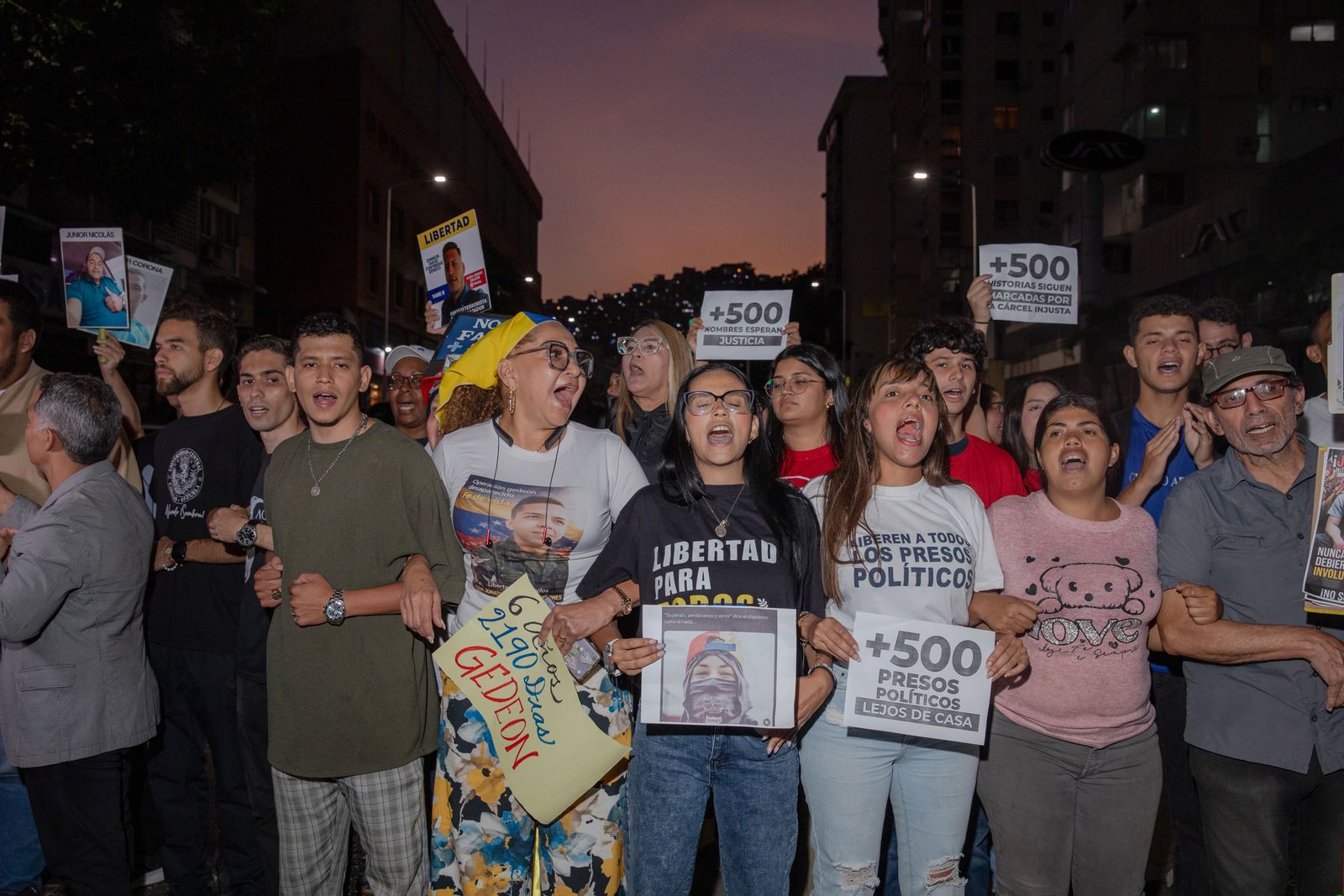
Chávez and Maduro conceived of Venezuela as a “civic-military union,” in which the armed forces were full partners in administering public life. For Rodríguez, one risk is that the military will turn against her. Thus, even as she purged the ranks, she was careful to keep some hard-liners in key positions. And, though she passed the amnesty law, she has shown little inclination to threaten the security services by seeking justice for past abuses. Hundreds of political prisoners are still being held, and reportedly sometimes tortured, in government facilities. Claver-Carone told me that the increased U.S. military presence after the earthquakes had helped identify Venezuelan officers who opposed America’s influence. But the U.S. does not have control over the Venezuelan armed forces, which could move to seize power if they feel threatened. “If that happened, we’d be back to square one,” Claver-Carone said.
Delcy and Jorge Rodríguez have a partner in running the country: Diosdado Cabello, a former military officer who was close to Chávez and has held strategic government posts for many years. He now effectively controls the secret police and is also regarded as the boss of the colectivos. The U.S. has sanctioned Cabello and placed a twenty-five-million-dollar bounty on his head for charges including “narco-terrorism conspiracy.” (Cabello has denied involvement in drug trafficking.) But he has remained in his job, evidently with the Trump Administration’s approval. When Delcy and Jorge appear onstage to make major pronouncements, Cabello usually stands alongside them.
One evening at the Maiquetía airport, the three presided over a ceremony honoring some six thousand people who had participated in search-and-rescue missions after the earthquakes. As an orchestra played patriotic songs, the rescatistas stood in formation behind flags that identified them as police, firefighters, civil protection, Red Cross, or military-intelligence agents. Next to them was a line of rescue dogs, tended by trainers in fluorescent outfits. They included a Border collie named Tsunami, who had become a national hero by helping to find at least twenty-five people alive in the rubble. After screens played clips of the dogs at work, Delcy, Jorge, and Cabello hung medals around their necks. Though many Venezuelans feel that the military was conspicuously absent during the earthquake response, Delcy assured the rescuers that they had served the country well. “I tell you sincerely that your uniforms are honorable,” she told them. What they were building was not just infrastructure but “a new Venezuela,” she said, based on “an ethic of love and understanding.”
During the ceremony, a U.S. military plane took off noisily from a nearby runway. Everyone onstage pretended that it wasn’t there, but one of Delcy’s ministers caught my eye. “I’m not saying anything,” he told me, then added in a whisper, “It’s what we’ve had to learn to do since January 3rd!”
On October 25th, María Corina Machado finally returned to Venezuela. After crossing the border from Colombia, she drove to Caracas, greeted along the way by thousands of fervent followers. Before long, she began calling for a new election next year.
Rodríguez has officially agreed to a democratic transition, but hasn’t given a timeline for elections. She and Jorge, with assistance from Claver-Carone and Bedoya, have initiated a dialogue with the political opposition—excluding Machado. The U.S. government has sent mixed signals. Rubio claims full support for a transition and has endorsed Machado’s return. Trump told reporters that he wished Machado well and called her “a very nice woman,” adding, “She gave me her Nobel Prize, so how could I say anything else?” But he suggested that he had no wish to change the status quo: “We’re doing really well in Venezuela.” Bedoya echoed Trump, saying, “You have to build the architecture to hold credible, legitimate elections first, and that, done well, takes time.” She described Machado as a self-appointed savior and disputed her claims that she has a following within the security forces. “She just knows how to be a rabble-rouser,” she said. “A true leader doesn’t seek to make a process about themselves.”
Polls suggest that if an election were held today Machado would win by at least thirty per cent—but Rodríguez still has the Trump White House behind her. Claver-Carone offered a concise statement of what the U.S. hopes to see: “Chavismo needs to become something like Peronism in Argentina, a nationalist movement without the socialist bullshit.” He was confident that Rodríguez could move the country in that direction. At the U.N. General Assembly in September, she declared that her government was committed to restoring “full democracy.” The same day, she posed for a friendly photo with Trump, who had appeared onstage repeating his line about victors and spoils.
I asked Rodríguez how she felt when Trump referred to Venezuela as the fifty-first state. “Did we face certain restrictions because of the bombardment that occurred on January 3rd? Of course,” she said abstractly. “In the first cabinet meeting I called, on the fourth or fifth, there were three hundred drones overhead. Three hundred drones followed me wherever I went. So this is a process. That’s why I say that independence is something we have to defend every day.”
I wondered whether such considerations of force had weakened her ideological commitments. Rodríguez told me that she had been mulling the value of political divisions. “I have been thinking about all the alliances—the communists, the socialists, the liberals. And I think that the way the world has put itself into silos is the reason for the state it’s in.” The times were perilous, she said: “Dangerously full of violence, the most violent century of all the centuries, with more deaths than ever before.”
She described the earthquakes as a moment of reckoning. “I was in an office nearby when it happened,” she said, her voice rising in amazement. “Dirt fell on my head. I felt the force of nature, in which you can’t do anything, absolutely nothing. But human beings have done nothing for nature, either. On the contrary, they have plundered it, attacked it. And I think there are minimal parameters, of respect for nature, for life, respect for another human life—these are parameters that should be a kind of Ten Commandments on what life should be. Because what has our siloing brought us to? This is what I was asking myself the other day—whether communism or anti-communism, and whether Venezuela should belong to this alliance or that one! For what?”
I asked her whether she still considered herself a socialist. “In my heart, yes,” she said. “But not only in my heart—that would be mere voluntarism.” She believed deeply in equality of all kinds, she told me, then fell silent.
Was she a traitor to Maduro or a hostage to Trump? The truth probably lay somewhere in between. One key question was the extent of her political ambition. “You’ve never been a politician as such—you’ve always been named to your positions,” I said. “Do you actually want to be President of Venezuela?”
“I can tell you it’s a very difficult job, very complex,” she replied. “I like being a Venezuelan, and I like to defend Venezuela. I like to defend our identity. I like to defend our history. I like to be able to serve the neediest. Now you say something very clear, that I have never wished to participate in elections, because it hasn’t been my thing.”
“But now it will fall upon you to do it.”
“I don’t know,” she said cryptically. It was, perhaps, an admission that her political future was not in her hands. But it also suggested that, now that she was President, she wanted to stay there. ♦
来源:纽约客中文网