 讲知识 · 讲经验 · 讲未来
 人人可分享 · 处处是课堂
 科技 · 财经 · 游戏 · 快讯,每日更新
 诚搜315观察网
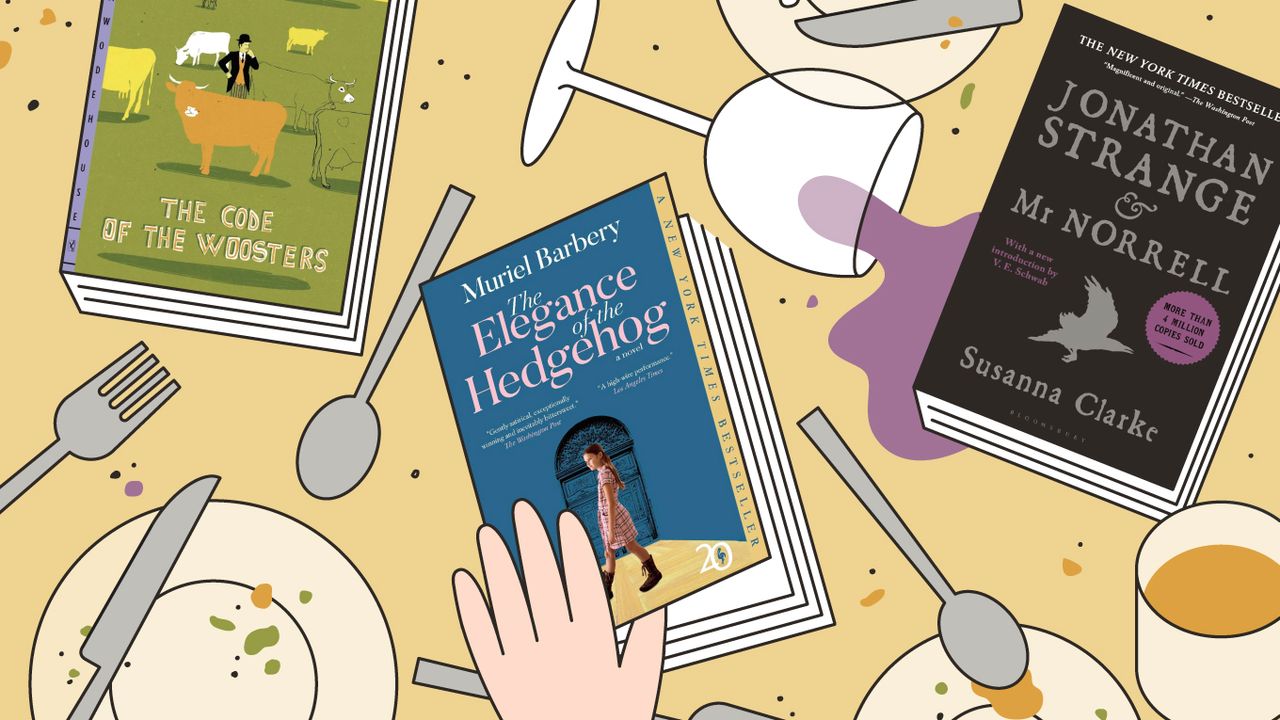
It’s the time of year for feasting, and thinking about feasts, and maybe dreading them, or yearning for more or better from them. The Thanksgiving feast doesn’t tend to lend itself to rhapsodic literature—the meal is so weighty with tradition that there’s hardly any space to move around in there, really, except as ironic set dressing. (No one’s turning over the last page of “The Ice Storm” with a primary feeling of hunger for gravied mashed potatoes and a slice of pie.) There are more abundant tables to be found outside of the holiday. Here are four of my favorite literary moments of gastronomic abundance—not a turkey in sight.
“The Elegance of the Hedgehog,” by Muriel Barbery
In this bittersweet chamber novel, the wealthy Monsieur Ozu invites the prickly Renée, the concierge of his Paris apartment building, into his home for dinner. The scene begins with Renée’s private meditation on the appeal of the still life, as an artistic form—“offered to us without requiring the effort of desiring on our part”—which rolls out a rich carpet for the food M. Ozu prepares for her: gyoza “stuffed with coriander and delicately spiced meat”; a wicker basket of chilled noodles, with a peanut sauce for dipping; endless cups of seaweed-scented tea. As a meal, it’s just a few modest courses, but as a scene it offers an extraordinary feeling of connection, of two people imbuing each other with a sort of magical mutual personhood. (I love, too, that the catalyst for Renée and M. Ozu’s wobbly friendship is a quote from “Anna Karenina,” itself one of the great chronicles of feasts and appetites—Oblonsky the gourmand’s extravagant lunching at the Hôtel d’Angleterre; Levin’s blissful bread and kvass after a day of scything; the minute social signalling of the zakuski table at a dinner party.)
“Jonathan Strange and Mr. Norrell,” by Susannah Clarke
Known, mostly, as one of the great works of modern literary fantasy, this book really deserves more credit as a comic novel, as nearly top to tail it’s a marvellously vinegary comedy of nineteenth-century manners. At almost precisely the halfway point, there’s a riotous set piece of a feast. A certain cruel Faerie king has, for his begrudging human bestie, put together a selection of what he considers all the finest foods in space and time: “Here is a haunch of roasted wyvern and a pie of honeyed hummingbirds. Here is roasted salamander with a relish of pomegranates; here a delicate fricassee of the combs of cockatrices spiced with saffron and powdered rainbows and ornamented with gold stars,” he explains. When the human—overwhelmed and fairly appalled—opts instead for a dish of plain sliced pork, his host informs him that the meat was “fried in fat that was rendered down from the exorcised ghosts of black Welsh pigs that wander through the hills of Wales at night terrifying the inhabitants of that deplorable country!”
“The Code of the Woosters,” by P. G. Wodehouse
Wodehouse peppers all his novels—glittery farces of interwar, upper-crust foolishness—with absurd and wondrous culinary details. None of these is so delightfully luscious as the Escoffierian handiworks of Anatole, the tempestuous French chef employed by Bertie Wooster’s Aunt Dahlia, whom she calls “God’s gift to the gastric juices.” Poor Anatole’s services (or the withholding thereof) are a near-constant engine of blackmail, betrayal, and other plot-fuelling choreography throughout all the Jeeves and Wooster stories. So magnificent is his cooking that, in “The Code of the Woosters,” Bertie is willing to spend a month in jail on false charges for the promise of, upon his release, an Anatolian dinner “that will live in legend and song.” The devised menu begins with caviar frais, cantaloup, Consommé aux Pommes d’Amour, Sylphides à la crème d’Écrevisses, Mignonette de poulet petit Duc, Points d’asperges à la Mistinguette—and that barely brings us to the foie gras, let alone to the Timbale de ris de veau Toulousaine, or (naturally) Le Plum Pudding.
“Land of Milk and Honey,” by C. Pam Zhang
There’s no end of exquisite food in this novel whose unnamed chef narrator often sinks into transportive sensory descriptions—at times overtly erotic, at times verging on body horror—while cooking for a group of billionaires hiding from global environmental collapse in a mysterious mountaintop enclave. So many food-forward novels use the lushness of appetites as a straightforward metaphorical tool; what I love about this book is the way its narrator wrestles with the angel of her own sensory rapture. The pleasures of culinary abundance are a symptom of vicious neo-feudalism, not a relief from it. “Butter doesn’t make the cake, nor cream,” the narrator notes of a cheesecake soufflé. “Its secret is ephemerality. Pull it from the oven and it is perfect; the next moment it is cooling, flattening, collapsing beneath the gravity of time. This is a flavor untasted by diners and critics, no record of its existence but for a private memory that lingers on one or two tongues.”
For more recommendations: see Helen Rosner’s gift guide of snacks, trinkets, and culinary-minded treasures.
Our editors and critics choose the most captivating, notable, brilliant, surprising, absorbing, weird, thought-provoking, and talked-about books. Find your next great read »
On Our Radar
Coming soon:
- December 1st brings Colm Tóibín’s “The Bridge,” a follow-up to “The Long Winter,” which he published twenty years ago. The new novella picks up the story of the closeted Miquel and his father, who are smugglers living in a remote valley in the Catalan Pyrenees, in the nineteen-fifties.
-
“Fabrications,” by Zach Mason, is a collection of short stories set in the near future, mostly told from the perspective of A.I. It’s also coming out on the 1st.
-
Stephanie Krzywonos spent seven seasons living and working in Antarctica, trying to process her grief over losing a dear friend. “The Blue Hours,” also out on the 1st, is her memoir of that time.
P.S. Agatha Christie’s “The Mousetrap,” the longest-running play in the world, opened in London’s West End on this day in 1952. Whitney Balliett, who reviewed it for the magazine in 1960, might be surprised to hear that the show is still going strong. 🎭
来源:纽约客中文网