 讲知识 · 讲经验 · 讲未来
 人人可分享 · 处处是课堂
 科技 · 财经 · 游戏 · 快讯,每日更新
 诚搜315观察网
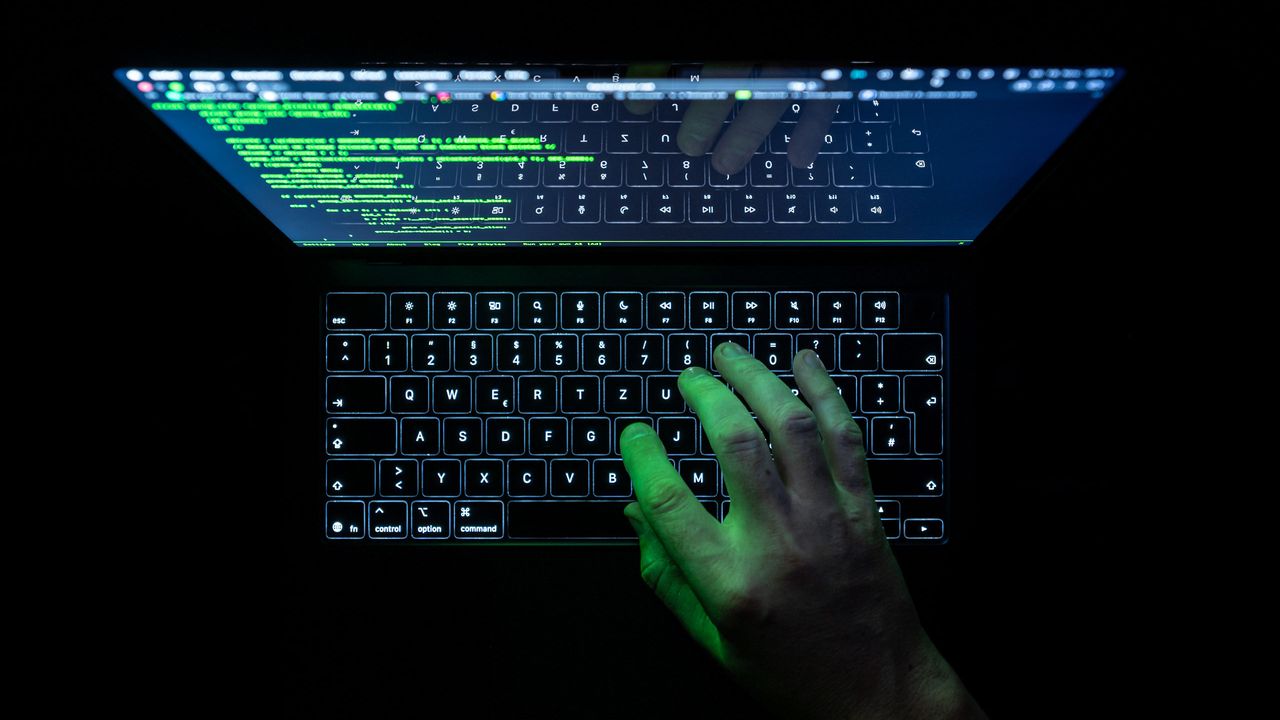
Are we entering a new age of cyber mayhem? The latest A.I. models are extraordinarily good at finding vulnerabilities in computer systems, and the computer systems have seemed unusually finicky. Lately, outages at the F.A.A., Apple, Microsoft, and Chase, among others, have created an atmosphere of alarm; Java and PHP, two programming languages that underpin much of the internet, were found to have critical security flaws. It’s unclear whether we’re in for a lot of inconvenience, or something more.
Andrew Lohn, a senior fellow at Georgetown’s Center for Security and Emerging Technology, has spent years studying cybersecurity and artificial intelligence. He’s worked for the RAND Corporation and the National Security Council. We spoke on the phone, and I asked him to put our unease in context. This conversation has been edited and condensed.
Let’s establish a baseline: Before this particular A.I. moment, what was the cybersecurity mind-set like?
It’s always been a little bit unclear how big the threats are, or what they’ll even be. Hacking goes back to at least the early eighties; back then, people really didn’t think about cybersecurity very much. You heard more about it once people started losing money. Then there were some scary, kind of fancy hacks that shaped a lot of thinking—like the Stuxnet worm, in the two-thousands, which was intended to take out Iranian nuclear centrifuges but then extended its reach and got onto computers elsewhere. At that point, cybersecurity people started talking about a “Cyber Pearl Harbor”—a theorized event where all kinds of really nasty things happened. We sometimes see little glimpses of it: in 2015 and 2016, for example, Russia was accused of taking down Ukrainian power grids.
But, over time, people started reconsidering the idea. Actually, not that much was happening. There’s a concept called the “cyber squirrel”: yes, there have been rare incidents of sophisticated hackers attacking critical infrastructure, but squirrels take down power substations or transmission lines all the time. There’s even a website where you can go and see all of these squirrel attacks on critical infrastructure. At some point, cybersecurity people started to talk about Cyber Pearl Harbor as an overwrought threat that never materialized. They usually use the term disparagingly now.
Why didn’t it happen? I definitely remember reading about how easy it would be for the bad guys to hack the power grid or the water system . . .
It’s not necessarily that there wasn’t a risk, but maybe we did some things to defend against it. Similarly, it was partly because of defensive preparations that we ended up seeing less damaging attacks at the start of the war in Ukraine than we might have anticipated. But, also, I don’t want to give us too much credit—we don’t really know exactly why there haven’t been all these devastating attacks. Maybe cyber’s just not good for it. Maybe you’d rather just walk around with a shotgun and shoot the transformers.
What happened in cybersecurity as fear of Cyber Pearl Harbor receded?
Other things were popping up, like criminal groups. Ransomware was getting pretty heavy. We saw ransomware attacks on Change Healthcare and on the Colonial Pipeline. And there were also intelligence hacks, with theft of data. The breach at the Office of Personnel Management got the records of millions of government employees, which was big, because that information about our citizens, particularly our cleared staff, could be used for blackmail, or things like that.
Today, with A.I., it’s almost like we’re back to the cyber-apocalypse scenario. Everybody’s trying to figure out, How bad is this? What could go wrong? We’re worried about Cyber Pearl Harbor again. How bad it is is definitely an open question. A lot turns on what happens when we put sophisticated cyber capabilities, which used to belong only to a few well-resourced nation states, into the hands of everybody—terrorists, your scorned ex-lover, you name it.
I thought the A.I. labs had all these guardrails in place to prevent bad guys from hacking. I remember when Anthropic didn’t publicly release Mythos because it was too powerful. Why aren’t these capabilities being controlled and locked down?
Well, the guardrails are very helpful—but people can get around them. They’re not as secure as what we would normally require of a cyber system. But that’s not where the main threat is coming from. First, there’s the fact that the open models are similarly capable, or just months behind, the frontier models: what we would’ve seen from Mythos in April, we’re seeing now from the Chinese open models. And another issue is time lag. Let’s say that Anthropic or OpenAI finds some vulnerability; they say, “Hey guys, this vulnerability was discovered, you should all use this patch.” That lets people do the patching, but also tells all of the attackers, “Hey, there’s this vulnerability out there that not everybody has patched yet.” So, anytime a vulnerability is discovered, that starts a race.
Now, these models are much better at finding vulnerabilities and writing patches than they are getting the patches implemented. And, every time you patch something, it usually goes right, but there’s some risk that it screws up your system. If we’re going to increase the number of patches that we do by ten times, then we’re going to expect ten times more of these patch-related outages. And that’s if you can keep the reliability of the patch that you’re writing to the usual level. If they’re less reliable, then we should expect even more. There’s a big rush for all of these overwhelmed defenders to get their patches out—and not only are the patches coming faster but now they’ve got scores and scores of them. I suspect that’s the main driver of what we’re seeing right now.
Could the A.I. labs avoid starting races by using back channels?
Yeah, there’s a process called coördinated vulnerability disclosure. When you find a new vulnerability, if you’re an ethical hacker, then you announce it to the people who will be affected by it or who can fix it. They get some number of days—forty-five days, ninety days—to try to deal with it. And, if they’re too slow dealing with it, then the standard ethical practice is to release the vulnerability publicly, so that the users understand the risk, even if they can’t fix it themselves—the idea being that, if you find a vulnerability, there’s a reasonable chance that some other attacker has found it. What’s happened recently is that Anthropic shortened their period for critical issues to thirty days. Presumably, they’re thinking that attackers have gotten better at finding new vulnerabilities, so the public needs to know about them faster. That also puts a higher pressure on these defenders to move their patches more quickly when they’re already being overwhelmed.
Can you give me a quantitative sense of how much easier it’s become to find vulnerabilities?
I have graphs here that show how many of these vulnerabilities are being found across the world. And, going back over the past year, January to January, most months hovered around four thousand new vulnerabilities. Starting in about April, it jumped to maybe six thousand, and it’s increased on an exponential trend: right now it’s up to sixteen thousand. So it’s about four times more per month, and looks like it’s trending up.
What’s the upper limit here? How many vulnerabilities are there? What are the dynamics? Take my house: If my goal is to prevent someone from breaking in, there’s a limited number of ways they can do that; at the same time, there are ways that people could break in that I could not prevent no matter what I did. If you have a powerful A.I. that can find vulnerabilities in computer systems, is a totally secure computer system even plausible? Or is that like me trying to secure my house against the U.S. Army? Or, alternatively, do these systems have a limited number of vulnerabilities, and, if we find and patch all of them, all will be well?
How many vulnerabilities are there to be found—that’s a tricky question. On the one hand, there’s this philosophy called Linus’s law [in honor of Linus Torvalds, the original creator of the Linux operating system]: “Given enough eyeballs, all bugs are shallow.” This is a mantra for the open-source community—it means that, if you put the code out there for everybody to inspect, they’ll find all the bugs, and we’ll be secure. But I don’t think that bears out in the math. If you look at how many vulnerabilities get discovered per month after a piece of software has been released, you see a bunch of them get discovered right away, and then the next month there’s a little bit less, and the next month there’s a little bit less—and if you extrapolate out that way of finding bugs, it doesn’t have a limit. Now, in the “before times,” the way that A.I. found bugs did have a limit; humans found more, because they were more creative. Since today’s A.I. finds the bugs more like humans do, my worry is that there’s no limit as you keep giving more compute to it.
There’s another approach that is worth giving more thought to, called formal methods. This is the idea that you can prove mathematically, when you write your code, that it doesn’t have these bugs in it. And now that A.I. is really good at writing proofs—as in math—there’s renewed hope that this could take out a bunch of the vulnerabilities. But that’s for the future.
Let’s recap all this. There are lots of things going wrong—Microsoft, the F.A.A., Apple, and so on—and in all of those cases, organizations have said that they weren’t cyberattacked. But it’s also reasonable to conjecture that these aren’t disconnected events. They’re the sorts of occurrences we’d expect when people are fixing their systems as fast as they possibly can.
That’s my impression. They’re the sorts of things you’d expect as the number of vulnerabilities bump up.
Just how bad is this state of affairs? On the one hand, these outages aren’t catastrophes—they’re limited, and they get fixed. On the other, the picture that emerges over all is alarming, because there are so many systems that need to be patched. How alarmed are you?
If I’m looking at the technical developments, I see plenty of reasons to be alarmed; if I’m looking at the attack database, at the incidents and impacts, then I don’t see it as much yet. Let’s go back to your house analogy. There are two ways of looking at it. We could imagine that a house needs to be like Fort Knox, locked down with layers of protection. But my real house is defended by glass windows, which means that Stone Age technology can take down the defenses—and so, even if somebody invents a new and cool glass-cutting contraption, it doesn’t make much difference, because they could already have just thrown a rock. Which scenario are we in? It might be that attackers were already fully capable of getting into just about anything they wanted to. They were not doing it for other reasons; maybe they didn’t want to go to jail, or they didn’t want to escalate to military conflict. In which case, maybe there’s less reason to be alarmed at the clear increase in vulnerability.
There are lots of different theories and approaches to cyber defense. A mantra used to be that if an A.P.T.—an “advanced persistent threat”—wants to get you, they will; you just have to make it hard enough that their A-team can only succeed a few times, so that you’ll go up against their B- or their C-teams, against which you can defend yourself. We had ideas like: You have to impose costs on the attacker, so that they are disincentivized. Maybe that means dollars, or the amount of people that they have to allocate, or the number of times they have to rebuild their infrastructure because you find it and take it down, or maybe it means costs like making them go to jail.
What about one-and-done hacks? Not stealing data but something where, say, the water infrastructure is compromised and just stops working. How scared should we be of that?
I think that a lot of what keeps us secure and stable is on the resilience side. For example, just over the past few months, Iran-linked hackers reportedly managed to get into a bunch of our water supply and started screwing with it. But there were no serious effects, because we’ve got systems that don’t allow dangerous things to happen at the mechanical level, no matter what the dials are turned to. I think that sort of preparedness gives us reasonable hope.
A lot of commentators are saying that we’re entering a period in which we should expect our critical systems to break or get hacked all the time. They argue that, where we once lived in an orderly universe of trustworthy infrastructure, we’re now going to inhabit software chaos.
I don’t want to be overly dismissive, because it’s clear that more people have access to more potentially damaging technology, but there are some reasons to be a little bit optimistic. One of them, like I said, is that attackers don’t want to do it that much anyway. You can even think about it economically. These new “zero day” mega-vulnerabilities could cost a hundred thousand or a million dollars for terrorists to buy. That is expensive—but not for terrorist organizations with hundreds of millions of dollars. Now, suppose the costs of those vulnerabilities drop down to ten thousand dollars each. Who’s priced in that wasn’t before? A lot of these cyberattacks don’t create the sort of buzz that even just driving a car through a crowd does. And, on the resilience side, we’ve already had some signs of success in making cyberattacks less troublesome. I’ve seen that in the ransomware data: the number of attacks is up, but ransomware payouts are down. I’ve seen the same thing in health breaches: health breaches are up or stable, but the number of people affected are down.
Why is that exactly?
For ransomware, my guess is that people have backups. They say, All right, fine, you locked our systems, so we’ll just go to our backup systems. We’re not giving you the money. I’m optimistic that, for a lot of the stuff that we really want to rely on, there are lots of ways to keep it reliable, even if the ability to run attacks goes up.
In your personal life, are you doing anything in response to this situation?
I’ve thought about it. It doesn’t cost a lot to have a dedicated computer with separate two-factor authentication keys for accessing important stuff, like your banking. I don’t think that’s necessary—but it costs so little compared to what it could save that it seems like a no-brainer. But I haven’t done it yet.
This is like having a computer that you use to do everything that’s sensitive, which is secured with its own special password? You just use this computer, you don’t use your phone? Am I understanding this right?
Yep. Basically like that. That doesn’t solve all of your problems, but it decreases one aspect of risk for a really pretty minimal sum.
But you haven’t done it yet?
Maybe this weekend. ♦
来源:纽约客中文网