 讲知识 · 讲经验 · 讲未来
 人人可分享 · 处处是课堂
 科技 · 财经 · 游戏 · 快讯,每日更新
 诚搜315观察网
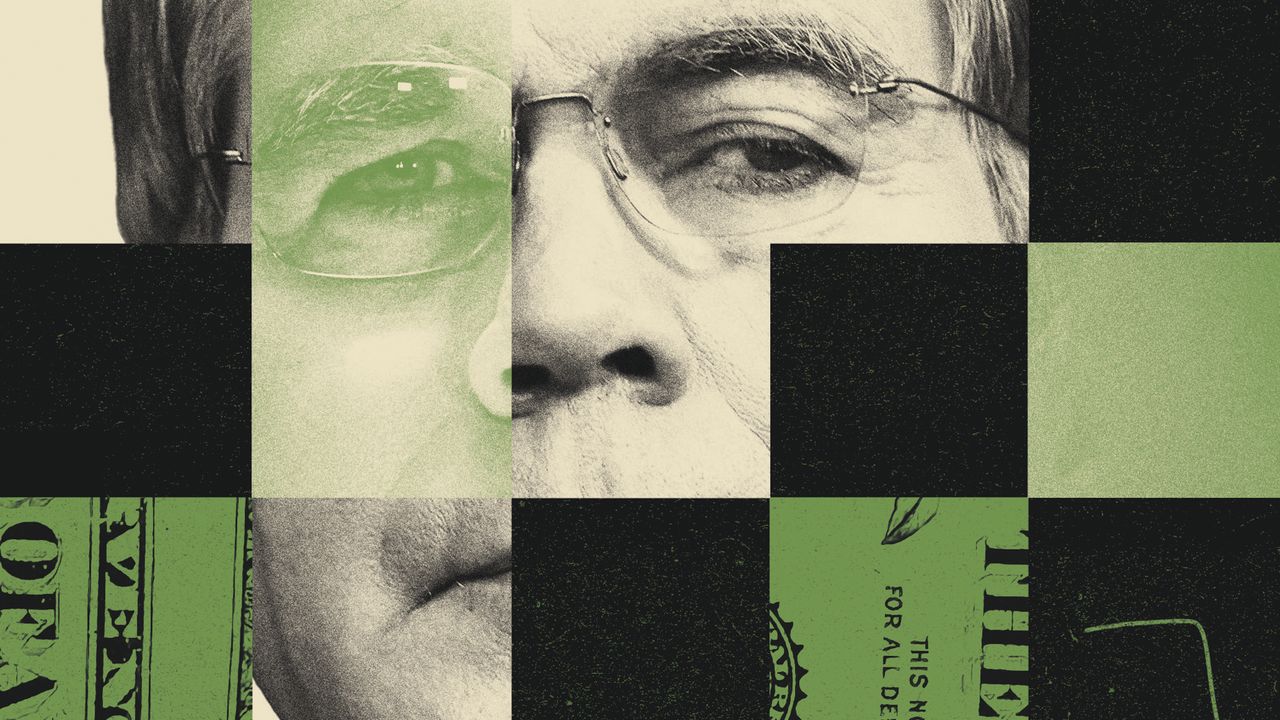
One evening in early October, the Secretary of the Treasury, Scott Bessent, sat in an empty meeting room in the Hershey Lodge, a chocolate-themed resort and convention center in central Pennsylvania. He was waiting to speak to seventeen hundred people attending the annual dinner of the state’s chamber of commerce. The comedian Kevin Hart had warmed up the crowd with a story about a trip he’d taken to Dubai with the rapper Ludacris, during which he fed a sheikh’s pet liger. Now Bret Michaels, the lead singer of the glam-rock band Poison, was onstage recalling his teen-age years in nearby Mechanicsburg. If Bessent was concerned that these would be tough acts to follow, he didn’t let on. He has encountered plenty of new things as a Cabinet member in Donald Trump’s second Administration. “I’d never danced with Nicki Minaj before, either,” he said, referring to a TikTok video he had made with the hip-hop star a few months earlier.
Bessent would seem an unlikely denizen of Trumpworld. He amassed much of his fortune—he’s currently worth an estimated six hundred million dollars—as a money manager for the billionaire investor and liberal bogeyman George Soros, and he likes to say that had he not gone into finance he would have been a college professor. He and his husband, John Freeman, a former New York City prosecutor, have earned plaudits from preservationists for their painstaking restorations of historic homes, including a pink mansion overlooking Charleston Harbor, in Bessent’s home state of South Carolina. “What are the chances?” Sean Patrick Maloney, a former Democratic congressman from New York, who’s been friends with Bessent for decades, told me. “A gay guy with money loves beautiful homes!”
Some of Trump’s supporters were initially skeptical of Bessent; Elon Musk branded him a “business-as-usual choice” for Treasury Secretary. But, in the past two years, Bessent has become one of the most consequential figures in the Trump Administration. A former White House official called him “the smartest person in the Administration, by far.” Jason Miller, a longtime Trump adviser, said, of the Treasury Secretary, “There’s no other person whose name comes up more often for V.P. in ’28.” Steve Bannon, Trump’s former chief strategist, went further: “If Scott Bessent wanted it, I think he could be the Republican nominee in 2028.”
In the run-up to the midterms, Susie Wiles, then the White House chief of staff, oversaw an unofficial Cabinet competition that awarded each member points for visiting swing states and competitive congressional districts. Bessent was a top performer. Past Treasury Secretaries have generally tried to avoid overt politicking, but Bessent was, presumably, the member of the Administration best equipped to address the issue that most dogged Republicans this fall: the economy. He was also the most willing to hit the hustings on his own. Many Cabinet members racked up points by accompanying Trump on his campaign travels, often hitching a ride with the President on Air Force One. But Bessent, Wiles told me, “knows that’s not what’s most helpful. What’s most helpful is to go ahead and speak to the crowd and see voters. If you travel with the President, that doesn’t happen.”
That afternoon, Bessent had been in Harrisburg with Scott Perry, a six-term Republican congressman, to promote Trump Accounts—the tax-free investment plans for American children which were established in last year’s One Big Beautiful Bill. “These children will be able to watch the Trump Accounts compound in real time, from a couple of thousand dollars in kindergarten to an estimated half a million by the age of retirement,” Bessent told a crowd in the rotunda of the state capitol. He called Perry, who, in 2020, had played a central role in attempting to overturn the results of the Presidential election, “one of the most effective members in all of Congress.”
Bessent, who is sixty-four, with combed-back silver hair and rimless glasses, is barrel-chested and six feet three. He carries himself in a way—throwing back his shoulders when he walks, sitting ramrod straight—that can make him seem even larger. One Trump adviser described him to me as “an alpha operator”; another said, “He’s very smooth, very patrician, all that, but he won’t take anybody’s crap.”
In Hershey, Bessent was eager to argue with anyone who thought that the economy was in bad shape. “The economy is good,” he told me. The only problem, he said, was energy prices, which were carrying over to interest rates—and the only reason energy prices were high was the war in Iran, which was both temporary and necessary. “Gas could be at at least six or eight dollars if the Iranians had a nuclear weapon,” he said. Otherwise, “there is no number in the economy that is bad. If I had a dashboard, there’s nothing on the dashboard that would worry me. It’s just the opposite. Things are accelerating.”
Bessent was aware that this was not the opinion of most Americans, who, polls showed, believed that not just gasoline but also grocery and health-care prices were too high and that wages were too low. The same polls showed that most Americans laid the blame for this situation on Trump, whose approval ratings were mired in the mid-thirties. “What I’m not going to do is say the American people don’t know how they feel,” Bessent told me. “But the data suggest otherwise. Like, there is revealed preference and stated preference.”
The revealed preference, Bessent said, could be found in data from credit-card companies, which showed strong consumer spending and no increase in delinquencies. Reports from retail banks like Bank of America, meanwhile, showed that “their working-class clients have more money coming into their accounts.” I asked what he and the rest of the Administration needed to do for revealed preference and stated preference to align. “I think it’s just time,” he said.
A day earlier, the Times had reported that a top official in Iran’s Islamic Revolutionary Guard Corps had admitted that his country’s economy was in dire straits. “Even the I.R.G.C. guy who was in charge of torturing and killing civilians came out and said that they’re fucked,” Bessent told me. In August, Bessent had seemed to take charge of the conflict in Iran by announcing Operation Economic Outcast, an aggressive sanctions campaign that replaced the military one. I asked Bessent what his timeline was for the Iranians to give up and accede to Trump’s demands. “I don’t have to have a timeline,” he said. “I just have to squeeze them more and more every day.”
Bessent pulled a pen from the inside pocket of his suit jacket and grabbed a paper napkin that was lying next to his four mobile phones on a table. “Do you remember what a decay curve looks like?” he asked. He drew a horizontal line that slanted downward before abruptly plummeting, a graphic representation of Hemingway’s old saw about how someone goes bankrupt: gradually, then suddenly. At some point, Bessent said, the situation in Iran would “go like that.” He jabbed a finger at the vertical line. “If you think about it, what happens on November 3rd?” he added, invoking the midterm elections. “The Iranians lose all their leverage.”

I said that that fact was probably cold comfort to the imperilled House Republicans he and Trump had been campaigning for—many of whom, including Perry, would go on to lose their jobs in the midterms. Bessent was unsympathetic. “Well, which is more important?” he shot back. “Getting rid of the Iranian threat? Or holding the House?”
The Treasury Secretary’s office occupies the southwest corner of the third floor of the Treasury Building. Previously, it provided an enviable view of the South Portico of the White House and the Washington Monument. But this fall the sights were largely obscured by a giant crane and other construction equipment, as crews worked twenty hours a day to build Trump’s ballroom. During one of my visits, Bessent gestured toward a window. “The big, beautiful ballroom is just big,” he said. “It’s not beautiful yet.”
Not that Bessent has much time to enjoy the view. In addition to overseeing the President’s economic policy and formulating and executing much of the Administration’s approach to Iran, he is largely responsible for managing the United States’ relationship with China. He ran the nominating process that resulted in Kevin Warsh’s appointment as Federal Reserve chairman, and, since the departure of Trump’s Senate-confirmed I.R.S. commissioner, who was made the Ambassador to Iceland in August, 2025, Bessent has been in charge of the tax agency. In September, Trump asked Bessent to take the lead on A.I. issues as the Administration’s new “Super Intelligence” czar. Bessent declined, and the job went instead to the director of National Intelligence, Jay Clayton. Bessent took a seat on the Administration’s new Super Intelligence Force, under Clayton’s leadership. “The impact without the responsibility,” Bessent said, of his A.I. assignment. “It’s the D.C. way.”
Steven Mnuchin, the Treasury Secretary during the first Trump Administration, was viewed as a loyal and competent technocrat. But though he was well liked on Wall Street and on Capitol Hill, he could frustrate other Trump officials—including, at times, the President—with his refusal to pursue a broader, more aggressive agenda. “Mnuchin was not MAGA at all,” a former Treasury Department official told me. “It wasn’t that he didn’t agree with the President. He did. But, culturally, it was just not his ethos.” Bessent, on the other hand, has displayed none of Mnuchin’s reticence. Jamieson Greer, the U.S. Trade Representative, said, “In the past, when you might have had one of those neoliberal-style Treasury Secretaries, they would have been the first to be, like, ‘No, don’t do this. The sky is falling. The other countries will say mean things about us.’ Scott doesn’t care about other countries saying mean things about us.” Another Administration official told me, “He’s willing to get down in the mud and fight.”
Before Bessent’s confirmation hearings, a Trump official gave him a pep talk, saying, “Just remember, you know more about the economy in your pinkie than every single person who’s on that dais.” Bessent seems to have taken that advice to heart. During a Senate Finance Committee hearing, in June, he accused the Oregon senator Ron Wyden, the committee’s ranking Democrat, of criticizing Trump’s “anti-weaponization” fund—a $1.776-billion settlement with the I.R.S. which would have disbursed payments to Trump allies who claimed that the Biden Administration politically targeted them—“in an attempt to cover up his son having an investment meeting with Jeffrey Epstein.” This was a reference to Justice Department e-mails showing that Wyden’s son Adam had met with Epstein in 2016 to discuss Epstein potentially investing in his hedge fund, ADW Capital, which had a stake in the parent company of the strip-club chain Rick’s Cabaret. Bessent remarked, “Did your son and Jeffrey Epstein talk about pole dancing as he begged him for money using your limited credibility?”
Last month, in a letter responding to the Democratic Massachusetts senator Elizabeth Warren, who had requested information about what the Trump Administration was doing to lower borrowing costs, Bessent wrote that the request “adds to the mounting body of evidence of your complete paucity of knowledge about financial markets” and offered Warren “a Foreign Exchange for Dummies tutorial.” Warren has long been a favorite target for Trump—he calls her Pocahontas, a mocking reference to a controversy over the extent of her Native American heritage. In a handwritten addendum, Bessent wished Warren “Happy Indigenous Peoples’ Day in advance.”
Civilians sometimes wind up in Bessent’s crosshairs. Last December, while the Secretary was having dinner at a Brazilian-Italian restaurant in Washington, hecklers from the left-wing group Code Pink showed up and accused him of being responsible for the deaths of six hundred thousand people around the world through the Administration’s economic sanctions. Bessent blamed the restaurant owner for not removing the protesters, and spit in his food before storming out. After a recent visit to a D.C. coffee bar with his teen-age daughter, he complained that customers seemed displeased by his presence. “There was some old hag who had to keep taking photos,” he recalled.
Even members of the Trump Administration have been subject to Bessent’s wrath. In the early days of Trump’s second term, when Musk and the Department of Government Efficiency were taking a chainsaw to the federal bureaucracy, Musk installed as acting I.R.S. commissioner a senior official who had publicly accused the Biden Administration of slow-walking an investigation into Hunter Biden’s taxes. Bessent confronted Musk about the move in the Oval Office. The two exchanged “fuck you”s before the argument spilled out into the hallway, where, according to Maggie Haberman and Jonathan Swan, in their book “Regime Change,” Bessent taunted Musk about his unrealized expectations for DOGE. “Elon, are the savings two trillion?” Bessent prodded. “One trillion? A hundred billion?” In response, Musk threw a shoulder into Bessent’s torso.
A few months later, during a dinner for top Administration officials at Executive Branch, an exclusive Georgetown club co-founded by Donald Trump, Jr., Bessent objected to the presence of Bill Pulte, the Federal Housing Finance Agency director, who, Bessent had heard, was bad-mouthing him to the President. “Why the fuck are you talking to the President about me? Fuck you,” Bessent reportedly told Pulte. “I’m gonna punch you in your fucking face.” (Later, during testimony before the Senate Finance Committee, Bessent partially disputed this report, saying, “I actually said I was going to kick his ass.”)
Bessent maintains that the stories about his temper are overblown. “I would say that I have great equanimity, and that people are startled when you get the occasional rupture,” he told me. If anything, the episodes have raised his standing in the White House. “It’s so Trumpy,” a former Administration official said. “ ‘If you push me, I’ll push you back harder.’ ” Another Trump adviser regarded Bessent’s occasional outbursts as a sign of his integrity: “He’s a straight shooter. You don’t have to wonder, ‘Oh, what’s he really thinking? Is he trying to fuck me?’ He’s not gonna hide it. You know where you stand with him.”
Indeed, the Trump Administration has sought to take advantage of Bessent’s tough-guy approach. Last year, when a group of House Republicans from New Jersey and New York were threatening to derail Trump’s One Big Beautiful Bill by holding out for a higher limit on the state and local tax deductions, the White House sent Bessent to Capitol Hill to take over the negotiations. At one point, he reached across the table and pulled the Administration’s term sheet toward him. “Guys, I think we’ve entered the valley of stupidity here,” he told the members. A former White House official recalled hearing from one of the holdouts that “everybody’s sphincter tightened at once.” The former official added, “It was just the absolute perfect negotiating gambit, and it went over in the room like a nuclear bomb.” After a brief break, the Republicans took the deal.
The first time I met with Bessent, in his office, he made a point of showing me the family Bible that he was sworn in on. It was printed in 1779, he noted, and some of it was in French. Bessent is a descendant of two of the most prominent and affluent families in the South Carolina Lowcountry. One set of his ancestors, the Horrys, were French Huguenots who arrived at Charles Towne Landing in 1680. The other set, the Bessents, came to South Carolina from Barbados in 1672, lured by the prospect of larger plantations. Bessent takes obvious pride in this heritage: Trump’s official statement announcing his nomination noted that Bessent was “a member of the French Huguenot Church of Charleston, where his family were founding members in the 1680s.” His Secret Service code name is Swamp Fox, the nickname of the South Carolina Revolutionary War hero Francis Marion, in whose unit Bessent’s great-great-great-great-great-grandfather fought.
Despite this prestigious lineage, Bessent’s childhood was not without hardship. The oldest of three children, he grew up in Little River, a small town north of Myrtle Beach. His mother, Barbara, was a fashionable chain-smoker with a fondness for vodka Martinis. His father, Homer, was a real-estate developer who claimed to own the largest collection of science-fiction books in the state. When Bessent was six years old, Homer, who had a drinking problem, contracted tuberculosis. That same year, Bessent’s great-grandmother died, and Homer and Barbara had to sell her home, where they and six generations of Bessents before them had lived. The family was forced to move into the guest cottage of Barbara’s parents’ house. “I had what I hoped then would be the worst year of my life,” Bessent told me.
Two years later, Homer’s real-estate business went bust, and he declared bankruptcy. Bessent, at the age of nine, started taking jobs—busing tables, putting up umbrellas at a beach club—to try to help with his family’s finances. “My dad made a lot of bad financial choices,” he said, during an appearance on Tucker Carlson’s podcast last year. “So when I was born—first six, seven, eight years—we were affluent. He lost everything. So I’ve seen what that’s like. I’ve seen both sides.”
Homer and Barbara couldn’t afford to send Bessent to boarding school, as they had originally planned, so he attended a public high school, where he played basketball, finished first in South Carolina’s Model U.N. competition, and, as a senior, was voted Most Likely to Succeed. He received an appointment to the Naval Academy but decided not to attend because of the military’s ban on gay service members. Instead, he went to Yale. In New Haven, Bessent leaned into his Southern identity, subjecting classmates to lectures about his home state’s palmetto-and-crescent-moon flag and marvelling in a Yale Daily News column that he “somehow survived” the city’s “lack of cornbread, grits, and stock car racing.” When Ronald Reagan visited New Haven a month before the 1980 Presidential election, Bessent was one of five students who showed up to meet him.
In his junior year, Bessent, who hoped to become a journalist, ran for editor-in-chief of the Daily News. “He was qualified,” an editor who participated in the election recalled. “But certainly no one’s first choice.” Bessent lost and was devastated by the outcome. “I kind of locked myself in my room for a month,” he later said. He walked away from the consolation prize of news editor and quit the paper, abandoning journalism altogether.
Instead, he set his sights on Wall Street—specifically money management, which he thought would offer a relatively gay-friendly path in finance. In trading or investment banking, he explained, firms controlled who got which accounts and the sizes of employees’ annual bonuses. “I’d actually heard what friends of mine said: ‘Oh, well, you didn’t think you were going to get the same bonus as Bob? He has a family,’ ” Bessent told me. But, in money management, “it’s just your scorecard.”
In November, 1991, Bessent was a few months into a job as an analyst in the New York office of Soros Fund Management when the hedge fund’s chief investment officer, Stanley Druckenmiller, called him into his office. S.F.M.’s European portfolio manager in London had made a bad bet on some German stocks, and George Soros was going to fire him. Would Bessent be willing to go to London and babysit the European portfolio? “Just stay there until we find a high-powered European guy to take over,” Bessent recalled Druckenmiller telling him. Three days later, Bessent was in England. The firm put him up in the mother-in-law flat attached to Soros’s house in Onslow Gardens, which came with the perk of being able to use Soros’s domestic staff.
As part of his new remit, Bessent studied the United Kingdom’s volatile housing sector, which had just experienced a boom in homeownership thanks to Margaret Thatcher’s privatization program. But, unlike in the U.S., almost all home mortgages in the U.K. had adjustable rates. After a few months in London, Bessent learned that Druckenmiller was considering shorting the pound—borrowing large quantities of it to purchase other currencies in the hope that a swing in exchange rates would yield a profit. He told Druckenmiller that the U.K.’s adjustable-rate mortgages would make it politically difficult for the Bank of England to deter currency speculators; raising interest rates to make short selling more expensive would also increase mortgage costs for millions of British homeowners. As Bessent later explained, “The Bank of England could punish us and raise rates up to fifteen per cent to try to make us go away, but they would be bankrupting all the new Tory homeowners who they needed to vote for them.”
Soros liked the idea of shorting the pound so much that S.F.M. invested ten billion dollars in the position. On September 16th, a day that came to be known in England as Black Wednesday, the bet paid off: after a series of interest-rate hikes failed to stabilize the pound, the British Prime Minister, John Major, pulled the currency out of the European exchange. S.F.M. made around a billion dollars in profit. “Scott gave Stan the conviction to do it, and then George pushed Stan to get bigger,” Michael Oliver Weinberg, a Soros portfolio manager, said. “It was a great synergy.” After Black Wednesday, Soros and Druckenmiller left the firm’s European portfolio in Bessent’s hands. “Scott was like a son to them,” Weinberg said.
Although S.F.M. was becoming one of the world’s most successful hedge funds—between 1989 and 1998, its assets grew from a billion dollars to twenty-two billion dollars—the firm’s offices near Carnegie Hall remained spartan, with duct tape holding together patches of pink carpeting. Soros himself promoted a culture of thrift, flying commercial, even to Russia on Aeroflot. He was deeply influenced by the philosopher Karl Popper—who posited, among other things, that a scientific theory cannot be proven with absolute certainty—and viewed investing as more of an intellectual endeavor than a financial one. He also believed that if you were confident in a position it was your duty to be as aggressive as possible. One of the fund’s mottoes was “It takes courage to be a pig.”
Years later, during a series of interviews with the journalist Chrystia Freeland, who was writing a biography of Soros, Bessent marvelled at Soros’s work ethic, his genius, and his attunement to the market. “George is like a big cat, like a panther walking through the jungle,” he told Freeland. “And he can hear every twig.” But it wasn’t Bessent’s appreciation of Soros’s financial acumen that stood out. As Freeland told me, “Of all the people I talked to about George, Scott was one of the most positive about his human characteristics. If ten is ‘This guy is Mother Teresa’ and one is ‘This guy is Mephistopheles,’ Scott was an eight—and a lot of people were fours.”
Since entering the Trump Administration, however, Bessent hasn’t been so effusive about his old boss. At this year’s World Economic Forum, in Davos, he took a gratuitous shot at Soros’s son Alex, who now handles his father’s philanthropic and political efforts. Alex had been photographed in Davos with the governor of California, Gavin Newsom, who, during a speech accusing European leaders of failing to stand up to Trump, had brandished a pair of kneepads bearing an ersatz Trump signature. In a press conference, Bessent said that Newsom was in Davos “with his billionaire sugar daddy Alex Soros” and quipped, “If he brought the kneepads, maybe that was for his meeting with Alex Soros.” Later, in an off-the-record comment to a reporter, he joked that Newsom’s kneepads still had Soros’s “cum” on them.
Bessent told me that, when he started at S.F.M., George Soros’s political views weren’t necessarily out of line with his own. The animating idea of Soros’s philanthropic group, the Open Society Foundations, Bessent said, “was to bring down the Iron Curtain. And it worked.” But during George W. Bush’s Presidency their politics began to diverge. “A lot of people have asked me, ‘When did George get so political?’ ” Bessent said. “I think something snapped under Dubya, because I remember at one point, when it was Dubya versus Kerry, he said, ‘Oh, I think I should go to Ohio to campaign for Kerry.’ I said, ‘George, I would just send more money.’ I would not say that self-realization is his strong suit.”
Bessent also claimed that the press had overstated his relationship with Soros, saying that he’d always been closer to Druckenmiller. “Stan was kind of like the Pope,” he said. “You didn’t really speak with George.” Bessent left S.F.M. for a time in the two-thousands to launch his own hedge fund and to teach economic history at Yale, but he returned to S.F.M., as chief investment officer, in 2011. He recalled telling Soros, “I’m going to do what I want to do, and, if the performance is bad or you’re not happy with me, you can fire me, but you can’t tell me what to do in the portfolio.”
By 2015, Bessent said, Soros “was starting to renege on his word,” letting his political views influence financial decisions, such as trying to get Bessent to take positions designed to protect the eurozone. “I think it’s a real challenge when you get older to be able to maintain a positive attitude,” Bessent said. “So he had gone into doomerism.” That same year, Bessent announced that he was leaving S.F.M. and starting his own hedge fund, Key Square Group, with a two-billion-dollar investment from Soros. Bessent said that he and Soros haven’t spoken in a decade.
Last year, at the Allen & Company Sun Valley Conference, an annual gathering of the world’s business élite, in Idaho, Bessent was asked to compare his current boss with his old one. He said that Soros and Trump were “the same animal”—both had an “incredible propensity to take risks” and “incredible survival skills.” When I asked him the same question, earlier this fall, he was less equivocal. “To George, everybody’s a stock,” Bessent told me. “You’re either going up or down. Not very sentimental.” He went on, “The President has much more empathy than George. The President is friends with people for twenty or thirty or sixty years.”
In the spring of 2023, Jason Miller, the longtime Trump adviser, got a call from Steve Bannon. “Steve just said, ‘Hey, there’s this guy you’ve got to meet. He’s going to be the absolute perfect Secretary of Treasury for the President,’ ” Miller recalled. “That’s how he introduced Scott.”
Bessent wasn’t obvious MAGA material. During the 2000 Presidential campaign, he and his partner at the time, Will Trinkle, hosted a fund-raiser for Al Gore at their home in East Hampton. “Our issue was equality, and Democrats were best on that issue,” Trinkle said. After Bessent and Trinkle broke up, in 2004, Bessent tilted his political giving toward the G.O.P., supporting establishment Republicans, including Paul Ryan and Mitch McConnell. During the 2016 G.O.P. Presidential primary, he gave two hundred thousand dollars to the super PAC of the anti-Trump Ohio governor, John Kasich. (The donation prompted Ted Cruz’s super PAC to run attack ads accusing Kasich of accepting “hundreds of thousands of dollars from George Soros.”)
For many years, Bessent’s economic views were those of a conventional Wall Street Republican. He told Steven Drobny, the author of the 2006 book “Inside the House of Money,” that “no one in the United States realized what a favor Mexico was doing us” with NAFTA by providing the U.S. with “cheap labor.” But Bessent told me that in the two-thousands he began to depart from the Wall Street consensus about who was—and wasn’t—benefitting from free trade. On trips back to South Carolina, he said, he was “seeing the whole textile industry get wiped out,” while on visits to China he’d hear about new manufacturing hubs with nicknames like Sock City and Underwear City. He recalled learning at the Shanghai Auto Show that a Chinese car company had produced “an exact copy” of a Buick model that was popular in China and thinking, “G.M.’s fucked.”
After reading Charles Murray’s 2012 book, “Coming Apart: The State of White America, 1960-2010,” which argued that the education gap between white élites and white working-class Americans amounted to a kind of caste system, Bessent became concerned about the “self-sorting at Ivy League schools.” Two Uber rides he and his husband took in the summer of 2016, to and from an expensive Charleston restaurant, were also influential. Both drivers, a groundskeeper at the Citadel and an elementary-school teacher, told Bessent that they were driving for Uber because they couldn’t “make ends meet.” Trump had just secured the Republican Presidential nomination, and Bessent began to think that he had a real chance of winning. “And then, also, Brexit happened,” he said. “I sensed a big mood shift in the country.”
After the election, Bessent adjusted his stock positions in the expectation that the market would climb during Trump’s tenure, which, after a brief dip, it did. Soros, by contrast, bet on a sustained market plunge and reportedly lost nearly a billion dollars in the weeks after Trump’s victory. During the transition, Bessent donated a million dollars to Trump’s inaugural committee.
Less than a year later, Bannon—who’d recently been fired from the White House after a brief, tumultuous tenure as Trump’s chief strategist—was giving a paid speech at a conference in Hong Kong. At the event’s dinner, he struck up a conversation with a man sitting beside him. It was Bessent, who later told Bannon that he had specifically requested the seat. Bannon was impressed that a hedge-fund titan like Bessent had an appreciation for what Bannon called “Trumponomics.” He also liked that Bessent was “kind of a cracker.”
Bannon began to help Bessent gain entrée to Trump’s circle. In 2021, he persuaded Bessent to bankroll a new conservative publishing house, All Seasons Press, which pledged to take on “the cancel culture that is destroying the publishing industry and the country.” (All Seasons published books by several MAGA luminaries, including Mark Meadows and Peter Navarro, but sales were disappointing, and Bessent off-loaded the publishing house in 2024.) Bannon’s longtime communications director, Alexandra Preate, put Bessent through public-relations “boot camp” and introduced him to influential Trumpworld figures, including Tony Sayegh, a Treasury Department official in Trump’s first term who is friends with Donald Trump, Jr. Sayegh and other former Trump officials became part of what one person close to Bessent called a “political kitchen cabinet for Scott.”
After Bannon’s call, Jason Miller invited Bessent to Mar-a-Lago to meet with Trump. It was not their first encounter. In the nineties, Bessent became good friends with Blaine Trump, then the wife of Trump’s younger brother, Robert, and he’d sometimes bump into Trump at social functions or family events. “Four or five years ago, if you were to say ‘Scott Bessent’ the President wouldn’t know who that was,” Bessent told me. “But if you pointed at me he’d say, ‘Oh, that’s Robert’s friend,’ because I was always with Robert and Blaine.” At Mar-a-Lago, Bessent worked to disabuse Trump and his advisers of the notion that he shared Soros’s politics, but his time at S.F.M. was otherwise viewed as a plus. “Soros was a powerhouse on the financial side,” Miller said. “All you’ve got to do is look at Scott’s record, what they did with the pound.”
Bessent threw himself into Trump’s fund-raising operation, giving more than a million dollars to the campaign and its affiliated PACs. He urged other deep-pocketed donors to do the same, likening Trump to a “super stock” that “goes up on bad news.” Just as important, he beat the drum for Trump’s economic policies. In a January, 2024, memo to Key Square investors, Bessent reassured jittery finance types that Trump’s talk of tariffs was mostly bluster: “We find it unlikely that across-the-board tariffs, as currently reported by the media, would be enacted at the same time as he moves to fix the immigration crisis. The tariff gun will always be loaded and on the table but rarely discharged.” That October, when Trump met with the Wall Street Journal’s editorial board, he brought along Bessent, who, according to a Trump staffer in attendance, jumped in several times to lend his expertise: “Having a Wall Street guy in the room saying yes to these policies, that they will work, was a big boost to the campaign.”
Bessent’s main obstacle in his quest to become Treasury Secretary was Howard Lutnick, the chairman and C.E.O. of the financial-services firm Cantor Fitzgerald. Lutnick did not have Bessent’s sterling reputation on Wall Street; he was often dismissed by peers as a hustler and a carnival barker. But he had insinuated himself into Trump’s orbit, and, that August, Trump had appointed him a co-chairman of his transition team. According to a Trump adviser, Lutnick used the position as leverage. “He was asking for support” from candidates for other Administration posts, the Trump adviser said. “ ‘Oh, you want that job? Support me for Treasury.’ ”
At the same time, Lutnick’s allies attacked Bessent, circulating a document of Key Square returns that showed the firm had lost money five of the previous seven years. On X, Lutnick’s backers, including Elon Musk and Robert F. Kennedy, Jr., advocated for him to get the position. One of Bessent’s allies suggested that Lutnick was trying to put Trump “in a box in a public way. And that wasn’t appreciated.”
After the election, Bessent decamped to the Brazilian Court Hotel, in Palm Beach, and visited Mar-a-Lago. Rather than make a public push on social media, he enlisted the support of Vice-President J. D. Vance, Donald Trump, Jr., and Susie Wiles, among others. The Fox News host Laura Ingraham, who spends time at Lyford Cay, an exclusive enclave in the Bahamas where Bessent has a home, privately conveyed to Trump that she thought Bessent would be the right choice for Treasury. “A lot of people had campaigns to get various jobs,” another Trump adviser said. “But Scott might have been the fiercest and the most dedicated.”
In the end, Lutnick, who wound up with the consolation prize of Commerce Secretary, likely did Bessent a favor by forcing him into a knife fight. “The President loves a battle royal,” a former ambassador under Trump said. “And he was impressed that Scott didn’t get rattled.”
Bessent told me that he’s been interested in public service ever since he applied to the Naval Academy. At Yale, he explored going into the Foreign Service, but he reconsidered when he was warned that the State Department frowned on gay Foreign Service officers because they were considered blackmail risks. “Now I think they’re all gay,” Bessent joked.
But one of Bessent’s old finance colleagues suggested that his move to the public sector was motivated by something other than civic duty. “The people he looked up to, like Stan and George, made these vast fortunes out of their intellects,” the former colleague told me. “And Scott never did. He did O.K., but he wasn’t at the same level as Stan and George. And I think becoming Treasury Secretary was kind of compensation for him for not being as successful.”
About an hour after Bessent was sworn in, in January, 2025, he confronted his first crisis. David Lebryk, the highest-ranking career official at the Treasury Department, who’d served as acting Secretary while Bessent awaited confirmation, informed Bessent that he’d been asked to take an administrative leave because he’d refused to give DOGE staffers access to the department’s payment system. Bessent told Lebryk that he would look into the matter. A day later, after not hearing from Bessent, Lebryk resigned—triggering a gradual wave of other resignations by career Treasury officials. One departing official left a copy of Umberto Eco’s essay “Ur-Fascism” in her office.
More than half a dozen Senate-confirmed Treasury officials have departed, too. “That’s a big deal,” a former Treasury official said. “It’s hard to get confirmed. You don’t walk away lightly.” Among those who have left are John Hurley, the Under-Secretary for Terrorism and Financial Intelligence, who reportedly clashed with the White House over its plan to crack down on alleged fraud in Minnesota’s Somali community; Brian Morrissey, Treasury’s general counsel, who departed on the day that Trump’s anti-weaponization fund was announced; and Ken Kies, an Assistant Treasury Secretary and the department’s top tax-policy official, who had warned the White House that it was at risk of violating a federal law that prohibits senior officials’ involvement in I.R.S. audits. “It just became very, very clear that the only thing that Bessent was interested in was keeping the President happy,” a career Treasury official who resigned several months into the Administration told me.
When I asked Bessent about the perception among current and former Treasury officials that he doesn’t “stand up for the institution,” as one of them put it, he replied, “That’s just wrong.” He argued that he did “defend the building,” and that the political appointees who’d left “served at the pleasure of the President.” He added, “I can defend them, but if the President wants them out then they’re out.” Of the ones he didn’t defend, Bessent said, “They didn’t want to work. Like, if I show up at the Met Club at seven-thirty or eight, and they’ve been in there throwing back Martinis since five-thirty—we’ve only got four years, and I didn’t come here to do that. A lot of people think their achievement was getting the job, not doing a good job.”
For most of Bessent’s time at Treasury, he has been regarded warmly on Wall Street. “He’s direct, he’s honest, he’s responsive, he’s smart,” Jamie Dimon, the chief executive of JPMorgan Chase, told me. “He’s a go-to person for a lot of people not in government.” Bessent’s prediction that Trump’s “tariff gun” would be “rarely discharged” turned out to be profoundly wrong. But after “Liberation Day,” in April, 2025, when Trump announced double-digit tariffs on almost every U.S. trading partner, Bessent was able to persuade the President to pause the tariffs for ninety days, settling the markets. He also helped talk Trump down from firing Jerome Powell, the Federal Reserve chairman. Kenneth Rogoff, a former chief economist at the International Monetary Fund and now a Harvard professor, said, “With Bessent, people feel that some educated technocratic view is getting through all the political mess on some issues some of the time, as opposed to just Trump running the show. If you had the headline ‘Bessent Resigns,’ the market would collapse.”
At times, Bessent has played a similarly stabilizing role for other countries. Last year, he orchestrated a highly unusual currency swap with Argentina’s central bank, using what’s known as the Exchange Stabilization Fund, a bucket of money that the Treasury Department controls, to provide a twenty-billion-dollar loan to keep the South American country from defaulting on its debt. The move was intended to help the political party of Javier Milei, Argentina’s President and a staunch Trump ally, win the country’s midterm elections. It also enabled Argentina to remove its export tariffs on soybeans, thereby reducing their price to China, which was refusing to buy America’s crop. Then, in August, Bessent used the Exchange Stabilization Fund to purchase five hundred million dollars’ worth of Japanese yen. Japan is the largest holder of U.S. debt; to prop up its currency, the country might have otherwise had to sell Treasury bonds—a move that could have led to higher interest rates in the U.S. Both currency bets worked, and wound up making the U.S. money, but they were also viewed as a troubling departure for the Treasury. “It’s shocking to use taxpayer assets, in the Exchange Stabilization Fund, to influence a foreign election,” the former Treasury official said.

Then, in August and September, Bessent made a dramatic intervention in the U.S. market. The Treasury Department tripled the amount it can spend buying back bonds—essentially buying back its own debt—at any given time from two billion dollars to six billion dollars. The move was interpreted by many on Wall Street as an attempt to lower the yield on ten- and thirty-year Treasury bonds, and thus help lower borrowing costs—a pressing concern for the Trump Administration and Republicans as they headed toward the midterms. Perhaps, after Bessent’s successful currency interventions in Argentina and Japan, he thought he had a hot hand—that he had the courage to be a pig. “It’s my dream,” he told an audience at the business school of Southern Methodist University, in Dallas. “I have asymmetric information. I am the house now. You can bet against me if you want.”
This time, the house didn’t win. U.S. government-bond yields climbed to multiyear highs, with the ten-year Treasury yield hitting 5.3 per cent in late September—the highest it’s been since 2002. Eventually, Bessent admitted, on CNBC’s “Squawk Box,” “I can’t set the equilibrium price.” The episode rattled Wall Street. “I believe he knew it wasn’t going to work,” Douglas Holtz-Eakin, a former director of the Congressional Budget Office, said. “So I ask myself, ‘Why would he do this?’ ” The answer, Holtz-Eakin went on, was likely that Bessent was trying to do “something, anything, to please the President.”
One of the loudest critics of Bessent’s bond intervention was his old mentor, Stan Druckenmiller. In an op-ed for the Wall Street Journal, Druckenmiller wrote, “This wasn’t liquidity management, it was price management.” He said the move was “a mistake.” It was later revealed that Druckenmiller had used A.I. to write the op-ed, but among Wall Street types its significance was clear nonetheless.
Druckenmiller did not tell Bessent about his Journal op-ed before it was published. “He was afraid I’d change his mind,” Bessent joked, before admitting, “I was surprised he didn’t give me a heads-up.” Bessent argued that Druckenmiller didn’t understand what he was trying to do. “I think Stan got a little hot under the collar and was kind of ‘Fire, ready, aim,’ ” he said. He likened Druckenmiller to Andrew Mellon, a laissez-faire absolutist, who, as Treasury Secretary in 1929, refused to intervene after the stock market crashed.
Bessent maintains that his intervention worked. He told me that the goal was not to bring down rates of U.S. Treasury bonds but to provide liquidity and prevent rates from rising as high as those on other countries’ bonds. “Where would we be versus the Bund or versus French bonds or U.K. bonds if I hadn’t done it?” he asked. “It’s like a race. If you and I are racing a bear, the important thing is that I beat you. And guess what? We did better than every other bond market over that period.”
I asked Bessent if the op-ed had made him think less of Druckenmiller. He insisted that it had not. “I’ve known him for more than thirty years,” Bessent said. “His wife is one of my daughter’s godmothers.” (The other is Blaine Trump.) He had no plans to change that relationship. “As long as she calls the balls and strikes on the ear piercing, the female-plumbing discussions,” he said, “she’s staying in.”
Earlier this month, I paid a final visit to Bessent in his Treasury office. On a table by the door, next to a yarmulke decorated with the iconic picture of a bloodied Trump in Butler, Pennsylvania, was a new tchotchke: a MAGA-style red baseball cap with the word “VETO” emblazoned across the front. “The President had ten thousand of them made,” Bessent said. “He’s the ultimate troll.”
It was a week after the midterms, in which Democrats had retaken not only the House but also the Senate, and Bessent and the rest of the Trump Administration were still coming to grips with the new political reality. “I think there’s a vibe shift,” Bessent acknowledged. “We’ll see what the Democrats want to do.” They could be “punitive,” he went on, or they could “moderate.” Three days earlier, Trump had ousted Susie Wiles as chief of staff and replaced her with Stephen Miller, the architect of the Administration’s immigration crackdown, who was being described by Trump allies as a “wartime consigliere.” But Bessent believed that Trump—some trolling aside—wasn’t necessarily going to respond to the midterm results with full-scale political combat. “The President’s a pragmatist,” he said. “So I think that he will be willing to work with the Democrats.”
Bessent stood up from a silk-upholstered couch and walked toward his desk. Trump had given every Cabinet member a flat-screen monitor that exclusively displays the President’s social-media feed. Bessent read to me one of Trump’s most recent Truth Social posts, which urged senators to vote for permitting-reform legislation. “Maybe that could be bipartisan,” Bessent said. The Treasury Secretary, too, was attempting some bridge-building: the gratuitous insults he’d lobbed at congressional Democrats—such as wishing a happy Indigenous Peoples’ Day to Elizabeth Warren—were “Kabuki” and “pro wrestling,” he said. He noted that he’d once hosted Warren for breakfast in his office. “She and I share a goal that the poorest people shouldn’t pay the most,” he told me. “She just has a command-and-control view of how to do it, and I have a supply-side-and-deregulatory view.”
A person who frequently speaks to Bessent told me that the Secretary had been “beyond pissed because of all the hard work he did to get the economy turned around—and then the war undid all of it.” But, unlike Vice-President Vance, who posted on X shortly after the election that “the reason we lost is the war,” Bessent does not blame the midterm shellacking entirely on the Iran conflict. “I think it was a reason,” he said. “I don’t think it was the reason.” He’d spent the past two years promoting the concept of “parallel prosperity”—that though Wall Street “can continue to grow and do well,” it was now “Main Street’s turn” to prosper. He’d fought for the inclusion of Trump Accounts and no tax on tips and overtime in the One Big Beautiful Bill, and he had loosened regulations on community banks so that they could do more lending.
But the midterms led him to conclude that the Trump Administration should have done more to address the cost of housing and to promote its work on student loans. On A.I., the White House might have helped the “data-center people in a better messaging route,” he said. “I was telling the A.I. companies the whole time, ‘You need to spend less on lobbying and more on P.R. and helping the communities.’ ” One idea he had was for A.I. companies to pay for people’s property taxes in the places where data centers were being built. “I used to live in Greenwich, Connecticut,” he said. “If you told everybody in Greenwich you’d pay their property taxes for twenty years, they’d let you put one on the town green.”
The Trump Administration’s big bet on A.I. has only grown more fraught. After the midterms, it was revealed that Jensen Huang, the C.E.O. of Nvidia, which controls around ninety per cent of the market for the advanced chips used in A.I., had been having an affair with a top executive at Megaspeed, a Singapore-based company that has been accused of smuggling Nvidia chips to China. The Times reported that, for roughly a year, U.S. intelligence agencies had suspected that the Megaspeed executive was a Chinese spy. Huang resigned as C.E.O., Nvidia’s stock plummeted, and the A.I. boom, which has been bolstering the stock market and much of the American economy, suddenly appeared as if it might go bust—adding yet another problem to Bessent’s growing pile of them.
On November 5th, during a meeting in the White House Situation Room, Bessent confronted Howard Lutnick on why the Commerce Department had not placed Megaspeed on a list of firms that pose national-security concerns. “Commerce has the pen,” Bessent later said, in an interview with CNBC. “You will have to ask them about their internal processes.” Bessent told me that the issue of stopping Nvidia chips from reaching China extended well beyond one Singaporean firm. “I actually think the spy issue is—‘canard’ isn’t the right word, but a sideshow,” he said. “Megaspeed was probably one of at least nine or ten pass-through companies.”
A Trump adviser said, “There have been people, like Howard, who kind of fell in love with Jensen and thought he could do no wrong. Scott’s always had an eye toward skepticism, and I think this development proves his instinct was right.” Of course, it wasn’t just Lutnick who’d fallen in love with Huang. Even after the affair with the suspected spy came to light, Trump reportedly urged Huang not to resign. The Trump adviser said that was further proof of Bessent’s value: “Scott is frankly one of the very few who know how to support the President but also help him navigate against his own worst instincts.”
Bessent, who recently moved out of his Georgetown mansion and onto a D.C.-area military base because of Iranian threats against his life, intends to stay at Treasury for the remaining two years of Trump’s term—“if the President will have me,” he said. The job, he added, is “as important or more important” than before. Oren Cass, the founder of the think tank American Compass, which advocates for moving conservative economic policy away from free-market orthodoxy and toward reindustrialization, has hailed Bessent as a transformative Treasury Secretary. Even after Bessent leaves office, Cass said, “he will continue to have a prominent and credible public presence and want to be moving these ideas forward.” Bessent claims to have no interest in one day running for office, but Nancy Mace, a Republican congresswoman from South Carolina, told me, “He has any political future that he wants, nationally or here in South Carolina. The world is his oyster.”
For now, the midterms seem to have shaken Bessent’s supreme confidence, if only slightly. In June, he described inflation spikes as a “short-term blip” and “transient”; when we spoke in November, he used the phrase “if and when inflation goes back to target.” Still, he remains characteristically defiant. Noting that he and Trump are both boxing fans, he reached for a prizefighting metaphor: “The President and I don’t agree about what was the greatest Ali fight of all time. He thinks it was Ali-Frazier. I think it was Ali-Foreman. But we can both agree that Muhammad Ali always won on defense—somebody took a shot, they missed, and he knocked them out. That’s what the President does. So he’s just going to try to get people to take shots.” ♦
来源:纽约客中文网