 讲知识 · 讲经验 · 讲未来
 人人可分享 · 处处是课堂
 科技 · 财经 · 游戏 · 快讯,每日更新
 诚搜315观察网
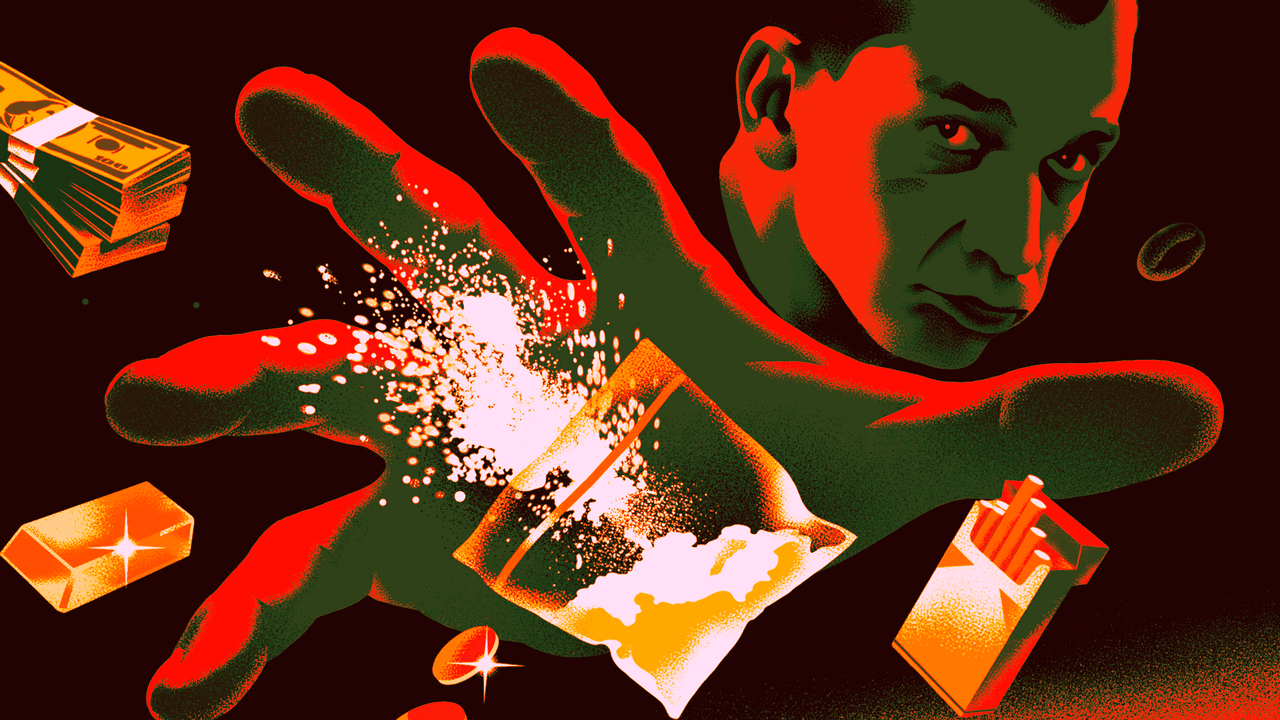
The Penitenciária Federal de Brasília is one of five federal maximum-security prisons in Brazil. A gray fortress completed in 2018 on a patch of scrubland nine miles outside the capital city, it was designed to house the nation’s most dangerous criminals. A perimeter wall is thirty feet high and continues fifty feet belowground, to prevent tunnelling. Inmates are housed individually in rooms measuring sixty-five square feet. The furnishings in each cell—a desk, a stool, a bed, a toilet, and a sink—are made of poured concrete. There are no electrical sockets. The prisoners are not allowed televisions, radios, clocks, newspapers, or calendars, but they are permitted books and legal papers. Six small meals arrive daily through a hatch. Visitors are rare and mostly limited to immediate family and lawyers, and during meetings prisoners must remain behind a barrier of bulletproof glass. All conversations are monitored for criminal content by police intelligence officers.
The prison, which can accommodate two hundred and eight men, lets inmates out of their cells for two hours a day. Many are allowed to mingle in small groups. But a few are barred from all social contact. The most notable is Marcos Willians Herbas Camacho—a lean fifty-eight-year-old with a widow’s peak and piercing dark eyes. Throughout Brazil, he is known simply as Marcola.
Since the early two-thousands, experts say, Marcola has led Latin America’s largest and most successful criminal organization, Primeiro Comando da Capital, or the P.C.C. The name translates in English to First Capital Command. (Marcola denies belonging to or running a criminal organization.) According to prosecutors, the group has more than forty thousand formally initiated “brothers”—or made men—and sixty thousand associates. Among other lucrative enterprises, the P.C.C. dominates the traffic of cocaine from Brazil to Europe, a multibillion-dollar business. Marcola has been in prison during the entire period of his leadership, serving sentences for bank robbery, drug trafficking, murder, and forming a criminal organization. The financial beneficiaries of his elevated status are his family (including several children), who enjoy a discreet but sumptuous life style. In 2014, an outlandish plot to free Marcola from an overcrowded general prison in São Paulo state was uncovered: fellow-members of his gang had planned to use heavy artillery and a helicopter with fake police markings to exfiltrate their leader. Five years later, another escape plot was foiled, and Marcola was flown on a military plane to a remote federal prison in Rondônia, along the Bolivian border; then he was moved to the federal prison in Brasília, and then back to Rondônia. In January, 2023, after plans for yet another escape were uncovered, he was finally returned to Brasília.
According to several law-enforcement sources, Marcola continues to head the P.C.C. despite the restrictions on his freedom and on his ability to communicate. Marcola’s lawyer denies these claims, saying that they lack “concrete evidentiary support,” and insists that the conditions of Marcola’s imprisonment make any “command function . . . materially impossible.” But, in September, Valor Econômico, a financial newspaper, published excerpts from more than three hundred wiretapped conversations recorded at the prison between 2018 and 2025 which corrections officers had deemed “suspicious”; among them were coded messages from Marcola to one of his lawyers relating to a new escape scheme. The corrections officers explained to the newspaper that, because a prison requires a ventilation system, it was impossible to achieve “complete acoustic isolation” in the cells, meaning that it was feasible for prisoners to communicate with one another by relaying messages through the air vents. Moreover, Marcola is adept at using ciphers. He is also well read: at a trial in 2006, he told the court that his favorite authors included Friedrich Nietzsche and Victor Hugo.
The most obvious example of Marcola’s continuing ability to wield power was a recent struggle at the top of the P.C.C. After he was transferred to Brasília in 2023, a recording was leaked of him referring to a fellow high-ranking member named Tiriça—who had foolishly ordered the killings of federal prison officials—as a psychopath. Tiriça and two others issued a salve, the gang’s equivalent of an interoffice memo, calling for Marcola’s expulsion from the group. A rival salve called for Tiriça and his allies to be expelled. Because Marcola had more support, the attempted coup failed—and family members of some criminals in Tiriça’s faction asked to enter Brazil’s witness-protection program.

In June, the Trump Administration designated the P.C.C. a foreign terrorist organization, alongside its sometime ally and now competitor, Rio de Janeiro’s Comando Vermelho (Red Command). The State Department’s rationale for doing so was hazy: a press release about the designation invoked “violent narco-terrorists” who were flooding American streets with drugs. The news surely surprised both Marcola and longtime observers of the P.C.C. Although the organization is responsible for many crimes, and its tentacles reach into the worlds of politics and legitimate business, its drugs rarely reach the United States. (America’s cocaine is supplied predominantly by Mexican traffickers.) Moreover, the ideology of the P.C.C. scarcely resembles the agenda of most terrorist organizations. The gang has used lethal force in a targeted way, but it has rarely engaged in bloodletting for its own sake. What it wants—and what it has achieved in many ways, and in many places—is not terror but control.
Brazil is one of the most violent countries in the world. But, in some areas where the P.C.C. has established dominance, homicides have become comparatively rare. São Paulo is the best example. In the late nineties, while the gang was still contained to Brazil’s prisons, the city’s murder rate spiked at fifty-two per hundred thousand residents. (New York’s highest rate, in 1990, during the crack epidemic, was thirty per hundred thousand.) Now São Paulo, in part because of the P.C.C.’s control of the city, has a murder rate of about five per hundred thousand—a ninety-per-cent drop since the peak, and similar to the current murder rate of Austin, Texas. As Bruno Paes Manso, a political scientist and journalist who has written several books about the P.C.C., emphasized to me, “They are not a cartel. They are the governors of crime, the national development bank of crime. They are a criminal-markets agency. They establish rules.”
On October 2, 1992, two inmates in Block 9 at the Casa de Detenção, an infamous prison in Carandiru, near the center of São Paulo, began arguing. The prison, like many such institutions in Brazil then and now, was often ungovernable. More than seven thousand men were crowded onto a campus built to house three thousand. AIDS and tuberculosis were rampant, and drugs circulated freely. Feuds were settled with knives and sharpened pieces of wood, often resulting in death. Whatever laws there were in the Carandiru penitentiary were haphazardly imposed by the prisoners themselves. In a description by Drauzio Varella, a visiting physician at Carandiru who wrote “Lockdown,” a book about his experience there, the “unwritten penal code” inside the prison included “paying one’s debts, not informing on fellow inmates, respecting other people’s visitors, not coveting the neighbor’s wife, and exercising solidarity.”
Precisely what started the argument in Block 9 remains unclear: competing theories include overlapping claims to a small quantity of cigarettes and a dispute about soccer. In any case, the two antagonists were from different criminal factions in São Paulo, and their fight soon drew in other prisoners, then morphed into a general rebellion against the prison authorities. In Block 9, Varella writes, “the prisoners started up a hellish shouting, running and breaking things, out of control, armed with knives, sticks and iron pipes . . . burning and destroying whatever was in reach.”
The military police were called in to take control of the prison. Officers entered Block 9 in riot gear, heavily armed and accompanied by dogs. In twenty minutes, the police fired more than three thousand rounds of ammunition. A hundred and eleven prisoners were killed—some were shot multiple times at close range—and thirty-five were wounded. The episode has since become known as the Carandiru Massacre.
The P.C.C. was founded in August, 1993, as a kind of prisoners’ union, in response to the events at Carandiru. It was formed by several criminals who had been transferred from Carandiru to a prison in Taubaté, and who played on the same jailhouse soccer team. The P.C.C. adopted the yin-yang symbol as its emblem and vowed to “fight oppression” in the penitentiary system. Money was collected from new recruits to pay for lawyers and for transportation expenses for family members so that they could visit their loved ones in jail. The P.C.C.’s representatives met with prison officials to lobby for better conditions. Occasionally, when their demands were not met, they started a riot.
Most strikingly, the P.C.C. imposed a strict legal framework on the prison populations it controlled—rules that were codified by the group’s leaders into a written estatuto, or constitution. According to the gang’s lore, the document was drafted by Mizael Aparecido da Silva, a founding P.C.C. member who had befriended two Italian mobsters on his cellblock and asked them to explain how the Mafia worked. Among other things, the estatuto clamped down on sexual assault, which was a significant part of life inside São Paulo’s prisons at the time. Article VIII of the estatuto notes that “members must set a good example to be followed, and therefore the Party does not tolerate robbery, rape, and extortion within the system.” The founders also instituted a rudimentary judicial process for disputes among members, in part to stem tit-for-tat murders but also to insure—per Article V—that “anyone who causes internal strife or tries to divide the brotherhood will be excluded and repudiated.”
Recently, in a noisy restaurant in a P.C.C.-controlled working-class neighborhood of eastern São Paulo, I met a former bank robber who had observed the rise of the organization. He was arrested for the first time in 1992, after he held up a security van, and was sent to Block 9 at Carandiru just a month after the massacre. Since then, he has spent much of his life behind bars. (In a characteristically poetic flourish, he told me that “prison is a world within a world.”) The man, who is in his fifties, asked to be referred to as Juca, since he currently works as a defense lawyer and prefers not to publicize his criminal past. He wore a Corinthians soccer shirt beneath a plaid shirt, and was tall and strikingly handsome; it didn’t surprise me to learn that he had acted in a recent television series about organized crime.
Juca told me that, when he entered Carandiru, it seemed terrifyingly lawless. He came across a friend from his old neighborhood, who said, “The best thing I can do for you is to give you a knife.” But, as the P.C.C. became powerful within the prison, everyday life improved for most inmates. Rapes became less common. More disputes were settled without violence. When a prisoner’s family delivered food, he could expect to eat it, rather than have it stolen. But Juca also noted that people who opposed the group or refused to submit to its authority were killed.
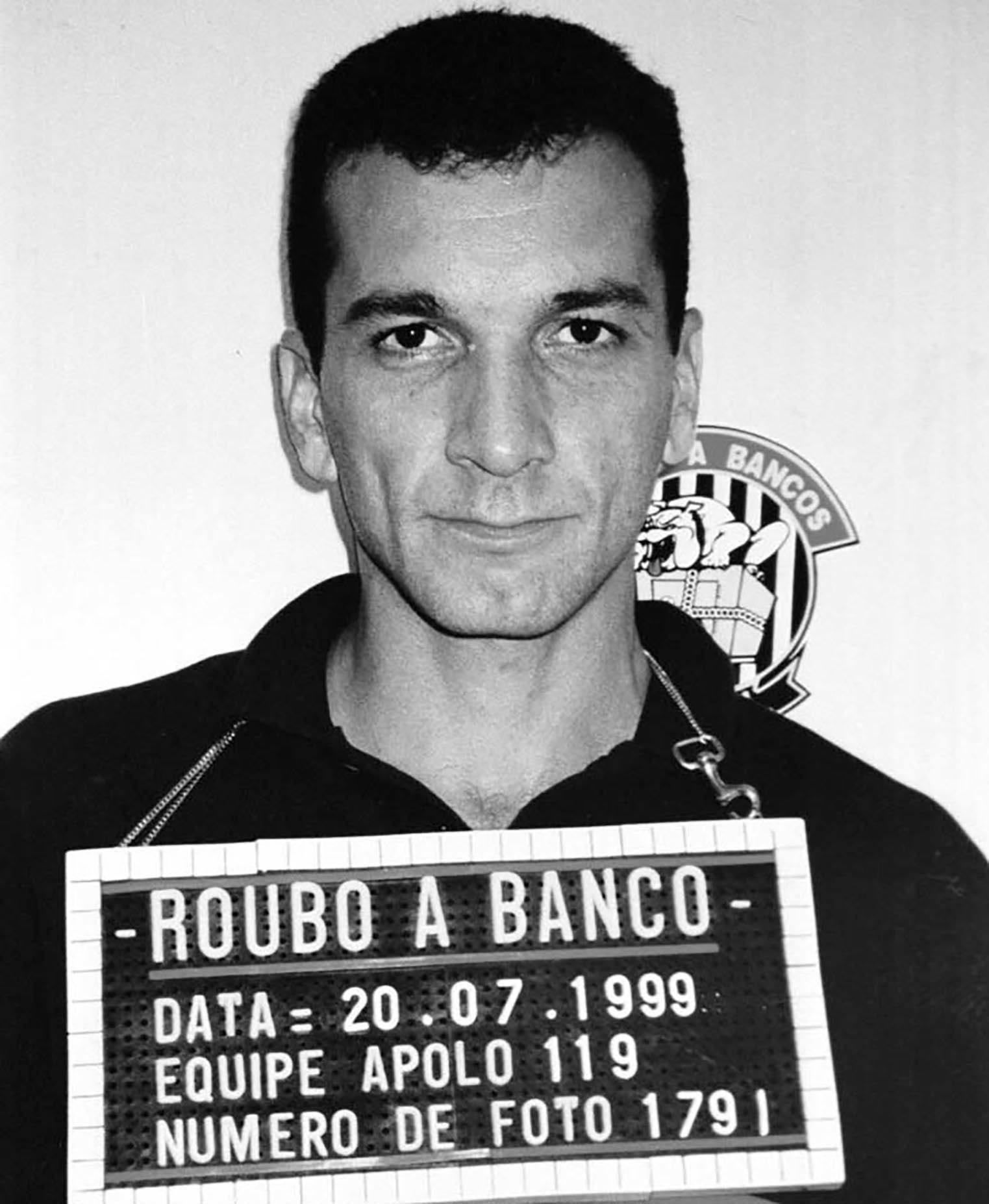
He encountered two of the early leaders of the P.C.C., who went by the nicknames Cesinha and Geleião. But he also met an up-and-comer in the organization’s leadership—another bank robber, called Marcola. (In the hierarchy of prisoner status, Juca said, bank robbers were at the top.) Juca remembers Marcola as a networker who would “talk to everybody.” Marcola’s wife, Ana Maria Olivatto, who was eleven years his senior, was a lawyer. Marcola was good at escaping from prison, doing so five times. After the final escape, he went on the lam in Paraguay, but would return to São Paulo to plan and execute heists. He had such a taste for expensive cars and watches that he garnered another nickname: Playboy. In July, 1999, São Paulo police spotted him in a red Dodge Stratus—an unusual imported car at the time—and arrested him. He has been in jail ever since.
In the early two-thousands, there was a power struggle at the top of the P.C.C. Cesinha and Geleião wanted to pursue a radical policy of physically attacking government institutions, using guerrilla tactics, to achieve their demands, but Marcola advocated for a more moderate approach. He asked his wife to investigate Cesinha and Geleião, and she discovered that Geleião had hidden a rape conviction. The radical wing accused Marcola of snitching to the police, and Cesinha and Geleião allegedly ordered a hit on Olivatto, whom they said had become a police informant. She was murdered outside her home, in São Paulo, by an assassin with a handgun.
Eventually, Marcola prevailed. In part because of the networking skills that Juca had noticed, he had more P.C.C. members supporting him than the original bosses did. News of Geleião’s rape conviction spread throughout the organization, sullying his reputation. By 2002, he and Cesinha had been expelled.
Under Marcola, the P.C.C. transformed. He was a strategic thinker who realized that, for the group to keep growing, it needed to expand its operations beyond prison and earn more money than union dues could provide. Members who’d made it out of prison, he concluded, had to return to crime—in particular, to trafficking cocaine.
Lincoln Gakiya, a dapper fifty-nine-year-old public prosecutor with a kindly face and a restless manner, has at least as many bodyguards as the President of Brazil. About eighty heavily armed military-police officers are assigned to protect him in shifts, twenty-four hours a day. Gakiya lives in Presidente Prudente, an unremarkable city a six-hour drive west of São Paulo. He travels in an armored Chevrolet, at the center of a convoy of S.U.V.s filled with his protection detail. Gakiya’s driver does not like to slow down. When I recently joined Gakiya’s convoy in a rental car, speed cameras flashed regularly. (I expect to be banned from driving in Brazil in perpetuity.) Occasionally, the vehicles were forced to stop in traffic, and the guards, anticipating a possible ambush, stepped out of their trucks and pointed automatic rifles at nearby cars.
Gakiya is shackled to this way of life. He cannot take a vacation in Brazil outside São Paulo state, because he cannot take his security apparatus with him. When he eats at a restaurant with his family—a rare event that can take place only at a venue that has been secured—other diners are asked to leave a large perimeter around his table. Most days, Gakiya shuttles between his house and his office, but even that simple routine is dangerous. Recently, two people with links to organized crime were arrested for flying surveillance drones over his house. I visited Gakiya at the public prosecutor’s office in Presidente Prudente, and he told me, “I feel like I’m in jail.”
These extraordinary arrangements are necessary because of the P.C.C. In November, 2018, Gakiya signed a request to transfer Marcola and twenty-one other senior figures in the P.C.C. to federal prisons; a month later, Marcola ordered Gakiya’s assassination. The P.C.C. has a track record of killing powerful enemies. Gakiya is haunted by the murder, in 2003, of Judge Antônio José Machado Dias, who also lived in Presidente Prudente, and who was shot in his car on his way home from work. Dias oversaw the prisons in western São Paulo state, a stronghold of the P.C.C., and had gained a reputation for denying transfer requests from its leaders. In 2009, Marcola and another man were convicted of ordering the judge’s killing.
Gakiya did not set out to be the P.C.C.’s nemesis. He was a low-ranking regional prosecutor until 2005, when he discovered that a P.C.C. leader had been directing drug sales and other street crime from inside a local prison. Gakiya ordered that the leader be placed in solitary confinement; the leader, in turn, ordered a hit on Gakiya, who got advance warning that a team of assassins was after him and was able to flee and hide. Undeterred and perhaps even spurred on by the P.C.C.’s aggressive response, he began wiretapping senior figures in the organization.
In 2006, some seven hundred P.C.C. members, including Marcola, were transferred from prisons near São Paulo to a higher-security institution in Gakiya’s prosecutorial district. In protest, Marcola and other P.C.C. leaders coördinated riots in about seventy of the state’s prisons. Meanwhile, on the streets of São Paulo, the gang attacked police with hand grenades and automatic weapons. One weekend that May, more than forty police officers and municipal guards were murdered. The violence brought the city to a standstill. Since then, Gakiya has become known for his work on organized crime, especially regarding the activities of the P.C.C. He has successfully prosecuted many of its senior figures and interrupted many of its operations. Eight years ago, he was the only official brave enough to sign his name to a document demanding Marcola’s transfer to a maximum-security federal prison.

In his office, Gakiya showed me thick internal reports that he has written about the inner workings of the P.C.C. The group’s business model is less centralized than that of other criminal organizations, he said. Members are free to pursue their own illicit enterprises, without oversight, as long as they use the P.C.C.’s supply chains. Various sintonias, or divisions, of the gang are responsible for financing new criminal activities, administering internal justice, insuring prisoner welfare, organizing street-level drug trafficking, and so on. At the bottom of the pyramid are sintonias dedicated to matters such as managing the gang’s relationships with corrupt lawyers (Sintonia dos Gravatas, or the Necktie Sector). There is even an internal-affairs division, which monitors corruption within the P.C.C. (Setor do Raio-X, or the X-Ray Sector). Near the top of the hierarchy is the Sintonia Restrita (Restricted Division), which deals with high-level assassinations and other major strategic operations. At the apex is the Sintonia Final Geral (Final General Division), which includes Marcola.
Gakiya has met Marcola several times, during depositions and court appearances, and has always found him polite and well spoken. The boss has never sworn or lost his temper. I asked how much operational control Marcola could really exert over the P.C.C., given the restrictive conditions in prison. Gakiya responded that I was thinking about the organization in the wrong way. The processes that Marcola established have allowed the group to flourish without the need for daily, or even monthly, instructions. The leader needs to be called upon only to make a truly consequential decision. “It’s almost like Coca-Cola,” Gakiya explained. “A big company. If you arrest the C.E.O. from Coca-Cola, Coca-Cola still exists, people still drink Coca-Cola. The structure operates by itself. But, if Coca-Cola is going to be in a partnership with Pepsi, only the C.E.O. can decide. That’s Marcola’s level—strategy.”
Gakiya recently secured two new convictions against Marcola, which added more than forty years to his sentence, virtually insuring that he will never be released. “That’s really why he hates me,” Gakiya said. But it’s possible that the permanent incarceration of top P.C.C. leaders might have backfired—by teaching the organization to be self-sufficient and resilient. An affiliate unit of the P.C.C. operates much the way that a terrorist cell does, making the group hard to penetrate, because neither leaders nor recruits know what their fellow-members are doing from day to day.
Francesco Guerra, a transnational-crime analyst who studies the P.C.C., told me that the group had a “considerable capacity for adaptation.” He continued, “Transfers between prisons, the isolation of leaders, arrests, and repressive campaigns—none of this appears to have led to a substantial weakening of the organization. On the contrary, it all seems to have strengthened the faction, by promoting compartmentalization.” Borrowing a term from the scholar Nassim Nicholas Taleb, he said that the P.C.C. had become “antifragile.”
In September, 2006, gunmen in military uniforms entered the Sol y Sombra night club in Uruapan, Mexico, commanded everyone to freeze, then rolled five human heads onto the dance floor. The gunmen were from a group connected to La Familia, a drug cartel that was then at war with a local affiliate of the Sinaloa group, for whom the five victims had been working as street-level meth dealers. The murderers had decapitated the men with bowie knives while they were still alive. Such performative barbarity is a central feature of Mexico’s drug wars. But it is anathema to the P.C.C. in its modern iteration. The Brazilian group’s attitude toward violence—though not prim—is much more sophisticated.
In August, at a café above a supermarket in Paraguay, I met a former P.C.C. brother who had left the organization seven years ago and converted to evangelical Christianity. (Such retirements are complicated, and permitted by the group only after the P.C.C. brother promises to abandon crime altogether.) The man was nervous about speaking to me, and wished to be known by a nickname: Professor. He was thirty-nine years old, with long jet-black hair at the top of his head and a clean-shaven scalp at the back and sides; wide, chestnut-brown eyes; and a deep, slow laugh that punctuated his speech at surprising moments. Occasionally, he lowered his voice and turned around to confirm that nobody was eavesdropping on our conversation.
Professor talked to me about the emphasis that the P.C.C. puts on justice. He had been committing crimes since the age of eight, when he set fire to his school, in São Paulo, as a prank. At twelve, he began dealing drugs for people associated with the P.C.C. in one of the favelas_,_ or hillside slums, of Itaquera, a neighborhood in São Paulo. His bosses had several rules, he said, but the most important was that selling crack cocaine was forbidden in his favela, because, as he told me, “it tore a person’s whole life apart.” (According to other sources, these rules are not uniformly applied: the P.C.C. has generated huge profits by supplying addicts in a central São Paulo market known as Cracolândia, or Crackland.) Professor rose quickly through the hierarchy, and, later, became an official member of the P.C.C. He was a natural networker and salesman, and, despite limited formal education, he had a facility for numbers.

In 2009, Professor was involved in an internal P.C.C. trial. He had been asked to supervise a drug-dealing business in Jaçanã, in the north of São Paulo, for a colleague who had been imprisoned in the northeast of Brazil. After inspecting the accounts, Professor realized that the numbers didn’t add up. He told his colleague, “Someone is stealing from you.” Eventually, Professor discovered that a female affiliate was buying cheaper, diluted drugs wholesale from outside the gang’s network, then keeping the extra profit. She was both enriching herself and cheating the group. “This was very serious,” he told me. “It’s not allowed.”
Professor called his superiors in the P.C.C. and arranged a trial. It took place in one day, on a quiet street in the favela. Because Professor himself had brought the accusation, he acted as the prosecutor. The woman defended herself. Ten P.C.C. brothers from a unit of the organization called Discipline acted as the jury. The man who owned the drug operation—the cheated party—listened to proceedings on a phone call. As is customary in P.C.C. tribunals, the prosecutor discussed with the victim beforehand what sanction the woman should face if she was found guilty. Professor suggested the death penalty, but the victim recommended that the woman be killed only if she failed to pay him back all the money she had stolen by a stipulated deadline. The trial was high stakes for Professor, too: if the brothers decided that he’d brought a false claim, he could face punishment instead.
The accused woman was calm at the start of the trial. But her demeanor changed when Professor called as a witness someone who had been selling her the cheaper drugs. She was found guilty. The brothers decided on the more lenient sentence: to expel the woman from the criminal network and demand that she pay back the money she’d stolen. The P.C.C., Professor said, has a high bar for capital punishment. “The only time they’d kill a person is if he had killed an innocent person or committed a rape,” he told me.
A federal police officer—who did not wish to be named, given his ongoing investigations into the P.C.C.—told me that the group’s attitude toward justice is common sense. Killing is bad for business, because it attracts the police. The gang’s judicial processes partly explain why the murder rate in São Paulo has dropped so starkly. There has been a kind of Pax Mafiosa in the city.
Robert Muggah, a security analyst in Brazil, told me that the P.C.C.’s effect on the murder rate may be overstated, since it has reduced only one category of killing—disputes among criminals. The decline in murders in São Paulo can also be attributed to greater investment in law enforcement. Still, I suggested, the police might prefer dealing with one well-regulated gang rather than with numerous factions competing for territory. Muggah said that, “at a purely operational level, some officers might privately say yes.”
Despite the P.C.C.’s ethic of restraint, it can be extremely violent in areas where it has not secured control. Along the Amazon’s so-called cocaine corridor, where the P.C.C. is competing with other traffickers for dominance of an alternative route to the Atlantic—and where it has also become involved in wildcat gold mining—murder rates dwarf the national average. In 2023, the municipality of Tabatinga, in the Amazon Basin, had a murder rate sixteen times higher than São Paulo’s. Manso, the political scientist, said of the P.C.C., “They try to make peace. But, if they can’t, they go to war.”
Most of the P.C.C.’s profits are now generated by the European appetite for cocaine, which is seemingly insatiable. Analysis of wastewater by the European Union Drugs Agency showed a rise in the presence of benzoylecgonine, a cocaine metabolite, every year since 2016. In 2025, there was a twenty-two-per-cent increase since the previous year.
The P.C.C. has been well positioned to profit from this trend. Brazil has four and a half thousand miles of Atlantic coastline, and it neighbors the Andean cocaine-producing nations of Bolivia, Peru, and Colombia. The P.C.C. can buy a kilogram from an Andean supplier for as little as fifteen hundred dollars and sell it to a European crime group for more than thirty thousand. The P.C.C. also maintains extensive ties to the cocaine trade in Africa and in Australia, where the wholesale price has sometimes reached four times that of Europe.
The most important exit point for cocaine in Brazil is the industrial port of Santos, in the east of São Paulo state. Gakiya, the prosecutor, told me that the criminal activity in Santos is completely controlled by the P.C.C., though he is currently overseeing an investigation there. (Understandably, he could not divulge more details.) A police intelligence officer told me that the P.C.C. sends an armada of trucks, filled with contraband, to the port every week.
I recently visited Santos, and customs officials there wanted to paint a rosier picture. The city actually contains several ports—for container ships, for fuel, and for grain and coffee—dotted along an estuary that flows through Santos. One of the container terminals is owned by a foreign firm.
At that firm’s headquarters, Rômulo Brandão, a federal customs official, showed me some of the cutting-edge surveillance methods that the company has introduced to catch smugglers. There are motion-detecting cameras all over the port, and sensors underwater; surveillance drones overhead; and scanners that can flag products in shipping containers that seem abnormal in shape or density. Brandão said that no other terminal in Latin America has such advanced technology. The port also employs more traditional tactics, such as sniffer dogs. In September, a German shepherd named Nutella discovered eight hundred pounds of cocaine hidden among sacks of coffee. In Europe, that haul would have been worth at least ten million dollars.

Brandão estimated that, five years ago, Santos was the departure point for about sixty per cent of Brazil’s cocaine. Since security had been beefed up, he said, the percentage had shrunk dramatically—although he did not give a precise figure. These days, the container port he was showing me around was “the safest in Latin America,” he said, adding, “The drug dealers avoid it now.” When I put his claims to Gakiya, the prosecutor laughed and said that the P.C.C. understands the new technology’s capabilities and limitations, and has started hiding its drugs inside bags of sugar or other products similar in shape and density to cocaine, or packing it inside fruit such as pineapples. Nevertheless, he conceded, the customs-enforcement efforts were worthwhile, since they made the P.C.C. work harder to export drugs.
Brandão did tell me about some obvious weaknesses in the government’s defenses. At the container terminal, he showed me a huge aerial photograph of Santos which depicted hundreds of oceangoing ships anchored offshore. Beyond the port’s borders, jurisdiction was contested; his department could not always monitor what was being loaded onto such ships. Criminal groups had begun to use small boats and divers to transport waterproof containers of cocaine to the ships anchored outside the port.
Often, Brandão said, traffickers hide cocaine in the vessels’ “sea chest,” which sits below the waterline and is normally used to draw in seawater for ballast and cooling. Storing drugs in a sea chest is tricky and dangerous: to access it, a diver must open a heavy grate in pitch-black, polluted water. And if the ship’s engines or internal pumps activate during the operation the diver can be sucked into machinery or trapped.
Skilled divers are therefore in high demand in Santos. An intelligence officer at Europol told me that his agency had recently noticed an influx of Brazilian divers working in Europe—presumably to unload sea chests after an ocean crossing. In fact, Brazilian divers now work in ports all over the world. Four years ago, the body of a diver named Bruno Borges Martins was found floating near a port in Newcastle, Australia, along with more than a hundred pounds of cocaine. Martins’s LinkedIn page noted that he had been a professional diver, based in the port of Santos, with expertise in cutting and welding.
Several Brazilian law-enforcement officials told me that one of the most important setting-off points for divers and small boats was a fishing village across the estuary that curls around Santos. Officially named Santa Cruz dos Navegantes, it is known more commonly as Pouca Farinha. (Farinha, the Portuguese word for “flour,” is, aptly but coincidentally, also slang for cocaine.)
One Sunday evening at dusk, I visited Pouca Farinha with my translator. The village was a grid of narrow streets fringed by a thin beach and a small ferry terminal. Tied up a few yards offshore were several rickety fishing boats in need of a paint job. We drove slowly to the terminal. As we parked, we noticed three young men sitting on the seawall, watching us. One of them approached our vehicle and knocked on the window. He told us that we couldn’t park there, and then asked, “Who are you? Everyone can see that you’re not from here.”
We got out of the car, and my translator improvised. He said that we were from São Paulo and interested in renting a fishing boat in a few days. Another man, who was smoking a joint, scooted off the seawall and said that he might be able to help. He and the translator swapped phone numbers. His area code was from Brazil’s border with Bolivia—a region that is dominated by the P.C.C. The man said that he had recently spent nine months in Bolivia itself. Like us, he was a long way from home. It was getting dark. The man indicated that it might be a good time for us to leave.
About six hundred miles west of São Paulo, the cities of Pedro Juan Caballero and Ponta Porã sit on either side of the Paraguay-Brazil border. In reality, they merge into one urban center. There are no customs checks between the cities. There are, however, significant differences.
The Brazilian side, in Ponta Porã, is more affluent. The roads are all paved, fewer stray dogs roam the streets, and large houses and excellent restaurants suggest a wealthier population. Everyday goods are also more expensive than in Pedro Juan Caballero. In a store on one side of a street, in Paraguay, you can buy a pack of cigarettes for less than two dollars. Walk to the other side of the street, into Brazil, and the same pack costs six or seven dollars. This area, unsurprisingly, has long been a bootlegger’s paradise. (A character in Graham Greene’s 1969 novel, “Travels with My Aunt,” jokes that smuggling is the “national industry of Paraguay.”)
Paraguay is not a coca producer, but much of Bolivia’s and Peru’s cocaine passes through the country on its way to Brazil. Until 2016, the traffic through Pedro Juan Caballero was largely controlled by Jorge Rafaat, a Brazilian Paraguayan dual national who was known as the King of the Border. Rafaat had a peculiar combination of illegitimate and legitimate commercial interests: he smuggled drugs and other contraband, but he also operated a successful tire business and had many friends in law enforcement. Marcelino Nunes de Oliveira, a city councillor who was formerly the local secretary of public safety for Ponta Porã, described Rafaat to me in surprisingly glowing terms. Rafaat, he said, was from a “high society” family and had a law degree. “He became a kind of a sheriff here,” Nunes said. “A big boss.”

Rafaat had understood for some time that he was the target of rival smugglers. He began travelling in an armored Hummer, in a convoy with cars containing bodyguards. But on June 15, 2016, his group was ambushed on a residential street in Pedro Juan Caballero. A heavy machine gun loaded with armor-piercing bullets was fired at his vehicle at least two hundred times. Sixteen bullets hit Rafaat, and he died at the scene. Soon after the assassination, the P.C.C. controlled his route.
Cocaine is perhaps the most lucrative product that the P.C.C. moves. But the group’s business model extends to a surprising array of enterprises. Luciano Barros is an economist based in Foz do Iguaçu, which is an eight-hour drive south of Ponta Porã, on the border between Brazil, Argentina, and Paraguay. The tourist attraction of Iguaçu Falls draws many visitors to the town, but it is also an important transit point for smuggled goods entering Brazil. Barros leads an organization that studies national borders, including the illicit trade across them. He described to me the torrent of cigarettes smuggled from Paraguay to Brazil—a business in which the P.C.C. has become heavily invested. Gangs can make a five-hundred-per-cent profit on cigarettes, selling a product that carries a much lower legal penalty than cocaine. Barros told me that there has also been a dramatic rise in the trade of GLP-1 weight-loss medications. In Ciudad del Este, a Paraguayan city across the border from Foz do Iguaçu, the manufacture of generic semaglutide has become a billion-dollar business. The medicine is mostly legal to make there, but it is then illegally transported to Brazil by the P.C.C., generating huge profits for the gang. “The product doesn’t matter anymore,” Barros said. “What matters is the logistics, the route.”
In Brazil, the P.C.C. often invests its illicit profits in conventional businesses: bus companies, waste-disposal firms, port terminals. A recent investigation by police and tax officials, called Operation Hidden Carbon, exposed how deeply the group had penetrated legitimate businesses. Officials discovered that the P.C.C. had been adulterating gas with methanol at more than a thousand gas stations, accruing vast profits in the process. The group was also laundering billions of dollars through fintech firms and traditional investment funds.
A company called 4TBank, which billed itself as Brazil’s “first CryptoBank,” was reportedly central to the P.C.C.’s money laundering. In August, 2024, the Brazilian authorities froze nearly a billion and a half dollars of 4TBank’s assets. (At the time, a spokesperson for the bank told news outlets that the transactions in question were not related to drug or arms trafficking, or to any other illicit activity.) Later that year, Antônio Vinicius Lopes Gritzbach, a crypto trader who had been coöperating with Operation Hidden Carbon, was fatally shot outside São Paulo International Airport.
The federal police officer who was investigating the P.C.C. told me that the only way to truly hurt the group was by targeting its financial networks—a strategy known in Brazil as descapitalização. “Every investigation we do, we uncover new mechanisms of laundering money,” he said. “They’re financing politicians who can open the door to them to get contracts—with bus companies, for instance.” Cryptocurrencies are the ascendant mode of washing dirty cash, he said, because they are “so hard to track.”
During the months before the Trump Administration decided to brand the P.C.C. a foreign terrorist organization, Gakiya, the prosecutor, received two visits from officials in Secretary of State Marco Rubio’s office. They wanted to tap Gakiya’s expertise on the gang. “I told them that the P.C.C. was a big criminal company—a mafia,” Gakiya said. “They have a lot of guns. But they don’t have politics or an ideological purpose. Their only goal is to explore criminal business. Brazilian laws don’t consider them or Comando Vermelho as terrorists.”
Gakiya’s appraisal was obviously ignored. (The State Department did not respond to a request for comment.) Jason Blazakis, who directed the U.S. Office of Counterterrorism Finance and Designations from 2008 to 2018, told me that the rationale for the Trump Administration’s decision was worrisome. During his tenure, Blazakis said, his office did not give the terrorist label to any group whose primary purpose was criminal. “We made an effort to not conflate the worlds of terrorism and crime,” he said. “Because, once you start designating cartels, where do you stop?”
On January 20, 2025, Donald Trump signed a broad executive order indicating his desire to redefine Latin American and Caribbean drug cartels as terrorists, in order to “ensure the total elimination of the organizations’ presence in the United States and their ability to threaten the territory, safety, and security of the United States through their extraterritorial command-and-control structures.” Since then, twenty-one criminal groups have been labelled foreign terrorist organizations, including the Sinaloa cartel and the Venezuelan gang Tren de Aragua. The U.S. military has conducted air strikes on suspected drug-smuggling vessels in the Caribbean and the Pacific, resulting in dozens of deaths.

Even though Blazakis disagreed with the Trump Administration’s strategy, he could see how giving the P.C.C. a terrorist designation could “open up leverage for prosecutors to go after individuals with an additional charge of material support for a designated terrorist group.” The threat of harsher penalties could give pause to the accountant or the fintech executive who is laundering the gang’s profits.
Some Brazilian officials, however, found the terrorist designations infuriating. The foreign minister, Mauro Vieira, complained that Brazil hadn’t been formally consulted about the decision, which he said would “bring no concrete benefits to international coöperation.” Brazil’s President, Luiz Inácio Lula da Silva, condemned the decision, and was especially concerned about the implication that it gave the U.S. license to “intervene” inside Brazilian territory. “We do not accept being treated like little boys,” he said. “We do not accept being treated as if we were some tin-pot country.”
According to Robert Muggah, the security expert, some Brazilian officials worried that the State Department’s language might grant the United States “more legal and political room to act outside the normal police channels.” This worry, Muggah continued, “has grown as the rest of the relationship has soured, with the tariff fight and the general mistrust between Brasília and Washington.” (Several right-wing candidates in the recent Brazilian elections, including the defeated Presidential candidate Flávio Bolsonaro, championed the terrorist designation to bolster their own anti-crime rhetoric.) Muggah continued, “The fear in Brazil isn’t a raid in Rio or São Paulo or a military strike off the coast. That remains very unlikely. It’s the gradual construction of a U.S. security perimeter around Brazil’s borders, the Amazon included, under a counterterrorism and counter-narcotics banner. That hits a deep nerve here.”
On July 1st, the U.S. Treasury’s Office of Foreign Assets Control sanctioned two Brazilian nationals, three Brazilian companies, and a Portuguese company for their links to what it claimed was a P.C.C. money-laundering network operating in Florida and São Paulo. The announcement had some troubling repercussions. A criminal investigation into the network by the Brazilian federal police was already in advanced stages: an arrest warrant for its central figure, Victor Henrique de Oliveira Shimada, had been signed by a Brazilian federal judge in March. But the judge had made the execution of the warrant conditional on officers’ pinpointing Shimada’s exact location, and they had been unable to do so. Gakiya told me that the Brazilian police were “caught off guard” by the U.S. announcement, and hastily launched a raid on the group in response but failed to catch Shimada, who remains at large. (Shimada’s lawyers have denied his involvement in any criminal organization.) “Ultimately, the publicity worked against law enforcement,” Gakiya told me.
Even worse, Gakiya said, Shimada may not have had a relationship with the P.C.C. after all. Certainly, he was a money launderer who did some work for drug traffickers. “But, from the perspective of the federal police—and within my own investigations—there was no intelligence establishing a direct link with the P.C.C.,” Gakiya said. “A coöperative approach would have seen U.S. officials notify the Brazilian federal police, and exchange raw intelligence, before taking unilateral action. This case exposed a fundamental disconnect between American and Brazilian law enforcement.”
In 1651, the English philosopher Thomas Hobbes published “Leviathan,” in which he examines ideas about government and the social contract. To avoid the natural state of the ungoverned—a war of all against all—Hobbes suggests that people might choose to establish a system of laws, thereby “getting themselves out from that miserable condition of war which is necessarily consequent . . . to the natural passions of men when there is no visible power to keep them in awe.” Hobbes would have found the P.C.C. an intriguing case study: a group of criminals presented with chaos and violence in the Brazilian prison system who chose to create their own order. Benjamin Lessing, a professor of political science at the University of Chicago, will soon publish a book about Latin American prison gangs on this theme. The title is “Criminal Leviathans.” He writes, “Today, the P.C.C. is a criminal organization of almost unbelievable scope and sophistication, at once hierarchal yet acephalous, highly adaptable and resilient to state repression and internal fragmentation, with an enormous capacity for governance over members, non-member criminal actors, and civilians.”
At the restaurant in eastern São Paulo, I asked Juca, the former bank robber, whether he thought that the P.C.C. might ever disappear from Brazilian life. The gang, Juca contended, has filled spaces that are properly the domain of the state. The P.C.C. does not just fund and organize illegal activity; it regulates people’s lives. Juca’s belief is that the group is now too established to be destroyed. “If somebody robs this restaurant, they’re not going to call the police,” he said. “They’re going to call the P.C.C.”
Manso, the political scientist, told me that the P.C.C.’s strengths were its discipline and organization. But it seemed that much of its influence was social. Like Juca, Manso is a fan of the Corinthians soccer team. The club’s culture, he said, has significant overlap with “the culture of the P.C.C.” In the past decade or so, Manso noticed that Corinthians fans had stopped booing their own players. He felt that this shift had to do, at least in part, with the ascendance of the P.C.C., whose ideals of self-control and solidarity had saturated São Paulo’s favelas. The shift wasn’t a top-down dictate. “It’s organic,” Manso said. The P.C.C.’s culture, he continued, is “very masculine” and comes from the periphery of the city. Its mind-set acknowledges that “the world is very dangerous” and that, in order to navigate a dangerous environment, it is better to establish rules, and to resolve disputes without violence. The P.C.C., he said, represents “an idea about crime—and they have a structure to defend this idea.”
Francesco Guerra, the transnational-crime analyst, noted a difference between the P.C.C. and the Southern Italian Mafia, which also regulates the territories it controls, by noting that the Brazilian group is much more decentralized. “The membership of the P.C.C. is less dependent on kinship,” he explained. “Its sintonias coördinate people who can retain substantial independence.”

Gakiya, naturally, has a more hard-nosed view. Since the P.C.C. emerged from the prison system, he told me, it has been violent toward its enemies and toward police officers. The group has also poisoned public life in Brazil. In his view, it must be destroyed. He noted that the P.C.C. keeps expanding internationally—it now has representatives in thirty-six countries. That said, those representatives are abroad mostly to facilitate drug deals and do not exert control over local populations or function in the same manner as the core Brazilian group.
Gakiya kept returning to the P.C.C.’s origins in Brazil’s system of mammoth, unregulated prisons, which politicians have not been able or willing to reform. If Brazil were to establish more, smaller prisons, troublesome inmates could be separated from one another and rehabilitation could at least be a possibility. Gakiya worried not just about the P.C.C. but about the potential rise of a new and even more dangerous organization that could be incubated by the current system.
Professor, the former P.C.C. brother who has converted to evangelical Christianity, now often leads prayer groups in prisons. He offered to take me to one in Paraguay with a wing controlled by the P.C.C. He warned me that he might not be able to protect me if something went wrong while we were inside. But he thought that we would be safe as long as I said nothing until we were within the P.C.C. wing, at which point he would introduce me as a journalist.
The Penitenciaría Regional in Pedro Juan Caballero is surrounded by high exterior walls. To enter, we passed through a small archway. Security checks lasted less than five minutes. An administrator took our phones; a guard searched us for weapons and contraband. After the frisk, we each received a stamp on the inside of our wrist, as if we had paid a cover charge at a night club.
A guard unlocked two doors and led us through the prison. Gaunt men in dirty clothes were lingering in the halls; they seemed lonely. Professor stopped to shake some of their hands, and it seemed obvious that I should do the same. Soon, we came to an atrium where about a dozen bored guards sat around a table, their guns holstered. To our right was a giant barred gate with the letters “P.C.C.” scrawled on a nearby wall. A guard unlocked the gate for us. On the other side, there were no guards. An arrangement had clearly been made that the men in the wing would police themselves. Professor started to introduce me to people he knew, then rushed off to arrange his prayer meeting.
The wing had two stories and housed about two hundred prisoners. Twenty-eight, I was told, were P.C.C. brothers. The rest were associates of the gang or crack addicts whom the P.C.C. had vowed to protect. The most voluble prisoner was introduced to me as Judenir Gomes Rosas, a sixty-one-year-old Brazilian wearing a retro Italian soccer shirt from which gray tufts of chest hair escaped. He was serving time for a firearms offense, and he told me that he was not a P.C.C. brother, despite having been invited several times to become one. He was, however, friendly with the organization and lived by its rules. “Outside, the P.C.C. does some bad things,” Rosas told me. “Inside, we have discipline like we’re an army.”
In his cell, which was on the ground floor, there was a makeshift stove, and he and his cellmate were kneading dough to make a tray of chicken and beef enroladinho—delicate pastry swirls. When Rosas learned that I was writing for an American publication, he laughed. “Welcome to the terrorist pavilion,” he said. He had kept up with the news of the P.C.C.’s designation via his phone, for which he had paid a corrupt guard.
When Rosas had arrived on the wing, a few months earlier, it had been a dangerous place, because the P.C.C. was at war with a local Paraguayan gang. Many of the prisoners had knives, and “people were killing each other.” But a truce had been made, and the killing had stopped. Like a building-site foreman counting the days since the last accident, Rosas noted how long it had been since the last act of violence. “A hundred and thirty-one days,” he said.
Professor returned and ushered me to the second floor to meet a group of P.C.C. brothers. At the end of the corridor, on the wall, was a yin-yang symbol. In a small cell were about ten men who were local potentates in the organization. They looked no different from any of the other prisoners. I was shown to a bunk, and the men crowded around me, blocking the door. The friendly atmosphere of Rosas’s cell had mutated into something more complicated.
One of the brothers, introduced as Luis Suarez, a thirtysomething Paraguayan in a Ralph Lauren T-shirt, began to speak to me. Sitting next to him on a bunk was a motionless man who was clearly in the grip of a powerful drug. Suarez told me a story about Rafaat, the King of the Border. Rafaat had demanded payoffs from gangs wishing to move their product through his area, and this situation had eventually become intolerable. “The P.C.C. killed him because he was in charge of everything,” Suarez explained. (In 2018, a Comando Vermelho gang member was convicted of murdering Rafaat, but investigators suspect that the killing was organized jointly with the P.C.C.)
Suarez also wanted to make sure that I wrote something down. “We are not terrorists,” he told me. “We are organized criminals.”
An argument broke out, in a confusing mixture of Spanish and Portuguese. I signalled to my translator that we should leave. But, instead, we were told that the P.C.C. boss on the wing had asked that we visit his cell, which was down by the yin-yang symbol.
The boss would not give us his name but said that we could call him Miguel. He was in his fifties, with a coat-hanger frame and spiky gray hair. He wore a Paris Saint-Germain tracksuit and immaculate Dolce & Gabbana Sorrento sneakers, which cost about three hundred and fifty dollars. We sat opposite each other on the cell’s two lower bunks while a younger man swept the floor around our feet. When Miguel wanted to smoke, somebody passed him a lit cigarette. A couple of phones were charging on his top bunk. Next to him, on the lower bunk, were two tubs of hash resin.
Miguel told me that he had been in the P.C.C. since its inception, in 1993, when—as a skinny kid in a São Paulo prison—he realized that he needed protection from rapists. (“Nobody was going to fuck me in the ass,” he said.) A bank robber by trade, he had spent much of his life in prison. This was his tenth stretch. It was striking that neither Miguel nor any of the other men on the wing ever mentioned Marcola. His life appeared as distant to theirs as it was to mine. Strangely, the organization that Marcola had built seemed to thrive because of his absence from the everyday concerns of P.C.C. members.
A few months earlier, Miguel had been arrested with a pistol and marijuana at his home in Paraguay, but he didn’t think he’d be inside much longer. The prison in Pedro Juan Caballero has a history of security lapses. In 2020, a total of seventy-six P.C.C. men escaped: some went through a hand-dug tunnel, and others walked out the front door, having allegedly bribed the guards with tens of thousands of dollars. Miguel preferred the second method. He told me freely that, to secure his release, he had already paid several thousand dollars as the first half of a bribe; he would be delivering the second half soon.
In Brazil, Miguel said, he was considered “a very dangerous person,” but in this jail he had led reforms. There had been a tuberculosis epidemic when he arrived, and he arranged for doctors to treat the sick. The prison now had a visiting dentist as well. When Miguel learned that prisoners could reduce their sentences by reading books, he encouraged all his men to start reading. He had also negotiated the truce with the Paraguayan gang that had precipitated the recent pause in violence.
The goal of the P.C.C. had never been the acquisition of personal wealth, Miguel said, not wholly convincingly. He had known what it was to be rich, and what it was to be poor, and, he told me proudly, he had put much of the money he made back into poor communities. “We were Robin Hoods,” he said. “We stole and gave it away.”
What, I asked, would he do when he was freed from prison? “Rob banks in Brazil,” Miguel said. “I don’t know how to do anything else.” ♦
来源:纽约客中文网