 讲知识 · 讲经验 · 讲未来
 人人可分享 · 处处是课堂
 科技 · 财经 · 游戏 · 快讯,每日更新
 诚搜315观察网
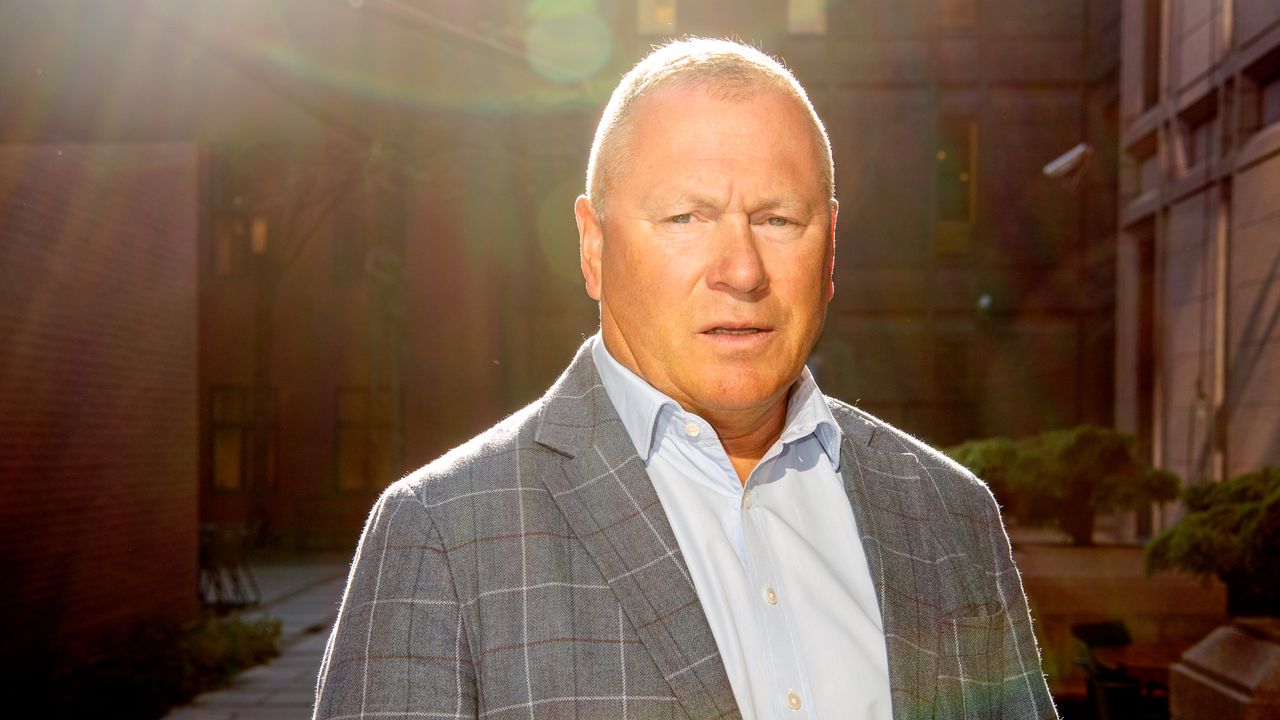
Nicolai Tangen, who manages Norway’s enormous sovereign wealth fund, is barrel-chested and red-faced; he looks more like a boxer than a banker and moves with coiled energy. At a recent event in Oslo commemorating the fund’s thirtieth anniversary, he weaved around Jens Stoltenberg—the country’s pallid, gracile finance minister, who decides how much investment latitude Tangen gets with the fund—and looked as if he might deck him. But they get along. Since Tangen took over the fund, in 2020, its value has nearly doubled, to $2.3 trillion. Tangen says of himself that he “might be the most powerful person you’ve never heard of.”
The fund is informally known as the oljefond, because its assets derive from Norway’s oil fields, mostly in the North Sea. Before extraction, they contained an estimated hundred billion barrels’ worth of petroleum. (Only about half the known reserves have been tapped out.) The oljefond is the largest single government-run investment entity in the world—larger than anything managed by Saudi Arabia or China. It is also the world’s biggest investor in the stock market, owning 1.5 per cent of all publicly listed companies and making nearly two hundred thousand trades a day. It holds $15.7 billion in Tesla stock and $52.7 billion in Apple shares.
The oljefond is so huge that it has become a force in corporate governance. Under Tangen’s watch, it has pushed an array of companies to adopt more ecological practices; it has divested from dozens of corporations, including the French mining giant Eramet, citing their poor environmental records. In June, 2024, it voted against giving Tesla’s C.E.O., Elon Musk, a gargantuan fifty-six-billion-dollar pay package; the decision made headlines, though it did not thwart Musk’s big grab. Even so, Musk was not happy with Tangen. A few months later, Tangen, who likes to socialize with the leaders of the companies the fund invests in, invited Musk to join other C.E.O.s for a dinner at a restaurant in Oslo. Musk texted Tangen, “This would be very difficult and expensive for me to attend,” pointedly adding that Tangen had done “nothing to make amends.” Tangen wasn’t daunted; the heads of Ferrari, Nestlé, DoorDash, Adidas, and Novo Nordisk still came. Tangen, who has taken Cordon Bleu cooking classes, helped out in the kitchen, preparing a menu that included Norwegian reindeer with cream sauce and lingonberries. “It was a very enjoyable evening,” Tangen told me.
Norway’s per-capita gross domestic product, a hundred and fifteen thousand dollars, is now twenty-one per cent higher than the United States’. But Norway hasn’t been a rich country for that long. For centuries, it was largely a land of poor peasants and fishermen, a vassal of its Scandinavian neighbors. Beginning in 1380, Denmark dominated Norway for four hundred years, even supplanting its written language with a version of Danish. After the Napoleonic Wars, Norway fell under Sweden’s control, a forced marriage that lasted until the twentieth century. To be a Norwegian was to cringe before more powerful rivals—to be a Viking without his shield.
Then, in 1969, a Phillips Petroleum vessel identified an oil field in Norwegian waters. It was one of the biggest ever discovered offshore, and other large deposits were subsequently found in its territorial waters. Ironically, Norwegians needed little of their own crude—the country’s wet, mountainous landscape allowed it to rely on hydroelectric power. It could sell virtually everything it pumped.
Many Norwegians were suspicious of their new bounty. The Netherlands had discovered its own gas fields in 1959, and the resulting focus on extraction had crowded out other economic activity. This had become known as the Dutch disease, and Norway was afraid of catching it. More profoundly, the windfall posed a threat to Norwegians’ identity as a thrifty, hardworking, and egalitarian people. Theirs was a nation where children ate a cold lunch at school and where dugnad, the custom of neighbors joining together in communal tasks, was almost compulsory: all the residents of an apartment building gathered outside to prune the bushes; everyone on a sports team helped repaint the locker room. In 1972, the Norwegian parliament established a state-owned oil company to insure that the government kept as much of the proceeds from the fields as possible. And legislators began looking for a way to let loose the oleaginous monster without letting it destroy them.
In 1990, Norway created the oljefond, a government-run endowment that would manage the oil revenue, invest it carefully, and preserve the profits for the country’s citizens. Kuwait pioneered the model, in 1953, and half a dozen countries, from Saudi Arabia to Kiribati, had since created such funds. In 1996, the oljefond received its first oil-revenue proceeds, and the Norwegian government appointed financial professionals to run it as civil servants. Restraints were placed on what the fund could invest in, in order to guarantee that its returns would be steady and that any losses would be manageable.
In early 2020, the fund’s manager, Yngve Slyngstad, was ending his term, and Tangen put up his hand. Born in the port city of Kristiansand, southwest of Oslo, he was a billionaire hedge-fund tycoon living in London. He saw the job as a chance to give something back. But, when his candidacy came to light, many Norwegians were alarmed. The head of the oljefond was supposed to tend the country’s savings account like a parsimonious pensioner, and Tangen was seen as brash and boastful—an entitled finance bro. Norwegian journalists reported that, the previous year, he had spent three million dollars to celebrate his career triumphs at a multiday event at the University of Pennsylvania’s Wharton School of Business, where he’d been an undergraduate. Tangen responded that the event had hardly been a bacchanal—it was an “academic exercise” that included presentations by the chef Jamie Oliver and the psychotherapist Esther Perel. But it wasn’t clear which looked worse to Norwegian eyes: that Sting had played a set for the attendees or that Slyngstad had flown home on a private jet chartered by Tangen for his Norwegian guests, complete with butlers, a chef, and two wine bars. (Slyngstad apologized to the Norwegian people; Sting did not.)
Then, there was the irritant of Tangen’s extravagant art collection. Four years before applying to run the oljefond, he’d given a thousand works of Nordic abstract and contemporary art to his personal foundation, with the goal of putting them on display in his home town. Ultimately, the Kristiansand government, with help from various foundations and the national purse, had come up with sixty-six million dollars to renovate a grain silo in the city’s harbor. The resulting museum was a flashy brutalist showpiece called Kunstsilo. In the regional newspaper Fædrelandsvennen, an online commenter decried the project as “an assault on the citizens by the art élite.” Tangen’s foundation had contributed at least twenty-five million dollars to Kunstsilo’s construction, but many Norwegians remained skeptical of the project. In 2019, a local politician told the Oslo paper Morgenbladet that it was a scandal for the municipality to have spent so much money “to exhibit a narrow, modern art collection they control but do not own.”
In March, 2020, Tangen secured the oljefond job. The Oslo paper Klassekampen wasn’t thrilled. It declared, “The terms of Nicolai Tangen’s appointment as C.E.O. of the Government Pension Fund Global amount to a prolonged humiliation for a country long known for its impartial civil servants and its restrained culture of public administration.”

Tangen prepared to move to Oslo, but one final obstacle remained. The press kept pointing to another potential conflict of interest: how could he simultaneously run the oljefond and be a beneficiary of his own hedge fund? Under rising pressure, Tangen agreed to donate his $1.1-billion stake in the hedge fund to his personal foundation. His new salary was a paltry six hundred thousand dollars a year, but he was left with assets, including real estate, worth eight hundred million dollars.
This past June, I visited Tangen at his offices in Oslo, which are inside a seven-story building owned by Norway’s central bank, under whose aegis the fund operates. In the lobby, the bank maintains a counter for specialized transactions; I passed Norwegians gathering in their omnipresent rain parkas and bright-colored knapsacks to exchange expired currency.
Up four flights, Tangen met me dressed in Davos casual: double-vented blazer, open-necked shirt. (When I visited a sauna with him, he wore Vilebrequin trunks.) At an immaculate table with roses and a glass decanter, Tangen began recounting the history of the fund as if it were a fairy tale. “Finding oil is a blessing,” he said. “But it can also be a curse. It can lead to crowding out of industries, and inflation and corruption.” The oljefond had started out relatively small, he said, with the equivalent of three hundred million dollars. But, like Jack’s beanstalk, it had grown and grown.
By 2017, Norway’s five million-plus citizens were enjoying unimaginable largesse through government programs sustained by the oljefond, and the Ministry of Finance, anticipating lower rates of return down the road, reduced the amount of money it would extract from the fund from four per cent to three. Even so, the fund is now so big that it supplies a quarter of the government’s budget, providing citizens such amenities as medical care, subsidized orthodontia for children, university tuition, and yearlong parental leave. At his paperless table, Tangen did some rough calculations, and it turned out that some four hundred thousand dollars were now effectively set aside for every Norwegian. “Today there’s much more money in the fund than is left of the oil and gas,” he added. He noted that, whereas China’s and Saudi Arabia’s sovereign wealth funds focus on spurring internal investment and development, the oljefond doesn’t invest in Norwegian businesses—a way to avoid favoritism and inflationary pressures.
By parliamentary mandate, Tangen must invest the fund’s trillions prudently and broadly. Seventy per cent of that money is in stocks, thirty per cent in bonds. He told me that, in the past three decades, the fund had outperformed its benchmark expectation by roughly a quarter of a per cent annually, earning slightly more than six and a half per cent on average. “That doesn’t sound like a lot, but for a fund of this size it’s significant,” he said. (The S. & P. 500, with no exclusions and no bonds, earned 9.2 per cent in the same period.) A patchwork of diversification mandates constrain how much of the fund can be put into, say, Chinese companies or Big Pharma. And there are many sectors in which Tangen can’t invest at all, such as tobacco and cannabis. The oljefond ties itself in knots when it comes to the fossil-fuel industry: it can’t hold stock in companies that focus exclusively on oil extraction, but it can invest in companies that sell gas to consumers, such as Shell and Chevron.
Tangen may apply his own strategies for maximizing returns to just fifteen per cent of the fund. Otherwise, he said, “we follow the indices.” (Like a kid asking for a raise in his allowance, he has petitioned the Ministry of Finance to increase the discretionary percentage.) When the fund sells off a position, it does so gradually, so as not to disturb markets—that’s one reason for those two hundred thousand trades a day. And, though he goes to Davos annually, he flies coach. “It’s important that when we meet Norwegians on the plane we are not wasting their money,” he said.
Perhaps to counter the notion that his hedge-fund past marks him as a headstrong risktaker, Tangen has just published a book of modesty-laden management tips, “Tell Me I’m Wrong: How Running the World’s Largest Wealth Fund Made Me Shut Up and Listen.” He writes of his determination to create “an environment where people actually dared to speak up when the boss made a fool of himself.”
Many of his countrymen worry that the fund is transforming society in negative ways. This is an anxious moment in Norwegian culture. Not only is the country leaving its hardscrabble history behind—it is developing the sort of inequality found in more nakedly capitalistic countries, such as the United States. The egalitarian train from the airport, the Flytoget, now regularly features on its info screen a list of Norway’s top investors and how much they made that day on the Oslo stock market. Outside Tangen’s office building, I saw indigent people poking through trash containers, likely looking for bottles and cans to return for the deposit refund.
A recent best-seller in Norway, “The Country That Became Too Rich,” by Martin Bech Holte, argues that the generous welfare-state benefits facilitated by the oljefond are sapping the country’s drive, leading to everything from poor test scores in schools to high absenteeism at work. Holte asks why Sweden—the home of Spotify and Klarna—has become a hotbed of tech while Norway lags behind. He told me that the constant revenue of the oljefond has made Norwegian politics “purely about fixing short-term problems.” Rather than address structural reasons for youth unemployment, the government hands out “welfare benefits to young people,” and buys their votes with goodies such as “free ferries” and “free after-school services.” Over time, he said, “Norwegians simply become clients of the state.”
The environmentalist left in Norway also questions the fund. One evening in Oslo, I saw about fifty young protesters, in backpacks and orange safety vests, marching with the banner “DEMOCRATIZE THE Oljefond.” Participants told me that they’d started the demonstration forty miles to the north, in the town of Eidsvoll, where the Norwegian constitution was signed, in 1814. (During their march to Oslo, they paused to sleep in a forest.) The protesters’ goal was to have the fund better reflect the values of the public—for example, by making donations to nonprofits developing technologies that help countries harmed by global warming. Many polls show that Norwegians want the oljefond to focus more on slowing climate change. (A 2025 climate-impact report by the Nordic Center for Sustainable Finance, an ecological-advocacy group, noted that ninety-six per cent of the oljefond’s oil and gas investments were in fossil-fuel companies “that are actively working against the 1.5°C target”—the limit the world’s governments have set for how much global warming they are willing to accept.) Frida Steinbakk, a spokesperson for the marchers, said of the fund, “We see very little action.”
This might be in part because the Trump Administration browbeats Tangen whenever the oljefond acts to reflect progressive values. Since 2004, the fund has been monitored by an independent watchdog, the Council on Ethics, and, since 2022, mitigating climate change has been enshrined as one of the central goals of the fund. Human rights have also been a focus. Last year, following the council’s recommendation, the fund divested itself from Caterpillar, the U.S. construction-equipment company, on the basis that its bulldozers were being used in human-rights violations in Gaza and the West Bank. A State Department spokesman said that he was “very troubled” by the decision. Lindsey Graham, the late South Carolina senator, called for retaliation. Despite the uproar, the oljefond did not reverse the sale. Soon afterward, however, the Norwegian parliament suspended the council’s ability to make recommendations, and last month a government-appointed commission endorsed handing over some of the council’s authority to the likely more pliant central bank. The council’s chair threatened to resign if the ethics panel was turned into a “toothless internal advisory group.”
Whenever I brought up Trump or the United States to Tangen, the color drained from his face. “I really don’t think I should have a strong view about the human side of the American society,” he said. “My job has to do with business and investments, and so that’s where I think I can have a view.” I asked him whether he believed in climate change. To my surprise, Tangen hedged. “I think it’s amplified by human activity,” he said. I asked him whether he meant that there was climate change without people. Norway experienced a nasty mini ice age from the fourteenth century to the twentieth century, its glacial covering extending farther than it previously had in recorded memory. Was what we were experiencing now merely the reverse? Tangen paused, then said, “I don’t know. But, I mean, I do think that we are making climate worse.”
Immediately, Tangen returned to safer topics. I noticed that a plaque in his office said, in Norwegian, “Let the Wolves Howl. The Caravan Drives On.” He clearly wanted to give the impression that the oljefond was like one of those massive cruise ships which ply the country’s fjords—big and slow, with a benign captain guiding it. At one point, he helpfully clarified to me that “a civil servant” is “the opposite of being a fat cat.” I left feeling puzzled. Someone who had worked his whole life to become a Master of the Universe seemed to have put his ego on a starvation diet.
Tangen was born in 1966. His home town, Kristiansand, is often described as gray and boring, but it is near some beautiful coastal areas. Tangen’s father was a local businessman who, after retirement, sold Christmas trees; his mother was an art historian who took him to exhibitions at a very young age. “No one else in Kristiansand did that,” Kurt Mosvold, a childhood friend of Tangen’s, told me. Most Norwegian boys liked to attend soccer games—Tangen did, too, but not because he cared about the sport. “He would collect bottles at sports events and get the redemption fee,” another school friend, Christian Jebsen, told me.
Tangen distinguished himself academically, and he moved to Oslo to attend the Norwegian Armed Forces’ School of Intelligence and Security, where he studied interrogation techniques and also Russian. He did a tour of duty at the Norwegian Embassy in Moscow—he assured me that he was a commercial attaché, not a spy. Not long after returning home, he went as an undergraduate to Wharton, graduating in 1992. He moved to London to become a financier, and after several years he landed a job at a hedge fund, Egerton Capital. In 2005, he founded his own fund, AKO. By the time he was in his mid-thirties, he was rich, and the Norwegian business newspaper Dagens Næringsliv was calling him a “superstar” in the hedge-fund industry. In 2013, a Kristiansand daily described him as “Norway’s unknown billionaire.”
You didn’t achieve this sort of success by trying to be “the world’s best bureaucrat,” as Tangen has described himself. I suspected that his tamped-down persona was effortful and that the alpha-male side of him was hiding just out of sight. At one point, I asked him what his happiest childhood memory was. He first described the quintessential Norwegian summertime family vacation: “spending time on this little island, Scandinavian life style, really simple—really, really, really simple life style. Fishing and that kind of thing.” Suddenly, he jumped to a story about his first days at Wharton: “Somebody in the class was, like, ‘What should I be doing?’ And the teacher was, like, ‘Well, it depends on what you want to do.’ ” The student said that he wanted to conquer the world. “Everybody was applauding, and they thought it was a great answer!” Tangen marvelled. “You could just never hear anything like that here.”
His crush on American-style capitalism is also evident in a podcast, “In Good Company,” which he started two years after becoming the director of the oljefond. In most of the episodes, he interviews a titan of industry. Occasionally, his questions bite. He asked the C.E.O. of Ryanair, the low-cost airline, “Is it good news for the climate that you fly people to Estonia for ten euros?” (The C.E.O. answered that it was more carbon-efficient than having people drive.) But the tone is generally chummy. The C.E.O. of Morgan Stanley at the time confided that he relieved stress by watching swans on the “little pond at the back of my beach house.” While interviewing the C.E.O. of Microsoft, Satya Nadella, Tangen gushed that the conversation was “the most incredible experience of my life.” Norwegians, who are not easily fooled, discerned that the podcast was largely a way for Tangen to stay in the game of winning friends and influencing people. Jebsen, Tangen’s childhood friend, explained it to me this way: “In Norway, we have something called Janteloven—the law of Jante.” Jante is the name of a fictional Scandinavian town in “A Fugitive Crosses His Tracks,” a wry novel about small-town conformity, by Aksel Sandemose. The book lists ten rules for living, Jebsen explained, including “You should never believe you are anything more than anyone else” and “Keep calm and be invisible.” I asked him how many of those rules Tangen had broken. “Quite a few,” he responded. “Nicolai is just very un-Norwegian.”
Tangen is, among other things, sociable in a reticent country. He enjoys being recognized on the street, as he often is in Oslo. At the thirtieth-anniversary event for the oljefond, I saw him introduce himself and shake the hands of about two hundred surprised high-school students. Tangen likes to throw dinner parties with very good food and wine. He prides himself on the variety of guests who attend—there are plenty of boldface business names but also academics and childhood pals.
Tangen’s exuberance, according to his friend Erling Kagge, a well-known writer and explorer in Norway, has one unexpected purpose—that of social revenge. For Norway’s beau monde, Kagge explained, the summer resorts around Kristiansand are like the Hamptons, and the young Tangen felt like a townie: “Well-off people from Oslo would come and hang out with the other kids from Oslo, and then they would go back to Oslo.” This crowd, Kagge went on, was “into the arts and money, and they had very nice clothes.” Tangen’s youth, he concluded, “was quite different—so a lot of this has been about giving the finger not to anyone in particular but to many different people, first by becoming very rich and then by getting all this art and then sharing it with the public.”
One afternoon, Tangen and I met at Oslo’s National Museum of Art, Architecture, and Design. The sleek building, which opened in 2022, is sometimes held up as an example of Norway’s luxurious indolence, because it was finished years late and vastly over budget. It’s not far from where Tangen and his wife, Katja, live, in the affluent waterfront neighborhood of Tjuvholmen. They have three grown children, one of whom, Alexandra, lives in New York City, where she runs the cocktail bar kabin, whose décor evokes a Norwegian summer cabin. (Photographs of the Tangens’ own summer home adorn the bathrooms.)
Tangen has a mordant side. He recounted to me a conversation with Alexandra, who, after following his footsteps to Wharton and then trying various finance ventures, asked him to help her launch kabin. She told him, “Daddy, always in these podcasts you tell people how important it is to follow their dreams. And my dream is to open a cocktail bar.” He was initially hesitant. To me, he joked, “The funny thing is, everybody thinks it’s great that somebody else’s daughter has a cocktail bar.” But ultimately she gave him a business plan, and he agreed to help her.

Heading into the museum, we talked about his collecting. Tangen has been buying art since his twenties. In an unusual move, he took a break from his finance career, from 2003 to 2005, to get a master’s degree in art studies at London’s Courtauld Institute. He went there primarily to improve his collecting knowledge—to gather it “into a system.”
At the Courtauld, he did extensive research on Rolf Nesch, a German Expressionist painter who fled the Nazi regime in 1933 and moved to Norway. Seven years later, Nesch’s chosen country was occupied by the Germans, who were widely despised. “It was tough to be a German in Norway during the war,” Tangen said. Tangen, who lived abroad for nearly three decades, said that Nesch’s story resonated with him. “I’ve always felt a bit of an outsider,” he told me, as we walked up a staircase to view the collection.
We stopped to see some works by Edvard Munch, of course, but Tangen wanted me to look more closely at some of the painters who followed Munch in the Nordic tradition. They awakened a competitiveness in Tangen that I hadn’t yet witnessed. When we came to a work by the Norwegian Cubist Aage Storstein, called “Thorough Cleaning,” Tangen assured me, “When you go to Kunstsilo, you’ll see much better examples.” This turned out to be a theme. In a room showcasing Nordic disciples of Fernand Léger: We have better examples of these. Ditto with the Danish modernist Vilhelm Lundstrøm.
Tangen admitted that, in going head to head with Oslo’s biggest museum, he was not really being a good citizen. A Norwegian ought to step aside whenever the government wanted to acquire a work—but he was an outsider and didn’t care. He declared, with pleasure, that it was almost “cruel that a small town like Kristiansand has better pieces than the National Museum.” His relentless buying has drawn pushback. After his foundation acquired an impressive private collection of Nordic modernists, for some twenty-two million dollars, and spirited them away to Kunstsilo, a curator at the National Museum called it a “tragedy,” adding that placing the collection in Oslo would have made “an exceptionally important contribution to our national memory.” Tangen responded that museums, like any market, benefit from competition.
We arrived at a gorgeous nine-foot-high tapestry, “Magic Moon,” depicting lunar light shimmering on a lake. The work, from 1967, was one of two related pieces by Synnøve Anker Aurdal. Tangen acknowledged the power of the tapestry before him but then said, “This is ‘The Moon.’ When you come down to Kunstsilo, you’ll see ‘The Sun.’ I have ‘The Sun.’ ”
I subsequently visited Kunstsilo. The giant tubular interior is arresting, and its brooding collection looks striking against the austere concrete walls. In a gesture that felt tellingly redundant, plaque after plaque bore the words “The Tangen Collection.” I was amused to hear some Icelandic visitors complaining that Norwegians had “grown lazy” because they no longer needed to work.
After Tangen and I spoke in his office, we headed down to the trading floor. He wanted to check on the markets. Recently, part of his job seems to be putting a happy spin on overseas innovations that many Norwegians might rather do without. A few days earlier, he had spoken warmly in the Norwegian press about A.I., in which the fund has invested heavily. He told me that A.I. represents a “democratization of knowledge and wisdom and learning.” It would free Norwegians from trivial tasks. “We quite like to spend time in our cabins”—he meant summer houses—“so who can do better than to have some A.I. working for you in the background?” (Most Norwegians have no family summer home.) This past February, he told the Oslo newspaper Aftenposten that he’d have no problem enjoying art made by A.I. “It doesn’t matter to me, as long as it’s good,” he said. An artistic collective, Kiki, has commented acidly that, “to be accepted by the tech oligarchs as the director of the Norwegian Oil Fund, you have to show that you . . . are willing to sacrifice most other principles on the A.I. altar.”
Tangen has made it clear that, when the A.I. wave hits Norway, it must not lead to layoffs. But on his trading floor there was already virtually nobody to lay off. When we visited, there were just three people, staring at Bloomberg terminals in silence. Ninety-eight per cent of trades at the oljefond are now automatic, Tangen explained, and, thanks to machine-learning algorithms and A.I., all trades are overseen by just fifteen people. “We’re very efficient,” he said. When I later visited the fund’s office in New York, he introduced me to a young portfolio manager with a scruffy beard wearing a sweatshirt and Asics. “He runs the most capital in the world,” Tangen claimed. The man told me that he managed eight hundred and fifty billion dollars in investments.
It remains a subject of debate in Norway whether, as Dagens Næringsliv put it last year, Tangen is “too much of a London finance acrobat and too little of a Norwegian bureaucrat.” But Tangen was nevertheless appointed to a second five-year term. Erlend Mørch, a podcaster who moderated conversations between Tangen and Stoltenberg at the thirtieth-anniversary party, explained to me, “We don’t love finance bros, but it’s good to have one who can make you a lot of money.” Friends of Tangen’s say that, even in private, he expresses nothing but love for a gig that cost him roughly a billion dollars to get.
In his second term, Tangen is hoping to be let out of his cage a bit more. He is pushing the Ministry of Finance to let the fund enter sexier areas, such as private equity. “So far, the idea hasn’t been approved,” he told me. Gøran Skaalmo, an investigative journalist at Dagens Næringsliv, told me he didn’t think that the idea would ever be approved. “I believe Nicolai is perceived as too close and cozy to the P.E. crowd,” he said.
On the Oslo trading floor, we spoke with a trader whose terminal was lit up with rows of greens and reds, a digital Christmas tree. She was trading in the energy sector. “We have some really interesting algorithms,” Tangen told me. “And we have separate screens for programming and A.I. use. Fantastic!” The fund trades twenty-three hours a day. Only when the sun is halfway between Australia and Hawaii are the oljefond terminals silent. Tangen explained, “We start the money in Europe, and then we move to the U.S., and then it goes to Asia, and we get it back in the morning.” (The oljefond has offices in London and Singapore as well as in Oslo and New York.)
We were standing by a bronze sculpture of a charging bull. Tangen seemed happy in a way I hadn’t seen since he’d bragged about outdoing the National Museum. He now burst out with a paean to investing. He didn’t trade for the money, he said. After all, he wasn’t trading with his own money anymore. He traded because trading was life: “Everything you drive, eat, and wear is made by somebody, by a company.” To win at the game, he went on, you had to “look at organizational structures and leadership philosophies and products, obsolescence, and innovation.” That was just one piece of it: “You also have to look at the economy and macroeconomics and inflation and money supply and war and peace, geopolitics, trade barriers. And you have greed, and you have fear, and you have psychology—all these kinds of things.” The best part, Tangen said, was that it all “changes, like, every millisecond. You couldn’t construct a more complex and more interesting game, even if you tried. It’s incredible.” ♦
来源:纽约客中文网