 讲知识 · 讲经验 · 讲未来
 人人可分享 · 处处是课堂
 科技 · 财经 · 游戏 · 快讯,每日更新
 诚搜315观察网
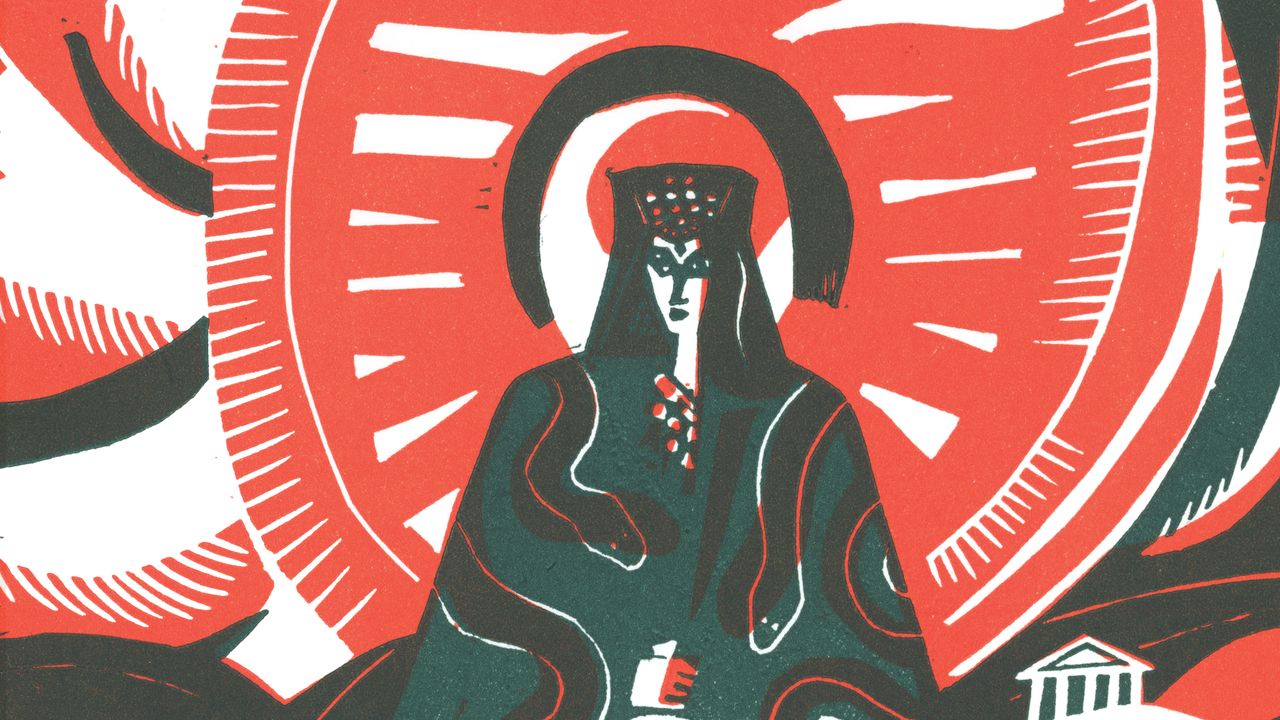
When my first child was born, my then mother-in-law—a labor-and-delivery nurse—told me to call 911 immediately if I had thoughts of killing my baby. “What if I feel like killing my husband?” I joked. She didn’t miss a beat: “That’s normal,” she said. I never had the urge to hurt my daughter, but the early weeks of motherhood left me threadbare and drained. One night, I lay awake next to her, unable to sleep because I was afraid something bad might happen if I did. In the whirr of a small portable fan that, on the advice of the internet, I kept angled toward her face so that air would flow over it, driving away invisible particles of dust that might smother her while she dozed, I began to hear a song—a musical pattern of high and low notes emanating unmistakably from the machine. With a start, I realized that the line between sanity and delusion was much thinner than I otherwise would have thought. I blinked and shook my head. The song died away. I was lucky.
We claim to be mystified when people kill their children, but the real mystery is why more people don’t. Statistically speaking, filicide—the murder of a child of any age—is rare, accounting for around two and a half per cent of annual murder arrests in the United States. Somehow, no matter how many sleepless nights we endure, how many diapers we change, how much food we clean off the floor, how often we are bitten, smacked, scratched, and kicked, some indomitable mechanism keeps us from putting a stop to it for good. Call it genetic self-interest, or love; whatever it is, it works.
Discover notable new fiction, nonfiction, and poetry.

When it doesn’t, nothing captures our collective imagination like the spectacle of a murderous mother. In 1994, there was Susan Smith, who buckled her young sons, the three-year-old Michael and the one-year-old Alexander, into their car seats and let her red Mazda Protégé roll into a lake. She eventually confessed to the crime. The motive proposed by the prosecution was at once clear and unfathomable: her boyfriend didn’t want kids, so she decided to get rid of hers. This past summer, Americans were riveted by the high-profile trial of Lindsay Clancy, a thirty-six-year-old former nurse—like my ex-mother-in-law, she worked in the labor-and-delivery ward—who killed her three children in January, 2023, then slit her wrists and jumped out a window, apparently in an attempt to take her own life. The case quickly became a Rorschach test. You either saw Clancy as an overburdened young mother suffering from postpartum psychosis, or as a cold-blooded killer who had meticulously arranged for her husband to be out of the house when she committed her alleged crimes.
The case turned on the question of why: Did Clancy kill her children because she was out of her mind, or did she do it because she is a bad person, a selfish or even evil woman who resented the hard work of parenting? But the question itself presents its own problems. After all, it is an irrational act to kill your children, and irrational acts obviate rational explanations. It’s no wonder, then, that the Clancy case ended in a mistrial, with eleven jurors in favor of exonerating Clancy and one in favor of finding her guilty. What Clancy did was senseless. Accordingly, twelve people, presented with the exact same evidence, could not come to a consensus about it. There is no reason in the inexplicable.
The urge to understand terrible acts in psychological terms is decidedly modern. We are quick to turn diagnosis into explanation—Clancy killed her children because she was mentally ill—or to locate the roots of present dysfunction in an unhappy childhood. In the ancient world, by contrast, misfortune, absurdity, and madness were seen not just as fundamental aspects of human life but often as its driving forces. This is the lesson of Greek tragedy, in which people find themselves doing all sorts of evil for which they are, in a strange way, blameless. Consider Sophocles’ Oedipus, who kills a man he doesn’t know is his father and marries a woman he doesn’t know is his mother. When he learns the truth, he blinds himself and goes into exile, but later he also undergoes an apotheosis—a transformation into a divine being. He is punished for his crime and also rewarded for it, as if the extremity of his circumstances caused the gods to throw up their hands in bewilderment and surrender.
We tend to use the word “tragedy” to describe a catastrophe that, in hindsight, was avoidable. For the Greeks, however, real tragedy was that which could not be prevented. It is almost cartoonish, like a wrecking ball swinging in from outside the frame to crush an unsuspecting Wile E. Coyote. So it goes with Euripides’ Medea, a mother who murders her two sons. Her ostensible reason is to get revenge on her unfaithful husband, but her actions seem so curiously beyond her control that it is hard to fault her for them; at the same time, she keeps such a cool head that it is equally difficult to see her as a sympathetic figure, one driven past her breaking point by jealousy and grief. She also gets off even more lightly than Oedipus: at the end of Euripides’ play, Medea escapes in a flying chariot given to her by the sun god Helios, leaving her enemies, including her bereaved husband, in the dust.
As the British classicist Edith Hall writes in her new book, “Medea: A Life” (Yale University Press), Medea has long been an object of mingled fascination and horror. Her name is shorthand for a woman who kills her children—both Smith and Clancy have been compared to Medea in the press—which makes it easy to forget that, according to Euripides, she has other victims, too. One is her husband’s new bride, a princess of Corinth named Glauce, to whom she sends a poisoned dress and a coronet that burns her flesh with “unnatural devouring fire.” Another is Glauce’s father, Creon, who embraces his dead daughter only to find that her flesh—“melted,” in Euripides’ words, “from the bare bone, like gum-drops from a pine-tree’s bark”—sticks to his, tearing the skin from his body. In the play, Medea is a fearsome representative of women scorned, cruel but clear-eyed in her pursuit of what she sees as justice. “You were mistaken,” she tells her husband, “if you thought / You could dishonor my bed and live a pleasant life.” When he observes that she, too, must bear the pain of losing their children, she replies with ghastly composure: “It is true; But my pain’s a fair price, to take away your smile.”
Medea’s story did not begin with Euripides. According to legend, she was the daughter of Aeëtes, a Greek who became the king of Colchis, on the eastern coast of the Black Sea, most of which is now in present-day Georgia, and a water nymph named Eidyia. Helios was her grandfather, and her aunt was Circe, the enchantress who turned Odysseus’ men into pigs. The poet Hesiod refers to Medea with the epithet “Medea with beautiful ankles.” In other sources, she is described as polypharmakos, meaning “knowing many charms” or “having many drugs”—essentially a witch. Her troubles began when she helped the Greek adventurer Jason, the leader of a band of heroes called the Argonauts, obtain the legendary Golden Fleece from her father. In Apollonius of Rhodes’ poem the Argonautica, written in the third century B.C.E., he explains that Medea offered to help Jason in exchange for marriage. Once Jason captured the Fleece, she helped him kill her only brother, Absyrtus, to facilitate his escape from Colchis. Next, per Euripides, she tricked the daughters of King Pelias of Iolcus into dismembering their elderly father, hoping that Jason would be able to claim his throne. The plan backfired, and she and Jason went into exile, eventually settling in Corinth.
Though Medea may seem vicious, or at least heartless, blithely dispatching anyone who gets in her way, there are versions of the myth in which she doesn’t kill her children. In one, attributed to the poet Eumelus, she tries to use magic to make her progeny immortal, but they die by accident. In another, the women of Corinth lynch her “seven boys and seven girls.” It is Euripides who makes Medea’s filicide canonical; one ancient commentator claimed that the playwright was paid five talents by the Corinthians to pin the murders on her. He certainly succeeded in establishing her place in a long line of dumped-and-dangerous women, from the Mesopotamian goddess Ishtar, who unleashes havoc on a whole city after the warrior Gilgamesh shuns her advances, to Alex Forrest, Glenn Close’s bunny-boiling character in “Fatal Attraction.”
And yet Medea has always had her defenders. Around 25 B.C.E., Ovid wrote a poetic epistle from Medea to Jason in which she begs him to show kindness to their “common offspring,” implying that the boys are alive and unharmed. Chaucer included her in his 1380 poem “The Legend of Good Women” and likewise omitted any mention of the children’s deaths. The Victorian artist and writer William Morris, perhaps smarting from his wife’s affair with Dante Gabriel Rossetti, imagines Medea “wrapped in uttermost despair” by Jason’s betrayal; as she prepares to slaughter her sons, she recalls bathing them and smoothing their pillows. Then there is Toni Morrison’s 1987 novel, “Beloved,” partly inspired by the true story of Margaret Garner, a Kentucky-born woman who escaped from slavery with her children. Faced with arrest, she resolved to kill them and herself before they could be taken back into bondage. Thomas Satterwhite Noble’s painting of Garner, from 1867, is called “The Modern Medea.”
More recently, Medea has come in for the girlboss treatment. Neither monster nor lovelorn discard, she emerges, in the eyes of some contemporary writers, as an intelligent, ambitious woman who tried to make it in a man’s world and was punished in the process. Rosie Hewlett’s novel “Medea,” from 2024, is dedicated to “all the women who have ever been called ‘too much’ or ‘not enough,’ ” and her title character says things like “The world tried to make me the victim, so I became its villain.” Hall takes a similar view of Medea, whom she introduces as a “fierce symbol of women’s refusal to submit to male authority.”
Marketed as a biography, “Medea: A Life” is more akin to what the scholar Saidiya Hartman calls a “critical fabulation”: a narrative about a person who has slid almost entirely out of the historical record, and whose story, pieced together out of multiple sources, must therefore be partly made up. Hall, a professor of classics and ancient history at the University of Durham, follows Medea from birth to death, borrowing the basic outline of her life from Apollonius and Euripides and then using her own knowledge of Bronze Age culture to fill in the details, such as what it would be like to be a young princess growing up in a backwater colony and how the people of the ancient world dressed, ate, worshipped their gods, and recited their poetry.
The project is less eccentric than it might seem. Hall tells us that “the ancient Greeks were in no doubt that Medea had existed.” The geographer Strabo, who died around 24 C.E., wrote that archeological sites near the Black Sea proved the existence of Aeëtes’ kingdom. “Medea the sorceress,” he insisted, was “a historical person.” Pausanias, in his second-century travelogue “Periegesis Hellados” (“Description of Greece”), claimed that he had seen the tomb of Medea’s children in Corinth, and that there was a time when they had been venerated by a local cult.
But Hall goes beyond literary texts and cultural history to the more dubious realm of popular psychology. Her Medea feels “a deep sense of abandonment by her mother” and is “by nature emotionally insensitive and often unaware of the consequences of her words and actions for other individuals.” Trained in herbal medicine by a priestess of Artemis, she is an aspiring poet and orator, even though she knows women aren’t supposed to make art or speeches. She is more playmate than aunt to her four nephews, and excels at hunting, easily taking down rabbits with her bow and arrow. Her rage, “inherited temperamentally from her father,” is compounded “by the constraints that patriarchy placed her under at every turn.” She is a feminist avant la lettre, whose spirit, Hall writes, is “still out there somewhere, punishing callous patriarchs, unfaithful husbands, and irresponsible fathers.”
As the great biographer Richard Holmes points out, life-writing is by necessity a “mongrel art,” laced with speculation and conjecture and requiring many imaginative leaps, not all of which will land. Yet the tensions between historical reconstruction and modern adaptation are on particularly awkward display in Hall’s book, which offers a well-informed, occasionally vibrant picture of the ancient Mediterranean world populated by characters who behave as if they are on an episode of “The White Lotus”—getting drunk, having sex, and committing crimes—while spouting psychobabble with an underlying view of human nature that would be unrecognizable to the Greeks themselves.
Too often, Hall’s characters stoop beneath therapy jargon and sitcom-level clichés, as if ducking their heads under a low ceiling. When Medea first sleeps with Jason, it’s because she “felt that she needed him to prove they were a couple in physical reality”; in Corinth, she offers her witchy services to the townspeople as part of a “cottage pharmaceutical industry.” Jason, for his part, is gripped by “neurotic mood swings” and finds “childcare a stretch.” After Medea balks at the news of his marriage to Glauce, he tells her that he hoped to “make a happy new blended family for all of us.” Of King Pelias’s brutish son, Acastus, we learn that “most people were convinced that he had an extreme personality disorder.” “I will put in a word for you with the top goddesses,” Medea’s mother, the water nymph, tells her, violating the Roman poet and critic Horace’s dictum “Nec deus intersit, nisi dignus vindice nodus incident”: Don’t let a deity show up in your story except for a purpose worthy of a deity, lest she seem ridiculous.
It’s not easy to balance the sheer otherness of very old texts with the desire to make them accessible to contemporary audiences. Is the wily Odysseus helpfully softened by the suggestion, present in Christopher Nolan’s recent film, that he has post-traumatic stress disorder following the Trojan War? Or is this a preposterously newfangled imposition on a man who, embedded in a tribalistic and highly martial culture, would not feel compelled to repress the acts of brutality he may have committed in battle?
To call contemporary interpretations anachronistic is beside the point: myths endure because they are transformed over time. But applying therapeutic categories to ancient stories obscures their insights into the unpredictable and unaccountable nature of human suffering. It also undermines what Aristotle maintained was one of tragedy’s essential lessons: eleos, which is often translated as “pity” but more rightly means “compassion.” Compassion entails a respect for the fact that there are limits beyond which our understanding can’t go, and extremes of experience that cannot be broken down into bite-size morsels of analysis and opinion. The great heroes and heroines of antiquity shouldn’t have their complexity amputated by armchair diagnosis. But, really, none of us should.
Early in her book, Hall tells us that Medea is “emotionally relatable,” noting that “psychological plausibility in the presentation of ancient mythological events is always hard to achieve.” This assumes that relatability and plausibility are desirable, when, in fact, the power of myth often lies in its most inexplicable elements. Orpheus, having rescued his beloved wife from the underworld, is told that if he looks back at her on their journey home she will be lost to him forever—so why does he do it? There is no answer, no reason or motive: that is what makes his story tragic. Like Medea’s killing of her children, his action is a flag planted in the furthest reaches of psychology. Its purpose is to remind us that terrible things happen, and that we might never know why. As the chorus says in the final lines of Euripides’ play:
Many matters the gods bring to surprising ends.
The things we thought would happen do not happen;
The unexpected God makes possible;
And such is the conclusion of this story.
“The unexpected,” in other words, seems impossible until it happens to you. ♦
来源:纽约客中文网