 讲知识 · 讲经验 · 讲未来
 人人可分享 · 处处是课堂
 科技 · 财经 · 游戏 · 快讯,每日更新
 诚搜315观察网
So far in this series, I’ve written about how we might collectively organize against Big Tech and how we might ward off the fear of rudeness that compels us to reply to every text message we receive. We’ve established that we should smash our devices and walk off into the field of not knowing, or whatever, but, given that we’re not actually going to do that, we should probably try to set a more realistic standard for how much time we can safely spend online. What is acceptable for someone who wants to be as offline as possible while remaining employed and “connected” enough to know, for instance, that your daughter’s soccer practice has been cancelled? Is two hours a day too much? What about thirty minutes? Should we get it down to the eight minutes it might take to read vital text messages from your child’s school or your mother or your boss?
I don’t think we need to put a precise number on it; nor do I think we need to buy the snake oil of every wellness entrepreneur selling a revolutionary app that will track our eyeballs to tell us the exact amount of time we should be spending online. But one statistic I found genuinely illuminating comes from a large survey conducted across fourteen different countries by the Organisation for Economic Co-operation and Development. The O.E.C.D. found that people who reported between one to three hours of personal screen time per day also reported a higher “life satisfaction” than those who spent more time online. That figure excludes time spent on a screen for work or school but includes television and video games. The peak happiness for work-related screen time landed somewhere between three to five hours per day. If you do a little bit of extrapolating, then, it does seem possible to spend upward of six or seven hours a day in front of a screen and still report that you’ve got a high level of “life satisfaction.”
I think I could get my daily screen time down to around five hours without resorting to absurd affectations like, say, purchasing the print edition of the Times and reading all my news in a café with a tight yet self-satisfied frown on my face. And the reduction, I’m sure, would help. Maybe I would sleep a little bit better; maybe my relationship with my family would improve. But I’m not sure that such a gentle weaning would solve the core discontent I feel about online life, even if it made the symptoms mild enough for me to ignore the underlying sickness. It’s true that I still feel some “satisfaction” with my life, but I remain certain that we are all doomed if we don’t get off the internet in a real way. Changing my habits so that I fit within the band of O.E.C.D. high-satisfaction reporters is not a radical enough solution.
To put it more simply: If we believe that online life is, on balance, horrible, and that smartphones are destroying the minds of the youth, is some incremental adjustment to the current situation really sufficient?
Nearly everyone who hates the internet is an incrementalist, largely because it’s hard to go into true dropout mode. Unless you move to the woods, like the Unabomber, you will likely need some connection to the internet to survive. Full-blown opposition to technology is not a new affliction born from our addiction to phones but a way of thinking that has been around for hundreds of years. It is monastic, antisocial, and usually quite vague. The Unabomber, for instance, writes in his manifesto about the need for an “ideology that opposes technology,” but he does not explain what that opposition might look like outside of the example he set through his murderous actions. The goal of the bombings, he seems to suggest—albeit not very clearly—is to place stress on “the system” and somehow open up the possibility of revolution. He does not tell us what will happen when mankind finally breaks through the barricades; nor does he spend much time explaining how the revolution will be won. The manifesto, which continues to find an audience, is mostly a lot of buzzwords. Most anti-technology screeds similarly suffer from grandiose rhetoric and slippery prescriptions.
Incrementalism wins, then, because there’s no good alternative. Unfortunately, technology continues to replace many of our brain functions. In recent months, I’ve noticed my recall failing much more than it has in the past. At least a few times a week, a name gets stuck at the tip of my tongue; even if I can picture the person’s face and think of several details about them, the name remains behind an impermeable wall. Much of this, I’m told by my doctors, can be explained by a lack of sleep, but I still wonder if part of my memory simply up and quit after being repeatedly bypassed in favor of Google searches and A.I. prompts.
The Unabomber, despite his general fuzziness, was quite prescient when it comes to this kind of dependence. In his manifesto, he writes:
It might be argued that the human race would never be foolish enough to hand over all power to the machines. But we are suggesting neither that the human race would voluntarily turn power over to the machines nor that the machines would willfully seize power. What we do suggest is that the human race might easily permit itself to drift into a position of such dependence on the machines that it would have no practical choice but to accept all of the machines’ decisions. As society and the problems that face it become more and more complex and as machines become more and more intelligent, people will let machines make more and more of their decisions for them, simply because machine-made decisions will bring better results than man-made ones. Eventually a stage may be reached at which the decisions necessary to keep the system running will be so complex that human beings will be incapable of making them intelligently. At that stage the machines will be in effective control. People won’t be able to just turn the machine off, because they will be so dependent on them that turning them off would amount to suicide.
This, of course, is a description of today, when we have major outages that ground planes and grind businesses to a halt and yet nobody in charge can entirely explain what went wrong—or, when they do, people dismiss the official record and assume that the robots are either messing up or acting up. We now assume the machines make the decisions. This, it should be said, is a bit different from the machines actually making all the decisions. It’s quite possible that the nationwide ground stop that happened this past week did come from faulty network equipment, but the conspiratorial, A.I.-centric explanations that immediately surfaced online betray the public’s extreme suspicion and rank dislike of this new technology and how quickly it has begun to shape our lives. On any trip to the hospital, for example, we will likely be screened by A.I., talk to a nurse who has been scheduled by A.I., and then have our conversation with the nurse recorded by A.I. If any part of that system breaks, the recourse will almost certainly be more A.I.
This overreliance is why the anti-tech side can speak only in the language of general imperatives rather than specific actions. How could you describe a society without technology and not sound like a monk or a transcendentalist who’s lost his way from the nineteenth century? I’ve tried and failed. Can you do it?
But, if incrementalism is our only option, then how do you turn a call for moderately less screen time into a political movement? In an earlier column, I mentioned the Luddite Club, a group of young people trying to put down their phones. I expressed some skepticism about whether anyone, young or old, could really break free, which prompted Lucy Jackson, one of the early members of the Luddite Club, to send me an e-mail; we later spoke on the phone. Jackson, who is now in college, talks with a slow, careful confidence. In the past couple of years, she has helped expand the Luddite Club to seventy chapters across the country.
“I started as an incrementalizer, because that’s the easiest thing to do,” Jackson told me. “I’ll delete Instagram today and then, tomorrow, I’ll see how I feel. And then I had this dream where I was talking to somebody who was my mentor. And they said, ‘You never do anything unless you do the thing.’ ”
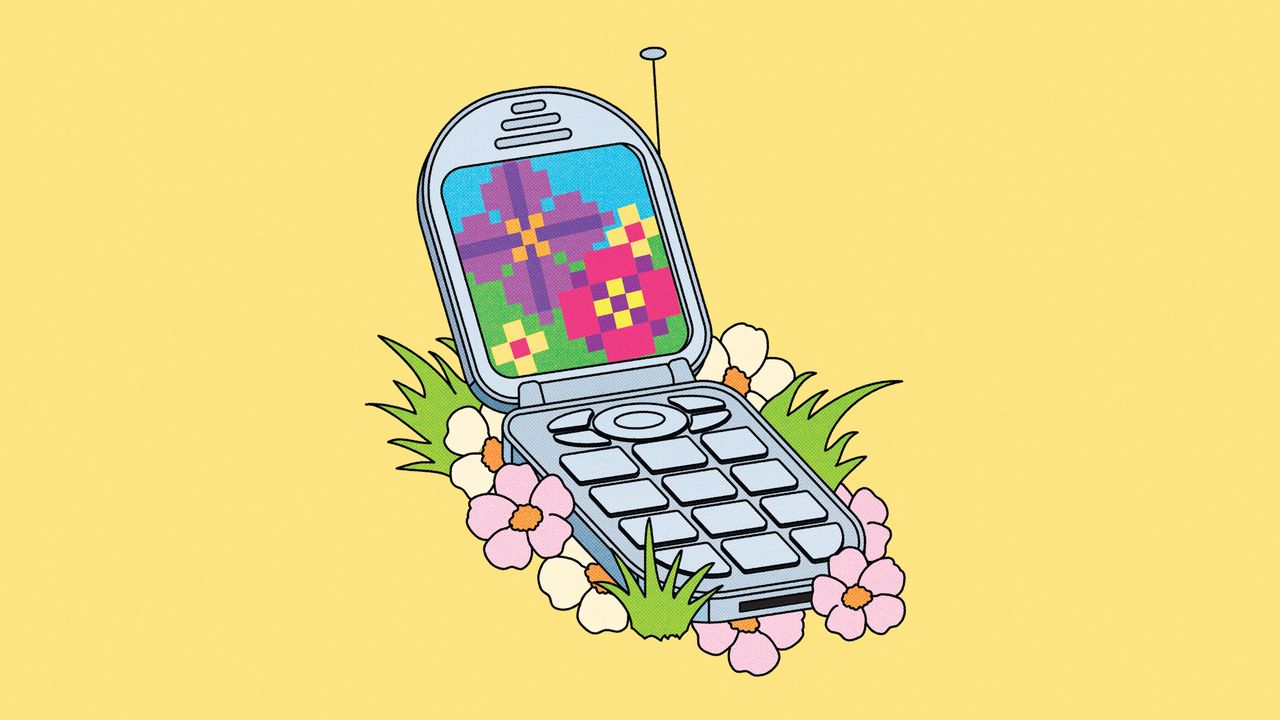
Jackson’s time online increased sharply during the pandemic lockdowns, as it did for so many of us, and doing the thing meant trading in her iPhone for a flip phone, taking periodic “cold-turkey” breaks from all screens and internet time, and, most importantly, spreading the gospel of this modern, piecemeal Luddism to anyone who would listen. She has made peace with the fact that Luddism will preclude her from many future jobs—basically, anything that requires her to be on Slack or e-mail. She says that she wouldn’t want to do those jobs anyway, because such a close connection to technology would feel unbearable to her.
For Jackson, deleting an app or two and otherwise going about your days as usual is not enough. Still, she is wary of being too prescriptive about what Luddism means. She told me that there had been an internal fight within the Luddite Club community concerning just how offline someone should be, and whether a dropout existence was the only way to free oneself from what she called “techno-fascism.” Many people, she said, felt an almost ascetic desire for deprivation, and would “buy two hundred acres and build a self-sustaining cabin” if they could, but Jackson believes in a big-tent version of Luddism that meets people where they are. “I want it to be mainstream,” she told me. “We like civilization—we like this exposure to diversity and culture and media, generally. Why can’t we make this livable for everyone? Why do people have to be forced into this alcove of peace?”
But despite her insistence that even people who merely set a screen-time limit for YouTube are welcome, and her belief that a more drastic retreat from society will never yield a sustainable movement, she does see a value in people showing us alternative ways to live. She told me about a friend who had started renting out rooms in a screen-and-internet-free house. “She gives you a typewriter and dinner and arts-and-crafts supplies and all this stuff—and you pay her when you arrive, so she doesn’t need to access anything online anymore.”
I was most interested in how Jackson thought about change. The dropout vision, she said, drew people to Luddism and has a powerful symbolic appeal, but would, she believed, limit a fight against the tech oligarchs. “I’ve been taking some classes and learning from people who are decades older than me,” she said. “The main thing in movement-building is you have to have a slot for everyone.” The Luddite Club is decentralized; the members of each individual chapter have to define their terms and their goals. “It’s not like church where you have an overarching religious framework,” she said. “You try to foster this space and create a new social norm and help other people find how they can do that, too, and how they can live that. And you don’t discriminate against people because they haven’t been on this road as long as you have.”
This openness was necessary, she explained, because it was quite difficult, at the beginning of the club, to get people to commit to even the slightest reduction in online life. “The group was founded out of loneliness,” she told me. “It was, like, ‘I can’t do this alone. I need somebody else to hold me accountable.’ ”
What she described sounded like a movement of friendly monks who led by example, refused to judge one another, and tried to uphold an admittedly vague ethos. They believed in “human rights” and “how we attain equality in this digital sphere that is entirely dictated by algorithms and a few select people who are coding these things.” The goal, she said, was to create a “livable world for everyone where you don’t need these things and where everybody on the planet can live without them.” When I asked her how many hours I should spend online, she said that I should figure out for myself what would work for me. She apologized for being vague.
Jackson’s theory of change does not require violent revolutionary action à la the Unabomber or hostility for everyone who ever picks up a device. Instead, change can come from simply using a flip phone and reassuring others who hate their digital lives that they will be fine if they swap out a SIM card and stop texting all the time. Happy abstinence can change the world. I understand why some people might see this as soft or, at the very least, naïve. But, in the Luddite Club’s defense: How many people do you know without a smartphone? And, if you swapped out your iPhone for a flip phone, would that constitute a radical change in your life?
“Your digital footprint is forever,” Jackson said. The sense of self and permanence that comes from this makes it hard, she explained, for people to get off their phones, which is something I certainly understand. If I stopped posting and replying, I feel as though I would simply cease to exist. Jackson preaches a modest weaning for people like me. “You can get a flip phone for a week,” she said. “That’s O.K. Who is gonna tell you that’s wrong?” ♦
来源:纽约客中文网