 讲知识 · 讲经验 · 讲未来
 人人可分享 · 处处是课堂
 科技 · 财经 · 游戏 · 快讯,每日更新
 诚搜315观察网
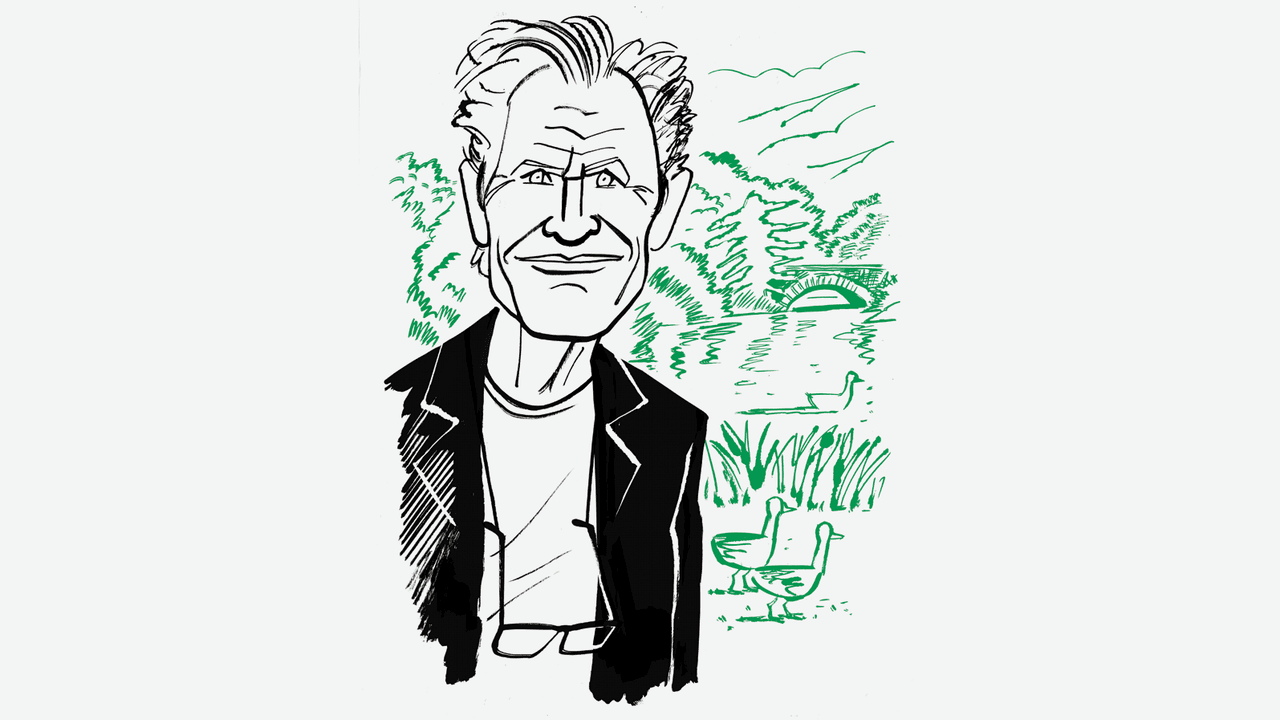
One recent afternoon in Manhattan, the actor and film producer Matt Salinger sat down for an hour’s meditation at the Central Park Pond—the one that Holden Caulfield says is “down by Central Park South.” Matt is the son of J. D. Salinger, the author of “The Catcher in the Rye,” the book about a New York adolescent written in the boy’s own demotic voice, which, improbably, has become perhaps the most successful literary novel of the past century.
The book celebrated its seventy-fifth anniversary this year. (Holden, its hero, first appeared in these pages as the protagonist of a short story called “Slight Rebellion Off Madison,” in 1946.) Matt, who has inherited his father’s suspicion of the more lurid kinds of publicity, marked the milestone by ruminating on ducks in the Park. “I was approached about doing any number of things that just felt—wrong. Yucky. Disgusting,” he said of potential anniversary hoopla. What he wanted was “to be with Holden more than to be with my father—but, in a way, to be with both. You can’t fully untangle one from the other. Holden is more recessive, but they’re intertwined.”
At sixty-six, Matt has his father’s long gait and equine good looks—J.D. used to get mistaken for the actor Jason Robards—but he has a soft and achingly precise voice, as though a single slip in meaning could damage his own hard-earned understanding of his father’s work. “I try never to speak for him,” he said. But he is alert to the fact that “any number of adolescents—and not just adolescents but people of all ages who are feeling confused or disappointed or going through some kind of grieving—gravitate to Holden.”
J. D. Salinger was famously charming and social in his youth; Matt recounted a story of a young Jerry, as friends called him, doing a handstand while drinking a Martini. “My father was different from Holden,” he said. “He did have a great ear for people, and people tended to unload their problems on him fairly regularly. At gas stations, diners, at an ox-pulling contest at the county fair. But, if it was coming from an authentic place, he listened.”
The central koan of “Catcher,” as every reader remembers, is Holden’s repeated question: Where do the ducks in the Park go when the Pond freezes over? Holden gets several answers, including one from a cabbie who informs him that the fish, at least, “live right in the goddam ice. . . . Their bodies take in nutrition and all, right through the goddam seaweed and crap that’s in the ice. They got their pores open the whole time.” (Holden responds, “I’m talking about the ducks.”)
Where the ducks go in winter is a question that contains another question. “The real question Holden is asking,” Matt reflected as he watched some ducks, “is, who protects the vulnerable, the lost, the confused? Gnawing at the edges of that is the knowledge that they’re often not protected.” He laughed.
Like many sons of famous fathers, Matt lives in a liminal space where love and limits interact. He is wary of saying too much about his father’s surviving manuscripts—except to assure that they are not being neglected. He recalled his father not as a mystical oracle hiding in New Hampshire but as a sometimes exasperating, deeply lovable man who spoke too loudly in public and had his share of peccadilloes, but could be a wildly funny companion. “Sid Perelman would come up for dinner and they would break me up together,” Matt said. His father liked to import old New York sidewalk games to their rural retreat, teaching his bewildered son to play stickball and stoopball in place of proper pastoral baseball.
Matt resists attempts to psychoanalyze Holden, to label him as “neurotic” or to try to find, as some critics have, a simple cause-and-effect reason for his angst, possibly stemming from Salinger’s own war experience. “I don’t believe that Holden’s worrying over where the ducks go is merely, or even primarily, a knock-on effect of some specific wound or loss he’s feeling,” he said. “But it does evince someone who cares for the weak, the vulnerable, those decidedly non-‘alpha’ types. He feels things. He’s empathetic. I’ll take that any day in this time where tech bros are espousing testosterone supplements and how to keep one’s body and psyche ‘hard.’ ”
He looked at the ducks: “If these are mallards, then they’re not big migrators. They might fly a short distance to find open water.” (The Central Park Conservancy has an answer to Holden’s question: If the pond freezes, ducks fly off north about thirty blocks to the Reservoir—too big to ice over—and wait for spring.)
Matt turned his attention to a flurry of activity near the Pond. “Is this a proposal over there?” he asked. A small box was glimpsed, and then a young couple embracing. Suddenly, a number of duck-watchers sitting on benches burst into applause, and so did Matt.
It seemed a Salingeresque benediction. “God damn it, there are nice things in the world,” Zooey Glass says, having seen a little girl and her dog playing hide-and-seek on a Manhattan avenue. “We’re all such morons to get so sidetracked.” Matt settled back to enjoy this nice thing, knowing that it would probably have delighted Holden, and his father, too. ♦
来源:纽约客中文网