 讲知识 · 讲经验 · 讲未来
 人人可分享 · 处处是课堂
 科技 · 财经 · 游戏 · 快讯,每日更新
 诚搜315观察网
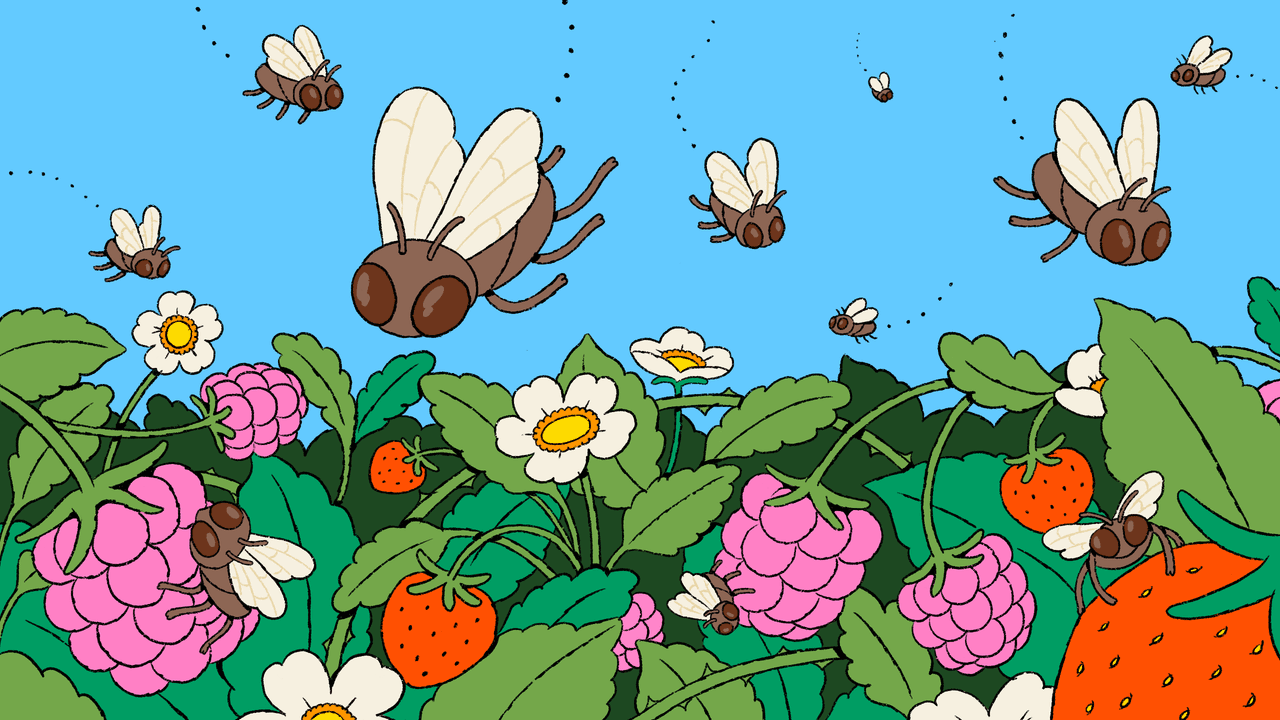
Toward the end of his Presidency, Barack Obama ended a White House meeting with a question: “What are we doing on bees?” For almost a decade, honeybees—some of the only insects that everyone seemed to love—had been vanishing from hives. There were years when commercial beekeepers in the United States lost more than forty per cent of their stock. Scientists spoke of “colony-collapse disorder,” and, given that bees pollinate crops we eat, some observers feared that civilizational collapse was not far behind. Wild theories circulated. Maybe there was an Al Qaeda plot. Maybe God was rapturing the bees to the big hive in the sky.
Researchers ultimately concluded that bees could not tolerate the stress, disease, pollution, and malnutrition that came with working on and travelling between intensive farms. The bees were essentially walking off the job. Environmentalists warned that the plight of honeybees was a harbinger of a new “Silent Spring.” But ecological studies of the pollination process suggested that honeybees were not mere victims. In fact, when fields were densely packed with honeybee hives, hardly any pollen, nectar, or water was left for other bugs. “High-density beekeeping in natural areas appears to have lasting, more serious negative impacts on biodiversity than was previously assumed,” a group of scientists wrote in 2019. Urban beekeeping led to local declines among wild pollinators. Even farmers who planted wildflower strips, to create habitat for wild insects, did not overcome the harms of honeybee hives. The honeybee was suffering from the unnatural conditions of modern agriculture—but it had also helped to create them.
If honeybees were nature’s finest pollinators, perhaps we’d be justified in using them anyway. But, in practice, heavy traffic from bees can pummel a flower’s reproductive parts, leaving many of its ovaries damaged or unpollinated and causing self-pollination, which produces lower-quality fruit. Recent studies have found that, when honeybees visit more, apple trees produce smaller apples and strawberry plants more malformed strawberries. Honeybees enhance pollination during their initial visits to a flower, according to one study, but when they visit too many times they actually hurt the plant. One scientific review determined that honeybees boosted yield in only six out of forty-one crops studied around the world, while wild pollinators benefitted all of them. “Wild insects provide better-quality pollination,” the authors concluded.
In 2015, Dylan Hodgkiss, an entomologist who was originally from the United States, conducted a survey of English strawberry farms for his doctoral dissertation. At one pick-your-own-berries farm, which did not stock any beehives, more than half of the pollinating insects turned out to be hoverflies. Many hoverflies have evolved fuzzy black-and-white or black-and-yellow bodies, so that predators mistake them for bees, but like all flies, they have only two wings. Although a lot of customers might be put off by the idea of flies near their fruit, Hodgkiss was finding that the humble fly played a crucial ecological role. A strawberry flower has hundreds of ovaries, and almost all of them need fertilization to produce a red, symmetrical fruit. When hoverflies fertilized them, nearly sixty per cent of the fruit was good enough to sell; when Hodgkiss tried to imitate their work, by hand-pollinating flowers with a paintbrush, only about forty per cent of the fruit was marketable. What’s more, many of the maggots that become hoverflies eat aphids, a major agricultural pest. Hoverflies “may be capable of providing growers with the dual benefit of pollination and aphid control,” he wrote.
Flies are often associated with disease, decay, and contamination. Two of the ten Biblical plagues—gnats and swarming flies—involved the order Diptera, or true flies. Scientifically speaking, mosquitoes are flies. Mark Twain once wrote a satirical essay contemplating whether God should be forgiven for having created flies in the first place, while St. Augustine concluded that God must have done so to humble people. Even Hodgkiss’s peers seemed uninterested in flies. “All of my colleagues were doing their Ph.D.s on honeybees or bumblebees, and they would get loads of press stories about bees being great for pollination,” Hodgkiss told me. But, in 2021, after finishing his dissertation and starting to look for academic jobs, he received an e-mail from Tashia Tucker, another American, who had originally moved to London to study architecture design. Tucker needed a scientist. She was developing a company called Olombria that aimed to breed millions of hoverflies and then release them onto farms.
In September, in the countryside east of London, I met Tucker and Hodgkiss outside a row of windowless, unmarked shipping containers that were overgrown with blackberry canes. They used two of the containers to breed six species of hoverfly. A third container was their laboratory. They ushered me inside and began to show me hoverfly maggots under a microscope. “I wasn’t a fly person coming into this, and now I’m, like, ‘Look how cute it is,’ ” Tucker said. In one petri dish, a maggot nosed its way into the abdomen of an aphid, which flailed its legs. “The maggots spit out digestive enzymes that start to break down the aphid, and then they suck those back up,” Hodgkiss said. I watched the maggot leave a trail of aphid husks that reminded me of crushed beer cans. A single larva would eat hundreds of aphids before pupating into an adult hoverfly.
Bee larvae aren’t nearly so independent. “Baby bees do nothing but sit at home and be looked after by their aunts,” Erica McAlister, the principal curator of flies and fleas at the British Museum of Natural History, told me. Flies, she said, contribute to the ecosystem at every stage of their development. The maggots of some hoverfly species recycle manure and other rotting materials. They use a long anal spiracle to breathe underwater, earning the kind of name that a drill sergeant might shout at new recruits: rat-tailed maggots. (“I prefer to call them larvae,” Hodgkiss said.)
Tucker previously worked in quality control at the Ritz-Carlton. After studying interior architecture at Drexel University, in her home town of Philadelphia, she grew bored of the field as conventionally practiced. As a master’s student at the Royal College of Art, she teamed up with a fashion designer and a graphic designer to create a fly lure for a bio-design competition. Afterward, the university’s innovation incubator offered Tucker funding to develop the concept. “It was amazing that this big subset of pollinators was sitting right there and no one was really paying attention to it,” Tucker said.
Olombria took over the shipping containers from a company that bred wasps and beetles to control pest insects. Tucker learned about breeding hoverflies from Karl Wotton, a professor at the University of Exeter who studies insect migration. “You just need to provide them with whatever their larval stages are feeding on,” he told me, which for some species meant breeding not only maggots but also aphids and their food source: plants. “You’re basically keeping three living systems alive at the same time,” Tucker said. Eventually, the maggots develop a hard, cocoonlike shell called a puparium, at which point she and Hodgkiss pack them into small cardboard boxes and deliver them to berry farmers around England.
The Summer Berry Company, about two hours south of London, is an intensive operation that looks more like an airfield than a farm. Strawberry plants grew on raised platforms in hangarlike plastic grow tunnels, which were large enough for tractors with mounted sprayers to pass between the crop rows. The Summer Berry Company stocked both honeybee and bumblebee hives, but its leaders were curious about hoverflies. Olombria used more than a dozen tunnels for field trials, with support from the British government’s Farming Innovation Programme.
The day after my visit to the shipping containers, I followed Tucker and Hodgkiss into a test tunnel and felt the temperature tick up a few degrees. I could see dangling cardboard boxes that they’d hung every two weeks throughout the summer; the pupae inside had already turned into adult hoverflies. The tunnel also contained several orange plastic devices that identified and monitored the insects inside. Because hoverflies do not return repeatedly to a hive or burrow, as bees do, Olombria tries to keep them around by deploying small burlap sacks filled with scent lures. Hodgkiss held one to his nose. “This blend smells a bit like a sort of fairground candy,” he said.
I had expected to see flies buzzing between flowers like the flying cars in Orbit City, from “The Jetsons,” but the strawberry plants were nearly deserted. It was late in the season, and the Summer Berry Company had sprayed liquid fertilizer that morning, which can temporarily drive pollinators away. But I spotted a few drone flies—a species of hoverfly—feeding on pollen and nectar from the flowers. I still struggled to tell them apart from honeybees. The biggest tell, I found, was that their eyes looked like ski goggles. Despite their resemblance, hoverflies do not collect and transport pollen to feed their young, as bees do; the grains stick to hairs on their bodies. According to one study this year, the more time a hoverfly spends grooming on a strawberry flower, the heavier the resulting strawberry will be.
Tucker said that Olombria’s hoverflies boosted the weight of strawberries in the test tunnels by eleven per cent this summer, while also reducing aphid populations by eighty-three per cent after four weeks. She told me that since Olombria began generating commercial revenue, three years ago, more than ninety-nine per cent of the strawberries grown with their flies were symmetrical and free of blemishes, meeting the British government’s requirements for good quality. Fly-pollinated berries are already on the shelves of grocery stores such as Tesco and Marks & Spencer.
Bees have long been domesticated for honey, but they were not widely deployed as commercial pollinators until after the Second World War. Agricultural intensification—including monocropping, chemical spraying, and heavy machinery—killed off a wide variety of wild insects. Honeybees were increasingly trucked in to replace them. We now know that bees were less effective pollinators. Flies, butterflies, beetles, wasps, and wild bees all behave differently on flowers. They visit at different times of day and under different weather conditions; they touch parts of the flower that honeybees avoid. A pair of scientists in Canada found that, at one commercial farm, strawberries pollinated by wild bees were almost twice as heavy as honeybee-pollinated berries. “Agricultural intensification has often replaced ecological processes with technological inputs,” Lucas Garibaldi, a professor at the National University of Río Negro, in Argentina, told me in an e-mail.
I sometimes worried that hoverflies could become another technological input in an unsustainable system. Olombria’s shipping containers are modest in comparison to a football-field-size facility in Spain, where a company called PolyFly breeds two species of hoverfly. “The real challenge was whether anybody could breed hoverflies in a controlled environment, at a scale so that it becomes commercially viable,” Marc Vaez-Olivera, PolyFly’s cofounder, told me. Neither of the species eats aphids, but PolyFly is already selling flies to farms in Europe, Japan, South Africa, and Canada to pollinate such crops as melons, avocados, and almonds. The flowering of almond trees is sometimes called the Super Bowl of Beekeeping; when they blossom in California, each February, two-thirds of all American beehives are brought in to work. (Tucker once witnessed the spectacle, and, in her time there, she didn’t notice a single wild pollinator.)
Still, the growing interest in fly pollination did strike me as one part of a more holistic approach to pollination. The Summer Berry Company, for instance, was planting wildflower strips around its tunnels. Ecologists I contacted supported these efforts. “When you depend on just two commercial pollinators”—honeybees and bumblebees—“there are no spare parts,” Jane Memmott, an ecologist at the University of Bristol, said. “Flies are your spare parts.”
Diptera may be the most common and most diverse pollinators on the planet: some scientists estimate that twenty per cent of all animal species are flies. “Basically every niche, they’ve colonized it,” McAlister, the fly curator, said. The larva of a midge develops at the bottom of Lake Baikal. There are islands near Antarctica whose dominant pollinators are flies. Flies also include some of the planet’s most extreme pollinators. The insect with the longest proboscis relative to body size isn’t a butterfly or moth, but rather a South African fly that siphons nectar from long-tubed flowers. A type of house fly is the main pollinator in the Arctic; the chocolate plant is pollinated mainly by a biting midge. Even mosquitoes need sugar to power their flight and will pollinate as they drink flower nectar.
A single bee might beat an individual fly in a pollination contest, but flies are far more abundant in nature, and they cover vast distances that establish reproductive links between far-flung plant communities. Some migrating flies are capable of travelling hundreds of kilometres in a day. Wotton, the migration researcher, used radar to determine that more than four billion hoverflies from just two species travel over southern Britain every year. (There are only around five billion managed honeybees in the whole of the United Kingdom.) Researchers have captured hoverflies on deep-sea oil rigs and islands without bees. In collaboration with Czech researchers, Wotton estimated that hoverflies move trillions of grains of pollen between Great Britain and Continental Europe every year. The worry now is that populations of flies, like those of most insects, have fallen sharply since the seventies. A Europe-wide study this year found that half of Europe’s hoverfly species are in decline. (They are still faring better than wild bees.)
“Hoverflies aren’t going to save everything,” Tucker told me in her shipping-container laboratory. “This has always been about biodiversity.” She, Hodgkiss, and I visited a neighboring allotment garden, where butterfly bush and ivy were in bloom. There were so many insects visiting—honeybees, bumblebees, solitary bees, ladybugs, yellow jackets, parasitic wasps, and of course flies—that the flower heads appeared to be nodding in agreement. There was a smaller, beelike hoverfly, Eristalis arbustorum, that grew from rat-tailed maggots. There was a hoverfly with an elongated abdomen, almost like that of a dragonfly, whose larvae eat aphids.
Hodgkiss netted a European paper wasp and carefully transferred it to a tube, in case I wanted to look at it under the microscope in the laboratory. “I’m extremely cautious, because I’m afraid of getting stung,” he said. This was another reason that he was so enthusiastic about flies: they don’t sting. For Tucker, the stakes were even higher. “I’m allergic to bees,” she said. Her EpiPen was in the car. ♦
来源:纽约客中文网