 讲知识 · 讲经验 · 讲未来
 人人可分享 · 处处是课堂
 科技 · 财经 · 游戏 · 快讯,每日更新
 诚搜315观察网
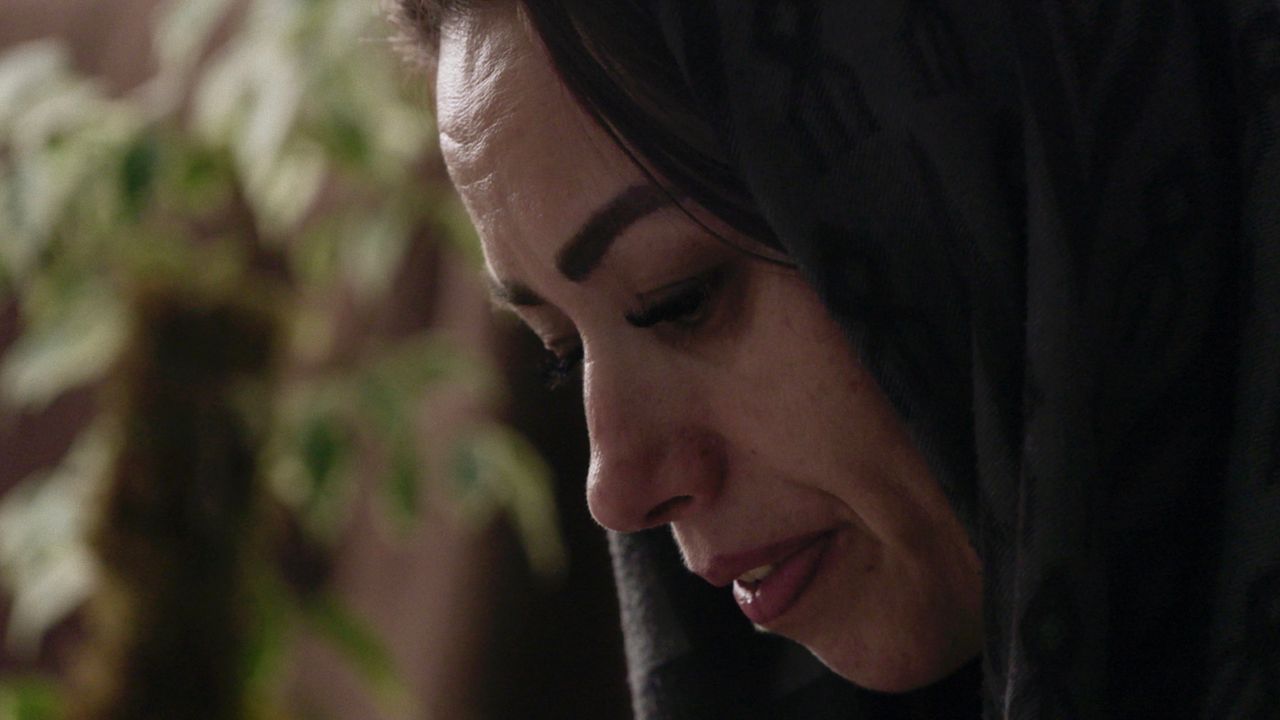
On an overcast day in 2022, an Iranian woman sat across from a grieving family in a modest living room in Zanjan, a city north of Tehran. The woman, an activist named Farkhondeh Jabarzadegan, was in her late sixties, with watchful dark eyes and a loosely tied headscarf. She had come to plead for the life of Tahereh, a mother of three who, fourteen years earlier, had killed her own husband, Hossein, who she claimed had abused her. Under the Iranian legal system, the sentences of convicted murderers are decided by the victims’ heirs, who are given the choice of offering a pardon, demanding financial restitution, or putting the perpetrator to death.
As Jabarzadegan pleaded for amnesty, Hossein’s mother, Mokarameh Adibi, sat wrapped in a chador, her face hardened by grief. “I hope she bleeds to death through her nose,” she said, of Tahereh.
“I’m sure she’ll pay dearly for it in her next life,” Jabarzadegan replied softly.
“I don’t want her to pay for it in the next life,” Adibi said. “I want her to pay for it now.”
In the preceding months, Tahereh had been released from prison after a long sentence, and settled in an apartment that her children had rented for her in Tehran. But her ordeal was far from over. Hossein’s mother and brother would now choose whether to seek her execution or to spare her life, in exchange for diya, or blood money, in an amount that they would determine. If Tahereh failed to pay within several months, she would face death by hanging.
These perilous few months are the subject of a new documentary, “An Eye for an Eye,” which opens in New York this week. I was able to speak with several of the principals from Tehran, via an intermediary. Tahereh and her children said that the years before the killing were painfully fraught. Hossein was addicted to opium, and life was chaotic. Tahereh’s son, Mohsen, recalled that his father once brought home a group of addicts and served them roast chicken—a rare luxury. While Hossein’s friends tore into the chicken, Mohsen and his sisters were given bread for dinner.
It was far worse for Tahereh. The family says that Hossein beat her—in the film, she describes broken teeth and a fractured skull—and that she lived in constant fear. There was no way for her to leave him. She wanted a divorce, but in Iran only men can impose divorces without a judge’s assent, and Hossein was resistant. Tahereh recounts in the film that he had warned her, “The day you try to divorce me, I will poison the food so you all die.”
Mohsen told me that the family finally concluded that “his no longer existing was better than his existing.” One night, Hossein returned early from his job on a construction site. Tahereh says that her daughter urged her to take action: “No one knows he’s with us. Let’s do it. Let’s kill dad.” Tahereh, a fan of detective shows, thought about managing the evidence: she worried that spattered blood would give them away. So, she recalls in the film, she sneaked up on Hossein and choked him with her hands.
Roughly twenty-one hundred people were executed in Iran last year, more than twice as many as in 2024. Among countries that reliably disclose their statistics (a group that notably excludes China), Iran is by far the world’s leading executioner. International attention tends to focus on executions carried out by the state: protester crackdowns, morality-police violations. Last week, the U.S. State Department accused Iran of using capital punishment to squash public dissent. Yet, as a panel of human-rights experts told the United Nations last month, most executions are related to drug offenses, which can carry capital sentences, or to qisas, meaning “retribution-in-kind.”
For unintentional killings and injuries, a judge determines the verdict, but in cases of premeditated murder the survivors are left to decide a punishment. Amnesty International has condemned the Iranian justice system, saying that it “perversely seeks to place the responsibility” for sentencing on “those who have lost their next of kin to murder.” The custom of blood money also results in a two-tiered system: wealthy offenders can buy their freedom, while the poor are often hanged.
In the film, Tahereh laments, “The decision is up to my brother-in-law. If he wants to seek the death sentence, it’s over. I’ll be executed.” Mohsen, who is now twenty-five, resented the control that his uncle and grandmother had over his mother’s life. “Her fate was in their hands, and all they wanted was money,” he told me. “I could see the price on her life going up and down with the country’s inflation.”
The case was unusual in that, as a local reporter tells the filmmakers, “Everyone claimed responsibility.” As a child, Mohsen told investigators that a man—someone with whom Tahereh appears to have been involved—had been in the apartment on the day of the murder. (Mohsen later said that the statement had been coerced.) Mohsen’s sister, Somayeh, initially said that she took part in the killing, and she was imprisoned before Tahereh stepped in to insist that she acted alone. The case against Somayeh was eventually dropped, but she was sent to a correctional facility in Tehran. There, she met Jabarzadegan, the activist, who took on the family’s case.
Jabarzadegan, a chemist by training, had begun volunteering in youth facilities twenty years ago, after she heard that minors were being sentenced to death. (Girls as young as nine and boys as young as fifteen can be tried as adults, and in recent decades human-rights organizations have documented dozens of executions of children under eighteen.) She told me that the first murder case she helped to negotiate was over a coat. Two teen-age boys had got into a fight, which ended with one of them stabbing the other in a roadside ditch. The dead boy’s parents eventually pardoned the killer in exchange for a nominal amount. “Back then, people were realistic,” Jabarzadegan said. These days, “it’s gotten crazy.”
Since the U.S. and Israel went to war in Iran, in February, the country has been beset by soaring food prices, power shortages, and rising unemployment—an economic downturn so harsh that even the usually dismissive regime was forced to admit it. The crisis has contributed to a spike in cases of marital violence, Jabarzadegan said. “As stress in Iran goes up, like the sanctions and the financial pressure, so have these behaviors.”
As Jabarzadegan advocated on Tahereh’s behalf, she proved to be a canny negotiator. In the film, Hossein’s brother informs her that he wants to set the blood money at 1.5 billion toman (roughly thirty-six thousand dollars at the time), and she scolds him in the tones of a disapproving teacher: “This talk of money is kind of ugly.” She tells him that the payment won’t satisfy him, and urges him to resolve the dispute for his own family’s good. “You have said that the last few years have been terrible,” she says. “So let’s find an amount to end this quickly.”
At one point, she hints at a paradox of the blood-money custom: those who value a perpetrator’s life least are the ones who set a price on it. But she never brings up Hossein’s drug problems or his physical abuse of Tahereh. This was a deliberate strategy, she told me. “Whenever we go to these families, we have to share their pain and tell them, ‘We feel you,’ ” she said. “We always have to give all the rights to the victim’s family because they lost a family member. That’s the only way we can form a relationship.”
For a Western audience, Tahereh’s story can elicit only empathy: she seems to have no good options. When I asked Mohsen how their situation would have been different had his mother been able to divorce his father, he was starkly pragmatic. “It would have been even worse, because in Iran the man gets the children,” he said. (Fathers are typically given custody of children older than seven, with the mother’s rights limited.) What’s more, Mohsen said, his mother would have had to move in with her own father, who was poor and did not have room for her. “It really would have been impossible,” he said.
In Iran, though, Tahereh’s “case is viewed very differently,” the film’s co-director, Tanaz Eshaghian, told me. Eshaghian was born in Tehran; her family emigrated to the United States in 1982, after the Revolution. She directed the documentary with a Tehran-based filmmaker, Farzad Jafari. But, at Mohsen’s request, they chose not to show “An Eye for an Eye” publicly in Iran; he feared that local audiences would condemn the family. Despite the years of abuse, Tahereh would inevitably be regarded as the aggressor. Eshaghian noted that, when Tahereh sought a divorce, a judge told her that her reasons were “childish” and that she should go back to her husband.
It is a painful irony that the documentary will not be able to influence the society that it depicts. But Eshaghian said that she did not consider that to be their role. “So much of filmmaking today is becoming advocacy nonsense,” she said. Instead, the film gives viewers an extraordinary view of a single, indicative Iranian story. It unfolds like a thriller, shot in an intimate, almost claustrophobic setting—taking us inside kitchens and living rooms where family members haggle over the price of a life.
For Eshaghian, making the film felt “both deeply familiar and, at times, like an investigation,” into a country that is rapidly changing. The disputes over money did not surprise her, she said: “I expected people to be constantly negotiating. It’s a bazaaring culture.” What impressed her was the dominant presence of women in civic life. Along with Jabarzadegan, Tahereh had a female defense attorney, Giti Pourfazel, who agreed to take up the case pro bono after visiting her in prison. Pourfazel tells the filmmakers that she came to believe the original sin of the case lay in an antiquated legal system: “Our laws are such that they affirm the patriarchy in life.” Eshaghian was deeply moved by her resolve. “I didn’t expect these middle-aged women to intervene when the system falls apart around them,” she said. “That, to me, changed my sense of Tehran.” ♦
来源:纽约客中文网