 讲知识 · 讲经验 · 讲未来
 人人可分享 · 处处是课堂
 科技 · 财经 · 游戏 · 快讯,每日更新
 诚搜315观察网
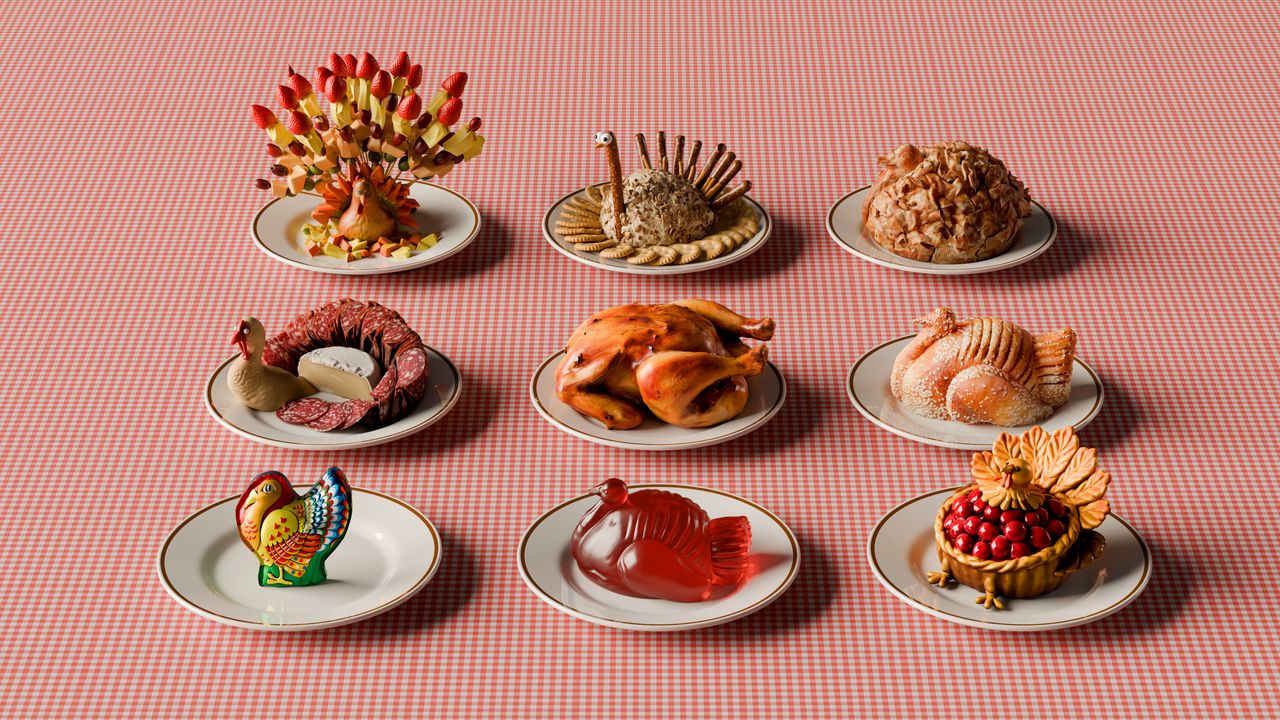
I wasn’t feeling especially jazzed about Thanksgiving this year. That changed, a few weeks ago, when I was lazily flicking through TikTok and stumbled upon the Turkey Antipasto Skewer. It is a truly absurd and magnificent creation: a jarred pepperoncini skewered crosswise onto a toothpick above a semicircular fan of cold cuts and cheese. The result is, unmistakably, a radiant turkey, with the upward-pointing pickled-pepper stem forming the bird’s sinuous neck. I fell in love instantly. There was no avoiding my fate: the Turkey Antipasto Skewer was so bizarre, so clever, so utterly goofy, I knew that I was going to have to make a dozen of them for the holiday feast, maybe two.
In the meantime, I thought about the Turkey Antipasto Skewer on the bus to a fancy dinner: Maybe I’d pipe the insides of the peppers with a puff of garlic-spiked ricotta or milk-thinned Boursin? I thought about it while slicing the crusts off my daughter’s breakfast toast: I should probably figure out a meatless version, for the vegetarians—maybe paper-thin rounds of red and yellow beets? I spent more time thinking about the Turkey Antipasto Skewer than I’ve spent considering most recipes, and in its compositional simplicity it hardly qualifies as a recipe at all. It’s something better: a campy cocktail-hour sculpture, a unit of ludicrous happy-homemaker kitsch. A turkey! Made of meat and cheese and pickled pepper! Of course.
Holidays need avatars—something needs to be embossed onto the disposable cocktail napkins, and printed on novelty pajamas, and, most important, turned into a season-marking papercraft for the little ones. A real turkey—that is, the feathered animal—bears little resemblance to the burnished mound that’s presented and carved at the table each year, yet in its very remoteness the living bird seems to me a fitting totem of the holiday. The nation’s elementary-school children still spend November tracing hand turkeys and decorating construction-paper capotains, but the sugarcoated story of the Pilgrims and the “first Thanksgiving” has, thank goodness, receded considerably in recent years. The nationalistic meaning of the holiday may have been vacated, but the turkey remains. (Roland Barthes, I suspect, would have a field day with this.) Unlike most other American holiday avatars, the living turkey doesn’t actually do anything—it doesn’t bring gifts, it doesn’t make mischief, it doesn’t have any particular personality or function. It just is: a gobbling, feathered thing suspended in the void.
While meditating so deeply on the Turkey Antipasto Skewer, I realized that I’ve always sort of had a thing for turkeys. They’re strangely beautiful animals, and also fairly terrifying ones, which is a potent combination: the eldritch head, with its wobbly wattle and drooping rockabilly pompadour; the gnarly, scaly, dinosaur legs and feet; the sheer doglike mass of the thing, compounded by that enormous and splendiferous tail, Ziegfeldian plumage bursting from the rump of the world’s freakiest showgirl. For a long time, my own private little Thanksgiving tradition has been to buy Madelaine Chocolate Company’s chocolate turkeys, which are wondrous things to look at, three-dimensional and meticulously detailed, wrapped in luridly colored foil with sprightly cartoonish eyes and an expression of placid contentment. But when you peel off the wrapper—and this I do to at least one of the chocolate turkeys a few days before the big meal, usually while I’m ricing potatoes or shredding a million pounds of Brussels sprouts—the chocolate bird within is a full-on nightmare: the feathers hideously textured, the eyes angry. The whole thing looks so spectacularly evil that it’s nothing short of a mitzvah to go in and bite off its head.
Another turkey I have known: last year, on a whim, I purchased a plastic-blow-mold bird, a foot and a half tall and decorated with uncannily lifelike features, including tiny yellow eyes that I imagine are marginally friendlier than an actual turkey’s would be. And it lights up! With the press of a button, a dull, warm glow emits from some inner, battery-powered light bulb, illuminating the brown feathers and red wattle and horrid yellow legs. I had an idea, when I bought it, that I’d bring it with me to a Thanksgiving meal at my uncle’s house—I pictured making small talk while cradling my child in one arm and the glowing turkey in the other—but when we arrived on the day I forgot it in the car. And then I forgot to ever take it out of the car, so that it’s now been riding around the Eastern Seaboard in the trunk of a Subaru for what amounts to a fair chunk of the natural life span of the average turkey living in the wild.
Through all my turkey curiosities (I admit that there is also a turkey finger puppet, and a turkey spatula, and that I’ve been known to make a turkey-shaped cheese ball, with endive arrayed for a tail), I’ve largely lost interest in the cooked, delicious one on the table. Last year, we didn’t even have a turkey: we had duck, and it was an enormous hit. This year, we’re back to turkey, but I’m not making it, and, anyway, I’ve been told it’ll be a roulade, so its resemblance to the living creature is still intermediated enough to be semiotically rich (or at least semiotically middle-class). Tradition doesn’t live in a particular species of bird, or in a bird at all, alive or dead, and there are things that I still like about Thanksgiving. The intention of giving thanks, the autumnal harvest, the fall’s blazing sunset shading into the dark of winter—these are older, deeper things than some squirrelly story of colonial triumph. My relationship to the holiday has cycled over the decades from simple joy to complex joy to dread to disdain and back around to simple joy again. Maybe that’s why I can’t stop thinking about the asinine, tacky, completely beautiful Turkey Antipasto Skewers, and how stupidly happy I’ll be when I uncover a platter of them. ♦
来源:纽约客中文网