 讲知识 · 讲经验 · 讲未来
 人人可分享 · 处处是课堂
 科技 · 财经 · 游戏 · 快讯,每日更新
 诚搜315观察网
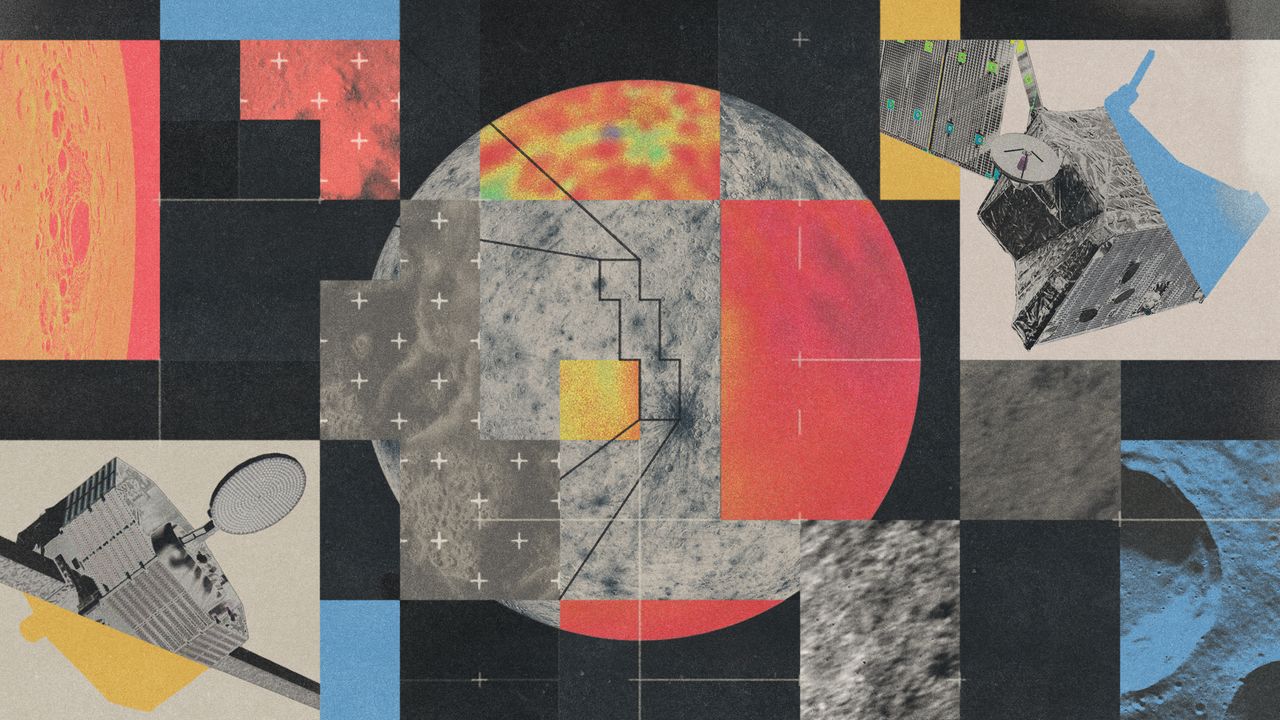
This week, BepiColombo, a joint mission of Europe and Japan’s space agencies, completed a six-billion-mile journey to Mercury, the closest planet to the sun. On November 21st, it became the second spacecraft in history to enter orbit around the planet. Now it will spend at least a year surveying Mercury, enabling scientists to make detailed maps, measure what the planet is made of, and deduce what might be below its surface. They ultimately hope that Mercury will help reveal how the planets of the solar system formed—and perhaps even provide clues about the ingredients that gave rise to life on Earth.
Few people predicted that Mercury would inaugurate a riveting new chapter in planetary science. In the elementary-school model of our solar system, Mercury may have been the least distinctive. Mars was where the rovers were, and where people dreamed of astronauts going; Venus was the hottest planet, and a sort of fun-house mirror of Earth. Uranus had the funny name, and Saturn, with its lovely rings, was the belle of the celestial ball. Mercury—tiny, cratered, bleached by unrelenting sunlight—has no axial tilt and virtually zero atmosphere, meaning that it experiences no seasons, no wind, and no weather. It lacks plate tectonics, so its surface barely changes. “It’s a bit of an overlooked, underloved planet,” Emma Bunce, a space physicist at the University of Leicester who oversees an X-ray detector on BepiColombo, told me. Astronomers had trouble even pointing telescopes at Mercury, because it was so close to the sun. By 1973, when NASA launched the first Mercury-bound spacecraft, Mariner 10, the United States and the Soviet Union had already launched more than twenty missions each to Venus and Mars.
Lately, though, what made Mercury boring has redefined it as the place to explore some of the solar system’s leading mysteries. Because of Mercury’s stable, upright rotation, sunlight cannot reach its deepest polar craters, and hasn’t for eons. Its airless surface can reach eight hundred degrees Fahrenheit in the sun, yet the craters remain hundreds of degrees below zero. As a result, they may be a time capsule for ancient water and prebiotic materials that predate life as we know it. NASA’s MESSENGER spacecraft, which became the first to enter orbit around Mercury, in March, 2011, confirmed the presence of water ice. “The exploration of other rocky planets has a special appeal, because they are Earth’s siblings,” Sean Solomon, a planetary scientist at Columbia University who led the MESSENGER mission, told me. “Understanding how their familial traits worked themselves out, following the same laws at the same time as Earth, helps us generalize our understanding and test our ideas for how our own planet operates.”
Mariner 10’s three flybys of Mercury, in 1974 and 1975, discovered that—unlike Mars and Venus—the planet generates an internal magnetic field. “That was unexpected, and is a window into the interior of the planet,” Bunce told me. Mercury’s outer core is partially molten, a bit like Earth’s; geologically speaking, Mercury is not a dead world. Still, twenty years elapsed before space programs began to plan another mission there. In 1995, the European Space Agency announced its intent to launch the Mercury orbiter that would become BepiColombo. Four years into this effort, NASA announced its plans for MESSENGER. “European scientists were quite upset, thinking there was an understanding that ESA would do Mercury and NASA would concentrate on the other planets,” Solomon told me. He said that a European delegation came to the U.S., anxious that NASA was preëmpting the ESA, but left satisfied that the two missions would be complementary. MESSENGER ultimately launched with a fourteen-year head start, in August, 2004.
Entering orbit around Mercury is difficult. As an object approaches the sun, it naturally speeds up, in roughly the way that ice skaters spin faster when they pull their arms inward. But the maneuver that engineers call orbital insertion requires a spacecraft to slow significantly. MESSENGER followed a circuitous, five-billion-mile path, and then used a “turn and burn,” blasting its thruster as a kind of braking system. BepiColombo, in contrast, spent years slowing down gradually so that it could use a technique called weak capture. It effectively sidled up to Mercury, already travelling at approximately the correct speed, and let gravity do the rest. Its engines will make small adjustments for about three weeks.
In the four years that MESSENGER orbited Mercury, nothing went as expected. The probe photographed not only craters but also ancient volcanoes and steep cliffs. Scientists discovered entirely new geological structures called hollows—clustered depressions that are hundreds of metres across. Despite their superficial resemblance to craters, they are not caused by impacts. Instead, they likely formed when something underground escaped into space; no one knows what, how, or when. Another curious finding was that the center of Mercury’s magnetic field was three hundred miles north of the planet’s geometric center. “The jury’s still out on what that means,” Solomon told me.
MESSENGER inspired new theories about how Mercury formed, according to Shoshana Weider, the Mercury lead at NASA headquarters. Chief among them was the giant-impact hypothesis. “Mercury has a very big core and a very small crust and mantle,” Weider said. Maybe the planet was once much larger, but then something smashed into it, removing much of its outer layer. Strangely, MESSENGER also found surprisingly large amounts of volatile elements such as sulfur, sodium, potassium, and chlorine. “Volatiles are materials that you expect to evaporate easily when things are heated,” Weider said. A collision would have generated a lot of heat. “The community has been wrestling with that,” Solomon told me. “There hasn’t been a compelling solution.”
In our solar system, Mercury, Venus, Earth, and Mars are the only planets on which humans could theoretically set foot (with varying degrees of discomfort). The differences between them effectively serve as natural experiments. Mars and Earth both have weather and seasons, but Mars is farther from the sun, and lacks a global magnetic field. Venus and Earth both have thick atmospheres, but Venus is sweltering and has virtually no water—and so on. Planetary scientists are particularly keen to explain something that only Earth has: vast oceans of liquid water that surely played a key role in the origins of life. Where did they come from? What else was in them?
The working theory, Solomon said, is that “when the rocky planets formed, ices were not stable in the inner solar system—it was much too warm.” Instead, water ice probably formed in the cold outer reaches of the solar system, and hitched a ride to the inner solar system on comets and asteroids. Other volatiles likely came with them. “That delivery gave rise to the early organic chemical reactions, out of which were born organic compounds and, ultimately, life itself,” Solomon said.
Ironically, the only planet known to foster life is also a bad place to study life’s origins. Earth is vexed by turbulent weather, a corrosive atmosphere, and tectonic systems that erase the ancient past. Mars lost its oceans and its magnetic field, and, on Venus, the greenhouse effect boiled away potential seas. “Mercury may be the best witness to the delivery of water and organic compounds from the outer solar system,” Solomon said. “It won’t tell us what kick-started life on our own planet, but it will get us a few rungs up on the ladder of understanding that process.” Although BepiColombo itself can’t collect ice samples from orbit, planetary scientists and engineers are studying how to return samples in the future.
BepiColombo, named for the twentieth-century Italian mathematician Giuseppe (Bepi) Colombo, is considered a flagship—the largest class of planetary mission, intended to advance entire fields of research. In December, after the spacecraft stabilizes its orbit, it will separate into two distinct probes—the Mercury Planetary Orbiter, from the ESA, and the Mercury Magnetospheric Orbiter, from the Japan Aerospace Exploration Agency. Each will circle the planet at a different distance from its surface. “You can have the Japanese spacecraft in the solar wind, and the European spacecraft in the magnetosphere,” Bunce told me. The former will allow for holistic research into space weather, which ripples out from turbulence on the sun, and the latter will clarify what’s happening on Mercury itself.
BepiColombo’s European orbiter will map surface minerals at wavelengths unavailable to MESSENGER. It will teach us more about Mercury’s core and measure how thick the crust is, along with how the ground stores and releases heat. Such data will feed models that seek to explain how Mercury formed, and how the solar system evolved. The results will also have relevance to extrasolar planets, advancing the search for other “Earths” around other stars. Scientists waited eight years for BepiColombo to reach Mercury, and Solomon told me that he was preparing for something unexpected. “We’re never so full in our understanding that we can anticipate the discoveries when we visit a new place, or look closer at an old one,” he said. “We’re always surprised.” ♦
来源:纽约客中文网