 讲知识 · 讲经验 · 讲未来
 人人可分享 · 处处是课堂
 科技 · 财经 · 游戏 · 快讯,每日更新
 诚搜315观察网
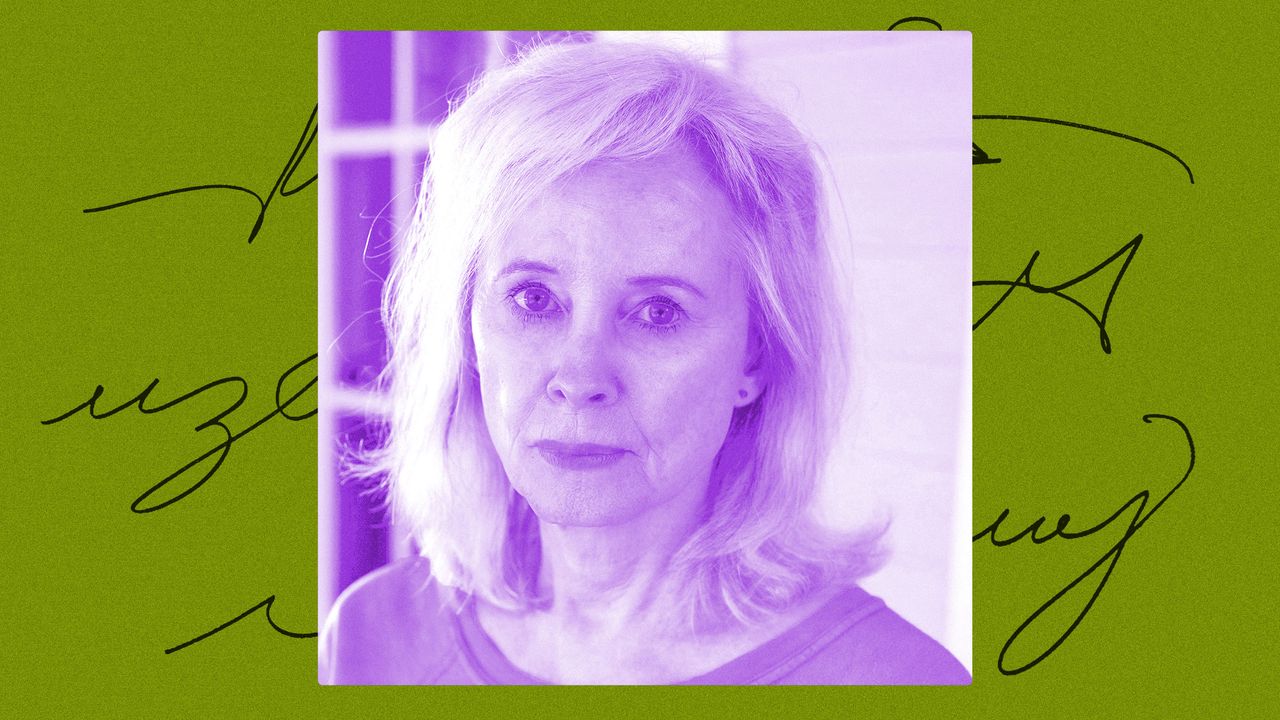
In your story “Out of Time,” a woman in her late sixties, a freelance writer, is asked to write a piece on “the undesirability of old women.” “Are they objects of ridicule for still harboring desire and for imagining that they are desirable when they are clearly past it?” the editor asks. This seems so unlikely a request from a magazine that I fear it’s actually true. Did you receive a pitch like this which inspired the story, or did the story begin for you with something else?
I did actually receive that pitch! But it’s not what inspired the story. I’m rarely inspired to write fiction in response to something like that. The inspiration was more ephemeral: I was doing some grocery shopping in an unfamiliar store where old people in the produce department were yelling to one another over the noise of an HVAC system, while eighties love songs played above them. It struck me as so poignant that I pretty much went home and wrote that scene. Everything else came some months later, and I don’t recall in which order.
Unlike the “old women” the editor is thinking of, Carrie, the protagonist of the story, does seem to be desirable: a much younger man, who works at CVS, has been flirting with her, asking her out, and clearly does find her beautiful. Why do you think, as he says, the age difference doesn’t matter to him?
I don’t know if he really finds her beautiful. He calls her a “beautiful lady,” but that’s a standard kind of flattery that doesn’t mean much. I think he finds her acceptable and also novel: he’s obviously very depressed, and she has openly shared that she’s in pain, too. He’s spoken bluntly to her about his private life, and she has shown sincere care for him that he likely isn’t getting elsewhere. So he feels some connection and, I imagine, curiosity. None of this means that Carrie is objectively desirable to the world at large, but she is to him right then. Also, he doesn’t realize how old she is—when she says she’s almost seventy, he’s taken aback, but the thing is already in motion. Given how he presents, he probably doesn’t have much luck with women generally and, well, she’s right there. Or he thinks she is, anyway.
Carrie is alternately intrigued by the CVS guy (both sexually and intellectually, because he offers an opportunity for her to learn more about radicalized right-wing young men) and dubious; she suspects that what he sees in her is someone he can take advantage of or get money from. Still, when she fantasizes about him, what she imagines is not just sex but affection, a connection of the kind she has had with other men in her life—her ex-boyfriend, her ex-husband. What makes her feel that that might be possible?
When people fantasize it’s not necessarily about what they realistically think is possible. I think fantasy is about what you want on a primitive level and sometimes what you fear, sometimes both smushed together in an ecstatic way. More simply, Carrie is an affectionate person with a history of affectionate relationships, so naturally her imagination includes that. That desire for affection, to give it as well as to receive it, would be heightened by her sense that he needs it, as she does. That, despite the almost comic differences between them, is for her an essential link.
Carrie’s book group is reading a novel in which a woman in perimenopause becomes involved with a much younger man and leaves her family. (The novel is “All Fours,” by Miranda July.) The cliché is the opposite: men in midlife crisis ditching their wives for much younger women. Why are older-woman-younger-man couplings so much more socially taboo than the inverse? And why do you think society focusses so much more on women’s aging than on men’s?
I don’t have anything original to say about this, or anything that July didn’t say. Obviously, older men tend to have more social power, and that’s part of it. But it’s also physical. Men keep the ability to have children longer, which means that they release pheromones and tend to radiate vitality for longer. (It’s not that older women have no vitality, but they often redirect it in a nonsexual way; their attention is on other things.) Men tend to feel desire for longer, too. Again, this isn’t always true—some older women have that particular vitality and desire as well—but it holds as a generality. And I think the first part matters subliminally, even if no one concerned is thinking of having children. Also—despite what Clavicular might say—men react more intensely to physical beauty than women do, and people across genders lose beauty as they get older. That is, there is such a thing as a beautiful old person, but it’s a different kind of beauty—it doesn’t ooze sexuality. I’m not saying that any of this is fair; it’s just what I’ve observed.
But I’ve also observed that desire in humans is unpredictable and idiosyncratic. And things like personality actually do matter. Some men are at least open to much older women in some situations. I’ve heard about this from friends who’ve hooked up with younger men they met online. A few men may even have a preference for older women. A few years ago, a taxi-driver, perhaps in his forties, entertainingly shared with me his opinions on the subject. He said that, after listening to young women talk to each other and their dates in the cab, he had decided that they were, on the whole, spoiled and selfish, and that older women were “more feminine and soft.” He rapturously concluded that “the older lady understands all the things!” Personally, I do not understand all the things. Some of the things, yes! But not all of them.
In the middle of the story is a box full of free eggs that someone has left sitting outside on a table—at a time when egg prices are at their highest. This act of generosity is repaid with an act of violence: someone drives a car into the table and leaves the eggs smashed. Should we see this as symbolic of what could happen if Carrie is generous with the “potentially dangerous” CVS guy? Or of something else? Or is it just a box of eggs?
That is also something that I witnessed, near where I live—this refrigerator box of eggs freely offered, which was one day plowed into by some asshole. And I really was “heart-struck,” like Carrie in the story. It seemed unbelievably awful that someone would do that. My inclusion of it was more intuitive than symbolic. But it makes sense. There is that line about Kira, the daughter of Carrie’s ex: “So much sweetness ruined.” The eggs are an image of brokenness and injury, and all the characters have suffered that. But the story is also about what the world feels like to Carrie. Someone extending goodness and generosity into the world is always at risk, because that gesture requires a kind of openness. Right now, it can seem more likely than ever that acts of kindness and generosity will be met with harm. However, I do want to add this caveat: the egg box might have been knocked over by accident. It might not have been a deliberate destructive act. Let’s hold on to that!
You leave the story open-ended or unresolved. We don’t know what Carrie will choose to do next. Why did you make that choice?
That was also intuitive. It just felt like the right place to end. To me, the most important thing is the turn that Carrie’s feelings take while she’s sitting by the river. I don’t want to say more about that, but to me that’s where this part of her story ends.
Your title comes from a song, “Out of Touch,” by Hall & Oates, which is playing in the supermarket Carrie goes to in the opening scene. What made that song feel like the right soundtrack for this story?
I guess because of the way it juxtaposes loss and bittersweetness. Also, the lyrics—I tend to think that the song is titled “Out of Time,” instead of “Out of Touch”—reflect a clear concern of the story, that the characters are late in life and literally running out of time. (I hate to expose the mundanity of my inspiration, but it really was playing in the grocery store with the grouchy old shoppers, which I found weirdly great.) But it also has another meaning, which occurs to Carrie toward the end. ♦
来源:纽约客中文网