 讲知识 · 讲经验 · 讲未来
 人人可分享 · 处处是课堂
 科技 · 财经 · 游戏 · 快讯,每日更新
 诚搜315观察网
On the morning of March 2, 1876, the Secretary of War, William Belknap, raced to the White House to see President Ulysses Grant. There, a tearful Belknap confessed to having taken bribes from a merchant he had appointed to run a military trading post, and submitted his resignation to Grant, seeking to preëmpt the House of Representatives from launching impeachment proceedings. The House was undeterred, and Belknap became the first Cabinet official to be impeached. The Senate failed to summon the necessary two-thirds majority to convict, with many members questioning whether they had power over a person who had left office—an obscure precedent that, as it happened, became front and center during the second impeachment trial of Donald Trump, in February, 2021.
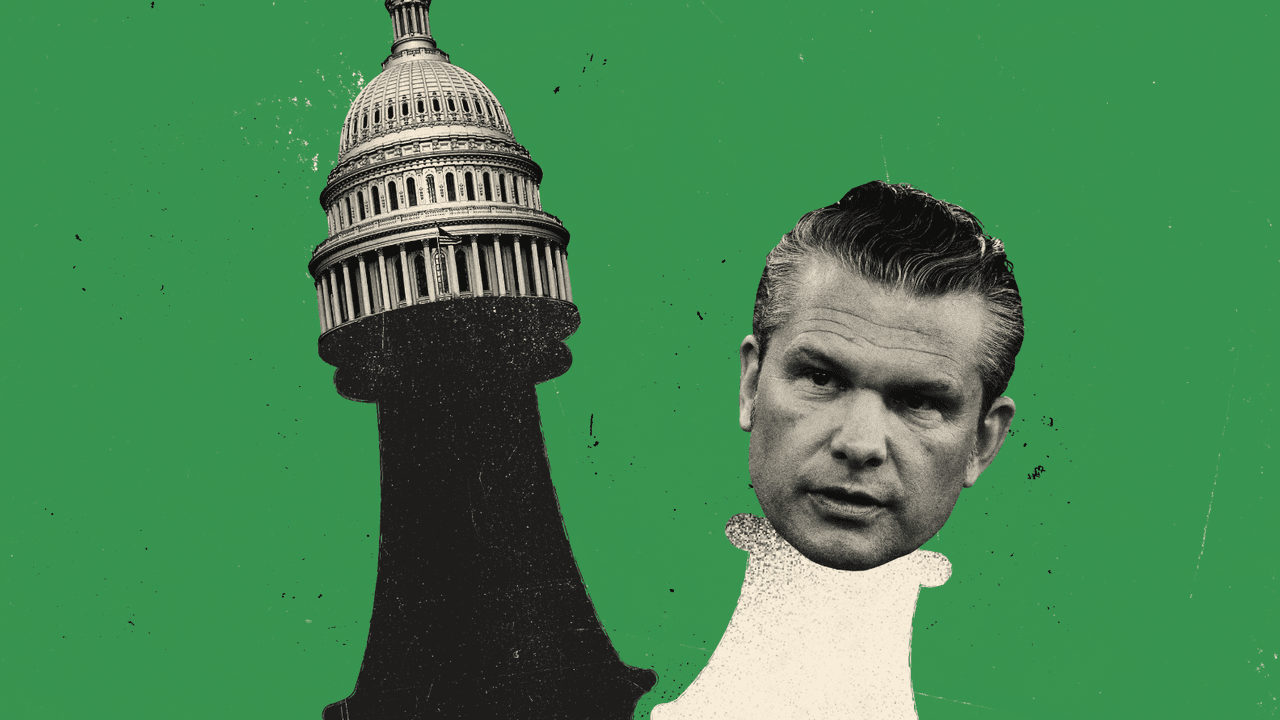
A century and a half later, Pete Hegseth, another Secretary of War, adopted a more pugilistic approach to the prospect of his own impeachment. Early this month, Thomas Massie, an iconoclastic Kentucky Republican who lost his primary to a Trump-anointed challenger, filed eight articles of impeachment that focussed on Hegseth’s handling of the war in Iran. Hegseth’s actions, the articles alleged, were “subversive of constitutional government,” trampling on Congress’s war-making authority. The effort failed, after eleven Democratic lawmakers—some of whom claimed to be stuck in one of the capital’s frequent traffic jams—missed a crucial vote. No G.O.P. lawmakers besides Massie backed the move. Republicans, Massie observed, “still haven’t broken from the spell of Donald Trump.”
The morning of the impeachment vote, Hegseth held a news conference, his first in six months, portraying the attempt to oust him as an assault on the President and the troops. “This is not patriotism—this is sabotage,” he said. After the vote, through a spokesman, Hegseth declared “total victory,” while Trump lauded the “EXONERATION of a Great American Patriot.” But, as anyone who has watched Trump understands, his loud professions of support are good for that moment only—a particular risk for Hegseth given the unpopularity of the war. And the Democrats seem in no mood to back off when they take over in January, if they still have Hegseth to kick around then. Hakeem Jeffries, the incoming Speaker of the House, has declared himself a “hard yes” on Hegseth’s impeachment.
Come January, oversight and its offspring, accountability, will be essential. Democrats will have a chance—despite how much Trump will resist—to document his Administration’s cruelty, incompetence, and corruption, not just for the historical record but to understand how such behavior can be stopped. The range of seeming malfeasance is staggering: granting pay-to-play pardons, issuing no-bid contracts, exploiting government service to amass enormous personal wealth. Then there are questions of policy, such as the Administration’s treatment of immigrant detainees and its dealings with Nvidia.
Hegseth, a former Fox News host with a reported history of alcohol abuse and sexual assault, is a worthy first target. (Hegseth denies any wrongdoing.) He was manifestly unqualified for the Defense Department job, and his conduct in office has only underscored that assessment: he personally ordered extrajudicial killings at sea of alleged drug traffickers; purged the ranks of military leadership; and sought to punish Senator Mark Kelly, of Arizona, for reminding service members of their right to refuse illegal orders.
But Democrats must exercise their power with caution. For the new majority, the next two years will entail navigating the tension between holding the Trump Administration accountable for its actions and delivering tangible results for voters. In the case of impeaching Hegseth, the process is unlikely to succeed. Even with the Democrats’ fifty-six-seat Senate majority, removing him would require eleven Republican votes. Pursuing an effort destined to end in defeat could make the Democrats appear fixated on administering political payback rather than addressing voters’ pressing financial concerns. The damage could be mitigated, though, if Hegseth is the only official whom they attempt to remove. Another failed impeachment of Trump would merely help him play the victim.
That leaves another worry: whether impeaching Hegseth would entrench a troubling precedent. For a hundred and forty-eight years, Belknap’s impeachment stood as the only such action against a Cabinet secretary. The bribery scheme of which he was accused was precisely the kind of high crime and misdemeanor the Framers envisioned when they provided for impeachment. In 2024, however, Republicans impeached Alejandro Mayorkas, the Homeland Security Secretary under Joe Biden, over his supposed failure to enforce border laws. The Mayorkas impeachment—it passed the House by a single vote, on the Republicans’ second try, and failed in the Senate—was the ultimate misuse of impeachment, as a tool to punish policy differences and score political points. Frank Bowman, a University of Missouri law professor and an expert on impeachment, testified for Democrats that it should be “a measure of last resort,” reserved for conduct “that corrupts or subverts governmental processes or the constitutional order itself.”
The Hegseth impeachment falls somewhere between Mayorkas and Belknap. As Bowman sees it, Hegseth is far closer to the Belknap end of the spectrum. “In Mayorkas’s case, there wasn’t a high crime or misdemeanor anywhere in sight,” Bowman said, in an interview after the Massie-led impeachment fizzled. “In the case of Hegseth, both Hegseth and the President are committing high crimes and misdemeanors.” Another leading impeachment scholar, Michael Gerhardt, of the University of North Carolina, agreed. The potential political downside of impeachment notwithstanding, “in some ways Congress doesn’t have a choice,” he said. “If they don’t use impeachment here, it might set exactly the wrong kind of precedent.”
Still, there would be something unsettling about impeaching Hegseth for deeds ordered by Trump himself, particularly when it comes to the Iran-related charges that Massie proposed. Presidents of both parties have wrestled with Congress over the scope of their war-making authority. To transform that constitutional tug-of-war into an impeachable offense seems questionable, especially when Congress itself could halt funding for the conflict. The more Democrats limit charges to conduct specific to Hegseth, the stronger the argument for impeaching him will be. And, with it, the lower the chance that a punishment intended for “great and dangerous offenses,” as George Mason, of Virginia, told the Constitutional Convention, becomes a routine weapon in the modern political arsenal. ♦
来源:纽约客中文网